So, here’s the deal. Out of literally nowhere, Urusei Yatsura had a 2022 anime project announced. I live in Australia where our timezone means that it was already past midnight when someone tagged me about the news, and so at truly only about 20 minutes into the new year I had decided that this one is already better than the last. As may have become apparent by now: I like Urusei Yatsura. Quite a bit, even. The anime is in my top five, and although the manga leaves nowhere near as much of an impact it’s still one I greatly enjoy. Thus I twthink, when better than now would there be to finally blitz development on this script. I’m a very big fan of Urusei Yatsura. Not only on its own merits (which are immense), but in tracing through its subgenre. To the extent that, for the past two or so years I’ve had this personal project going on, following the lineage of Lum Invader. The way her explosive personality has rippled through the scene over the past 40 years. The demihuman-forced-cohabitation-romcom, something I’ve more commonly come to refer to as the “Romantic Invader” in reference to its origins and function. How does one piece influence the next, and the image of this genre steadily evolve over the years? It’s a line running strongly throughout anime history, constantly picked and prodded by a multitude of participants that adapt and transform its shape. Sometimes channelling it directly like Oniyome wa Metotteshimatta, sometimes branching off to create a new multimedia empire like Tenchi Muyo. Sometimes faintly borrowing characters like Ami and Minori in Toradora, and sometimes doing so in a more signposted manner like Zero Two or Cure Milky.
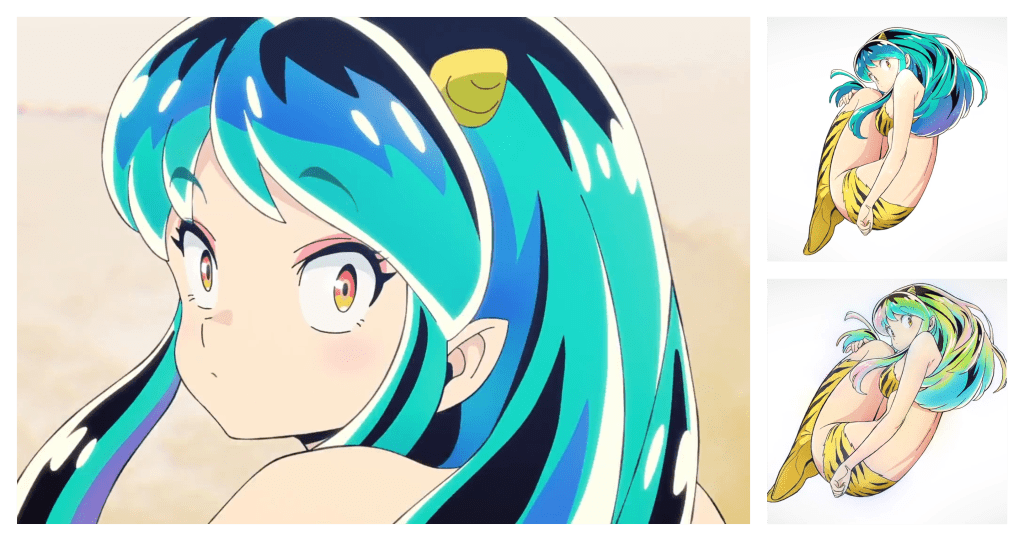
This has become one of my biggest activities around anime. Not exactly an analytical one, but a surface-level categorisation project. Urusei Yatsura becomes Megami-sama becomes To Love-Ru becomes Nisekoi. How so, and where? I’m not so much fixated on the why, but of observing each text and noting down the linkage points viewed from within their own structural confines. Previously, this project was done in the form of a collage. But that has long become unwieldy. I’m simply too dumb to figure out the logistics of arranging these things any longer, and furthermore it’s difficult to even try since it’s reached the size to where it feels as though Photoshop is on life support any time I open the file. I can’t add any substantial text into an image either, so it presented a problem where my graphic was always divorced from the notepad file containing vague explanations. For these reasons I’ve been wanting to rearrange it in a more workable form. That being this blog post. The next question is then whether I try and extract a video project out of it. To which my answer is maybe later. I have a lot of passion for Urusei Yatsura and for this topic, so ideally I’d like to. But given the fact that I have not seen every anime in existence, I wasn’t really sure it was worth approaching. It’s impossible for me to make a decisive piece on this because it will certainly become incomplete with every new cohabitation romcom I watch. I’m sincerely doubting that I still have all the screenshots I need for this anymore either, nor the memory required to accurately apply them, given that I have well upward of 70 series to mention and quite a few of them are manga. With the amount to cover I can’t imagine I’ll have much room for coherent grammar or avoiding word repetition either, and in the paragraphs I can already see a clear imbalance between those I detailed from memory and the ones I watched while this script has been active. This is more of a general talking piece with an excess of bad paragraphs than it is any kind of specific, sustained essay. Though I’m sure that limitation has become quite evident by now. This script perpetually grows the more anime I watch, and although I can obviously keep coming back and adding to the text in the blog post, for quite a while now I’ve been trying to figure out where I actually cut it off and publish. That was something with no answer in the foreseeable future, so I believe that the announcement of Urusei Yatsura: Allstars is probably the best prompt I’m going to get for it. And so, here I go.

Character Roles
Lum (Urusei Yatsura): Miia (Monster Musume), Nuku Nuku (Cat Girl Nuku Nuku), Zero Two (FranXX), Cure Milky (Star Twinkle Precure), Mai van Transylvania (Vlad Love), Louise (Zero no Tsukaima), MM (Kemeko DX), Nyaruko (Haiyore! Nyaruko-san), Ren (DearS), Ura (Oniyome wa Mettote Shimatta), Lala (To Love-Ru), Chizuru (Kanokon), Tamamo (Fate/Extra), Ami (Toradora), Tanarotte (Macademi Wasshoi), Ryoko (Tenchi Muyo), Kiriha (Tsugumomo), Urd (Megami-sama), Lime (Saber Marionette), Kurumi (Steel Angel Kurumi), Dokuro (Bludgeoning Angel Dokuro), Kisara (Engage Kiss)
Ataru (Urusei Yatsura): Godai (Maison Ikkoku), Reverse Rito (To Love-Ru), Shuu (Nisekoi)
Shinobu (Urusei Yatsura): Haruna (To Love-Ru), Kosaki (Nisekoi), Akiko (Nuku Nuku), Neneko (DearS), Ayeka (Tenchi Muyo), Ichigo (FranXX), Siesta (Zero no Tsukaima), Herikawa (Onegai Teacher), Kanna (AnoNatsu), Akane (Kanokon), Nozomu (Kanokon), Saki (Koutetsu Tenshi), Minorin (Toradora), Ayano (Engage Kiss),
Ran (Urusei Yatsura): Run (To Love-Ru), Lunar (Seto no Hanayome), Cthuko (Nyaruko), Eimi (Nuku Nuku), Sia (DearS), Zange (Kannagi), Cherry (Saber Marionette), Marika (Nisekoi), Kaori (Shugogetten)
Ten (Urusei Yatsura): Mashiro (Mikakunin de Shinkoukei), Peke (To Love-Ru), Maki (Seto no Hanayome), Chitose, Slash (Mahoromatic), Kanna (Dragon Maid), Skuld (Megami-sama), Rishu (Shugogetten)
Oniboshi (Urusei Yatsura): Setouchi (Seto no Hanayome), Deviluke (To Love-Ru), Beehive Gang (Nisekoi), Mafia (Final Approach)
Mendou (Urusei Yatsura): Mitaka (Maison Ikkoku), Mikawa (Seto no Hanayome), Miyauchi (Shugogetten), Mikhail (Engage Kiss)
Ryuunosuke (Urusei Yatsura): Ranma (Ranma 1/2), Ren (To Love-Ru), Run (To Love-Ru), Sun (Seto no Hanayome), Tsugumi (Nisekoi), Bamba (Vlad Love)
Megane (Urusei Yatsura): Saru (Seto no Hanayome), Saruyama (To Love-Ru), Kitamura (Toradora), Shuu (Nisekoi), Oikawa (DearS), Kamikura (Tenchi Muyo)
Belldandy (Megami-sama): Shao (Shugoetten), Sun (Seto no Hanayome), Mahoro (Mahoromatic), Mizuho (Onegai Teacher), Ichika (Ano Natsu de Matteru), Tsukasa (Tonikaku Kawaii), Snowbow (3 Angels), Ena (Mansen Maou Shoujo Ena-sama), Senko (Senko-san), Falce (Macademi Wasshoi), Pyra (Xenoblade Chronicles 2), Sakura (Fate/Stay Night), Tohru (Dragon Maid), Orihime (Maga-Tsuki), Tamamo (Tamamo no Koi)
Keiichi (Megami-sama): Nasa (Tonikaku Kawaii), Nagasumi (Seto no Hanayome)
Ryo-Ohki (Tenchi Muyo): Shantak-kun (Nyaruko), Celine (To Love-Ru), Sae (Twin Star Exorcists)
Lala (To Love-Ru): Yuuna, Cherry (Nadenade Shikoshiko), Zero Two (FranXX), Yuuna (Yuragisou Yuuna), Ikaros
Taiga (Toradora): Chitoge (Nisekoi), Ayumi (Her or the World), Benio (Twin Star Exorcists), Aki (Masamune’s Revenge), Mashiro (Tomodachi no Imouto), Erika (Cuckoo’s Fiancee), Mythra (Xenoblade Chronicles 2)
Mahoro (Mahoromatic): Hikari (This Ugly Yet Beautiful World), Ponko (Ponkotsu Ponko-chan), Nona (Chou Kadou Girl), Isla (Plastic Memories), Yumemi (Planetarian), RyuZU (Clockwork Planet), Flower (Kowarekake no Orgel)
Chi (Chobits): Ren (DearS), Flower (Kowarekake no Orgel)
Nemesis (To Love-Ru) -> Anzu (Sekai ka Kanojo)
Louise (Zero no Tsukaima) -> Taiga (Toradora) -> Chitoge (Nisekoi)
Ryuji (Toradora) -> Raku (Nisekoi)
Ryuunosuke’s dad (Urusei Yatsura) -> Claude (Nisekoi)
These are not ordered by year, since that would have been the smart thing to do. But instead they’re put into what I thought at the time would be the easiest way of writing them. Furthermore even though I’ll mostly be using anime screenshots the dates listed will be for when the source was first released, not for the adaptation which in every major scenario comes years later. Where relevant, collages will have the original series on either the left or the top, and the new one opposite.

We start off, naturally, with Urusei Yatsura (1978). Rumiko’s wildly influential romcom where the flying, green-haired alien oni – Lum Invader – steals a proposal that wasn’t actually directed at her and pushes her way into Ataru’s family. It never actually gets mentioned if she’s a proper princess or whether Oniboshi even has that system of royalty, but nevertheless Lum is the daughter of the tribe’s leader and in multiple movies we see the entire planet mobilized for her sake. Which is important to note because there are many a princess down the line. She’s a possessive lover from a race of barbarians, whose lack of understanding in the human common sense constantly makes trouble for her “darling”. That ‘lion tamer’ act resulting from the different definitions of normal between the human and the non is perhaps the most defining characteristic of the genre. However not every player is as aggro as Lum. There are generally two streams of character within this niche. You have your Lums, and you have your Belldandys. Either selfish or smothering. But even within the gentler sect, the invader naturally brings trouble to the protagonist’s daily life wherever they go. Aside from a handful of non-PC moments as a result of being published in 1978, Urusei Yatsura is very good and its character comedy is still among the highest quality I’ve seen. With all that I’m about to mention, it is rather interesting to look at this one and note how it, against all odds, isn’t a harem series. Most things from here will be, but this one itself actually was not.
Genre is a dynamic and inherently transformative thing so the best bet will always be to look at each instance on an individual level, but generally speaking the Urusei Yatsura-derivative “romantic invader” formula tends to manifest as a rowdy demihuman girl forcibly taking the protagonist as their husband, while misinterpreting or outright ignoring their will. Like, as a viewer we naturally sympathize with Lum’s unrequited romantic endeavours – or at the very least that they largely appear that way – but you gotta realise that really she’s just a brute who storms into Ataru’s life to suddenly declare ownership of him and physically punish any defiance. Lum is very much the one pushing this romance from the wrong place, not Ataru. Usually her descendants will mimic either her lack of common sense or affinity for violence, and although the protagonist can’t help but be attracted to her at some level these rough alien sensibilities are something which always stand in the way of him earnestly accepting her affections.

Because of her iconic bikini outfit the romantic invader will most times be a sex symbol for the protagonist (Lum, Lala, Zero Two, Nyaruko, Ren from DearS, Kemeko, Nagi), in many cases even wearing their own bikini outfit (Lum, Kemeko, Utsutsu, Oniyome). So too is it pretty common for them to have a three letter name like Lum, Sun, Run, Ren, Ura or Mai. Rather than beginning from dating they usually leap straight to marriage and immediately move into the husband’s home. In most cases however the protagonist stubbornly rejects the invader’s advances, frequently using the phrase “don’t cling to me”. Though given that these do all have a romance show hidden somewhere beneath all the craziness, they will undoubtedly reciprocate their feelings with time.
Once the girl he had been trying to keep hidden, due to the oddities in her personality, inevitably makes her way to his classroom the rest of his peers become jealous and lash out at him (Urusei Yatsura, To Love-Ru, Nisekoi, DearS, My Succubus Girlfriend), oftentimes going so far as to form a fan club which aims to get in between them. After causing that ruckus with her intrusion, she then transfers in and immediately becomes the campus idol. This can lead the previous popular girl to one-sidedly treat her as a rival (Megami-sama, To Love-Ru, Toradora).
Before long a nuisance comes to throw a wrench in the newlywed life, most often appearing as a younger relative with a chibi body (Ten, Skuld, Mashiro, Maki, Kanna, Nana, Haru Onodera, Chitose, Slash).

The monster bride’s main romantic rival is a human who embodies more antiquated social values and has her hair styled in a short bob (Shinobu, Haruna, Siesta, Ichigo, Jinko, Herikawa, Kanna Tanigawa, Akane Asahina, Nozomu, Neneko from DearS, Saki from Koutetsu Tenshi, Minorin).
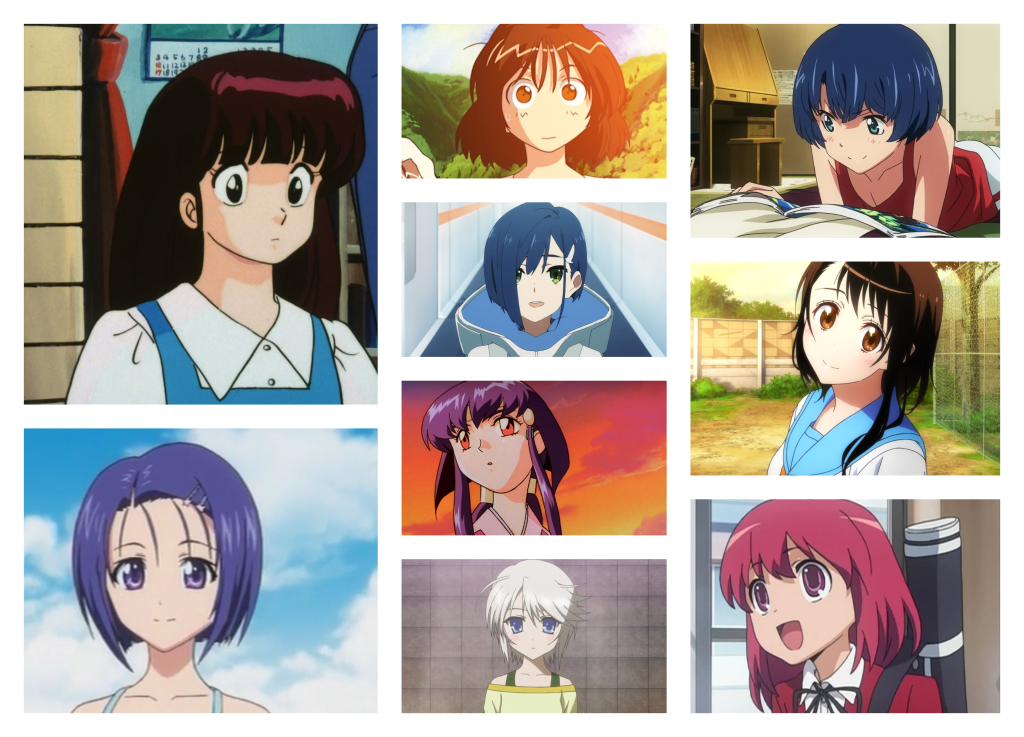
Her childhood friend will have some kind of two-faced or manufactured personality and consider her a lifelong rival, though their attempts at revenge tend to not even register with the main girl. The friend is standoffish and attempts to deceive others by acting especially cute or polite in order to cover her grudges, though at the same time gets lonely easily (Ran, Run, Luna, Henrietta). A lot of the time this duo will also have green and pink hair to specifically call out Lum and Ran.
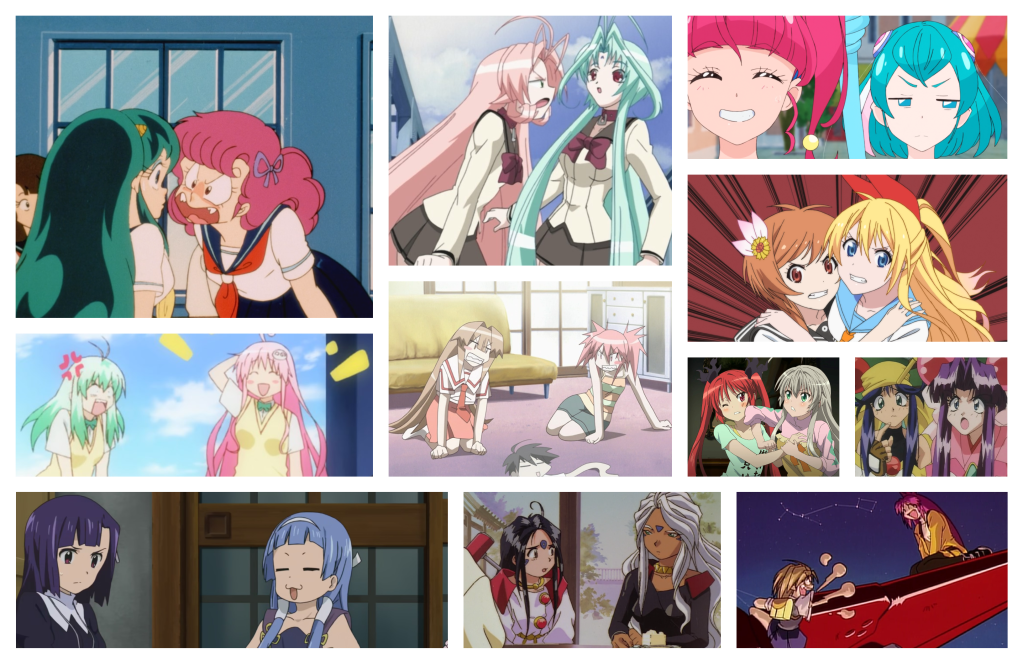
There will undoubtedly be some kind of rich and handsome love rival competing against the husband (Mendou, Mitaka, Mikawa Kai, guy from Shugogetten) since I suppose that’s the main point of this genre, really. The traditional representatives of the subservient wife and rich husband are rejected in favour of she who comes to reinvent love and self-definition. That is the invasion, that is her romance.

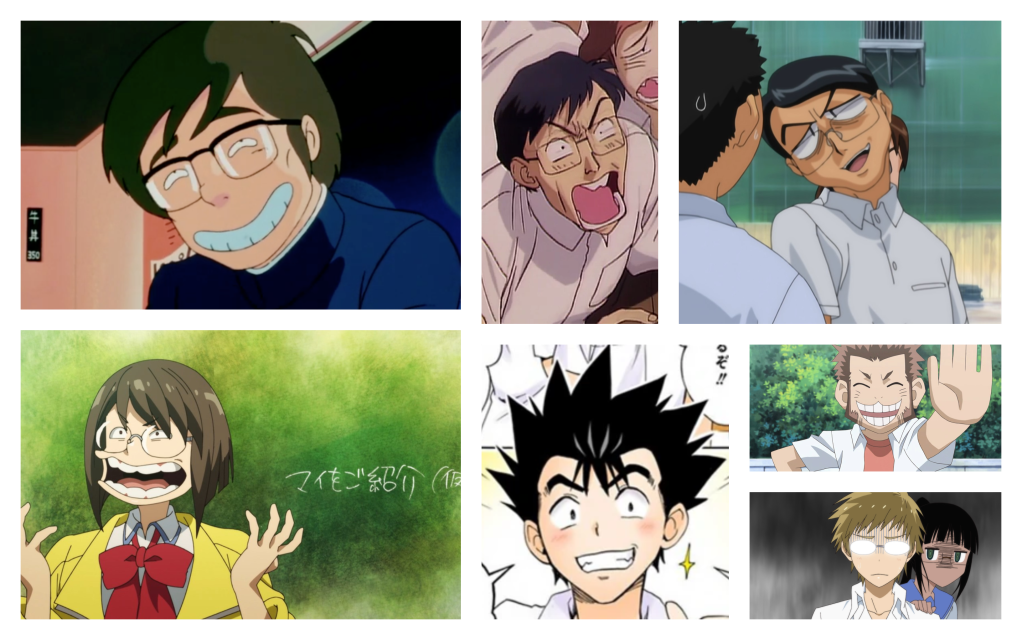
There’s often a girl with a troubled gender identity (Ryuunosuke, Run, Tsugumi, Sun, Bamba) and their dad’s refusal to acknowledge them as a girl for some questionable reason or another is the cause of much conflict (Ryunosuke’s dad, Claude).

The bride’s father is an imposing man who towers over the protagonist (Lum’s dad. Sun’s dad, Gid. Mai’s dad). The groom’s father is instead much the opposite, and the mother is easily swayed by other men (Ataru’s, Sun’s, Mizuho’s). The bride is often the princess of some unsavoury group (Oniboshi, Setouchi, Deviluke, Beehive gang, mafia). The protagonist’s best friend is a sleazy guy infatuated with the invader, and as part of the gag often has a monkey motif in his design (Megane, Saru, Saruyama, Kitamura, Shuu, DearS friend,).
As far as recurring gags are concerned, there are a few which will always show up. Urusei Yatsura is a slapstick comedy so things coming after it will usually have the protagonist getting caught up in precarious situations played for comic effect. Genderswap jokes happen in a lot of series too. The invader has running jokes such as her inability to cook something suitable for humans, like Lum’s extreme spicy food or Lala’s dark matter flavouring. A lot of the time they sleep in the protagonist’s wardrobe, either as is, or by creating an interdimensional space within it.
This is a huge chunk of media wherein all roads lead to Lum. So if it looks, feels and sounds like an Urusei Yatsura – it’s probably an Urusei Yatsura.

Homage: Urusei Yatsura
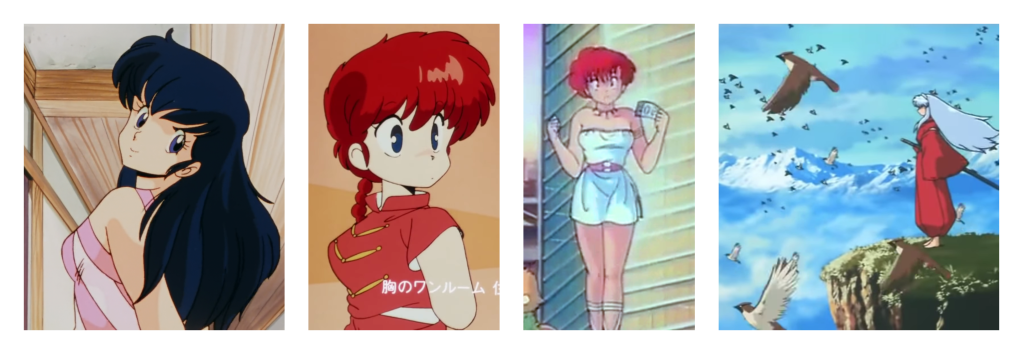
To begin with, before getting into anything external, I suppose the first point of interest ought to be Maison Ikkoku (1980). It’s another Rumiko work and so it naturally has traces of her defining Urusei Yatsura in it. Aside from the Tomobiki cast cameoing all over the place, the friction between the Godai, with his financial struggles, and the annoyingly rich Mitaka, immediately reminds one of Ataru and Mendou. That’s to say nothing of the obvious physical resemblances which stem from their shared character designer. Though it’s not limited to just them. With Rumiko’s library in general you’ll very quickly notice that she always draws one girl with this particular style of long black hair. You see it in Sakura, Kyouko, Akane and Kagome. Akemi looks a lot like Ran too.
The Urusei Yatsura cast show up quite a few times in Maison Ikkoku. There are more background cameos than I could hope to catalogue here. Lum, Ataru and Ran are constantly seen in the background, and any time a character walks through a crowd you’ll surely spot Ataru’s parents, Onsen Mark and the Stormtroopers. Kotatsu Neko merch lines every shop, and character can occasionally be spotted reading Urusei Yatsura itself.
You’ll find cameos in other Rumiko works too, like a mural of Maris the Choujo (1986) in Urusei Yatsura’s anime, and then the gang subsequently appearing at the beach in her OVA. Ranma 1/2 (1987)‘s comedy naturally feels familiar to it. Ranma’s genderswapping is magical in nature, so the setting falls under this supernatural umbrella. Those two series each have a girl that resembles Lum. Sue is a girl with pointed ears and a bikini who shows up near the end. Shampoo’s bangs and sideburns vaguely align with Lum’s.
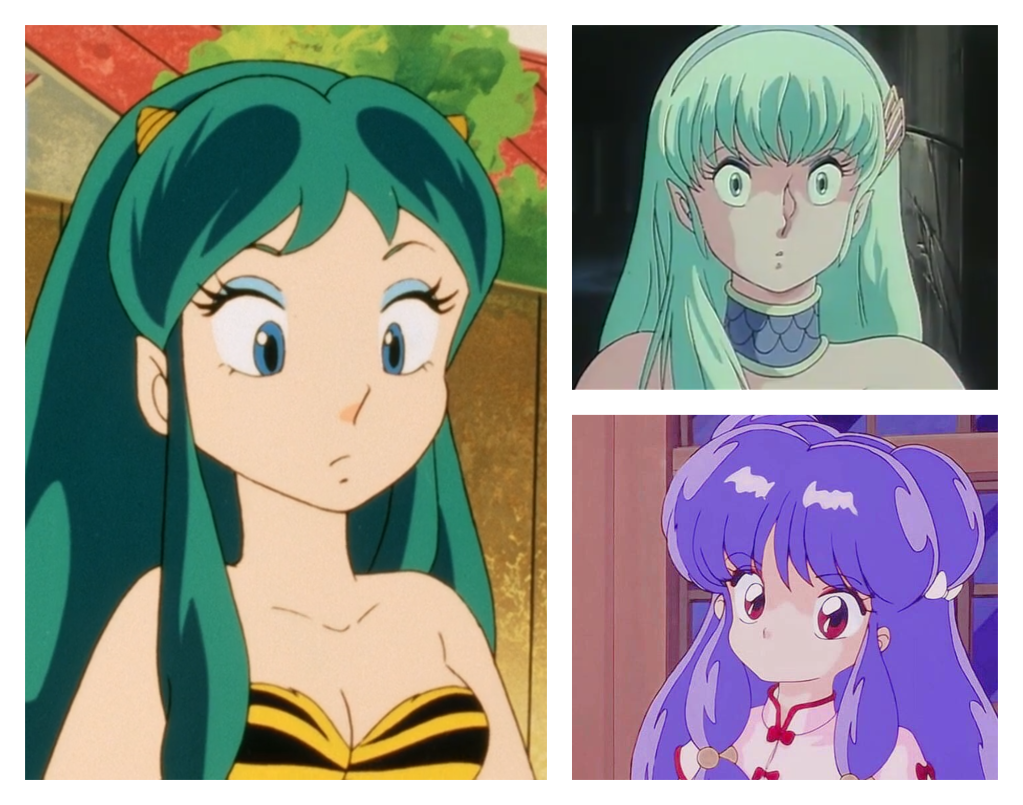
However in this discussion of Urusei Yatsura’s impact on Rumiko’s own body of work, Inuyasha (1996) is the most notable for being her main other entry into the invader niche. The sequel Yashahime (2020) features a cameo from Lum’s Stormtroopers.
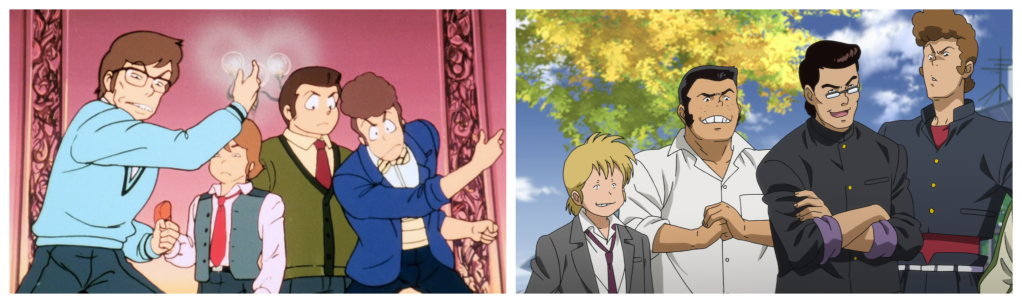
The premise of Maison Ikkoku influences other similar dorm romances, such as Kawai Complex (2010) and Kanojo no Kagi (2008). The character dynamics of which also influenced its creator’s next work Okusama ga Seitokaichou (2011). That one’s opening scene with the condom throwing then may have been an inspiration for Shimoneta (2012), and Kanojo no Kagi’s bit with the lookalike pornstar could have been what inspired that same element when it shows up in Yuutosei to Himitsu no Oshigoto (2018).
Homage: Urusei Yatsura
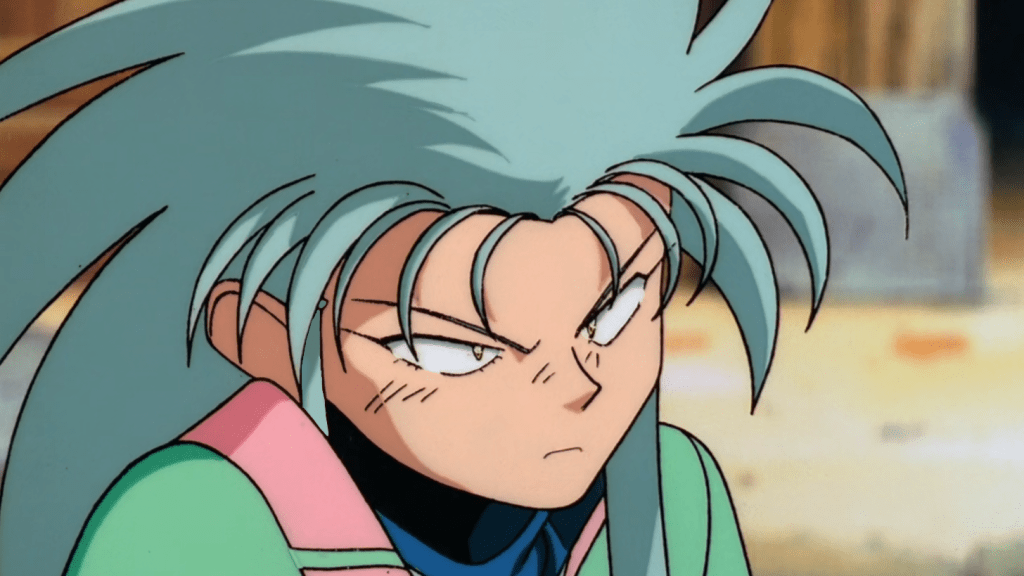
Tenchi Muyo (1992) is another prominent cohabitation series where an alien forces the male lead to take her in. It’s a very prolific franchise that has put out new entries as recently as 2020. There’s a whole selection of different spinoffs and interpretations of the setting, and the majority of them are works I’m not yet familiar with. But the original story goes like this: Tenchi has helped out at his grandfather’s shrine since he was a child, constantly hearing legends of the terrible oni that was sealed in the cave up the hill. The notion fascinated him, but naturally his grandfather forbids looking into it any further. Once he becomes a teenager Tenchi finally goes to investigate, accidentally breaking the seal, which causes the mummified demon at the bottom to stir. In a panic he slaps the seal back together and escapes the cave, but the next day he finds himself chased down by the unknown regardless. The girl has Lum’s massive sideburns, blue hair and a mean streak not unlike the oni, but she reveals herself to actually be a space pirate named Ryoko. Tenchi Muyo is a franchise that adapts elements of the japanese mythos into a space drama, so Ryoko is thusly an oni from space. Ryoko is sassy, violent and generally invokes the image of Lum. She has no common sense at the start and no reservations about upsetting others to entertain herself. When Sasami gets lost on the mountain she would sooner use it as a chance to flirt with Tenchi than be worried about the missing girl which is quite similar to how Lum was in the early days. Ryoko can fly, and when she gets angry there are times she causes sparks.
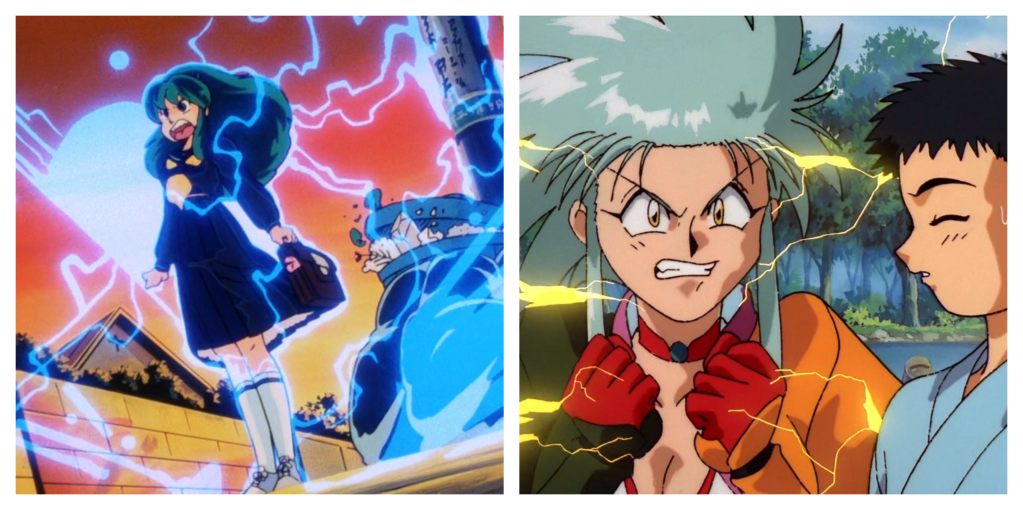
There’s a whole string of conflict during the introductory episodes, but once everything has settled down Ryoko makes her way to Tenchi’s home and the invader antics begin. By episode 2 the second invader, Princess Ayeka, has appeared. Rather than an oni, she resembles a Shinto goddess, and in this way her rivalry with Ryoko can come to resemble Lum and Shinobu. Her mother Washu joins the lineup by the end of the OVA. She’s the greatest genius in the universe and carries an according amount of snark, yet she also requests everyone treat her cutely. She’s the main schemer of the group. Her pink hair then sometimes makes the two oni like Lum and Ran. Washu builds a subdimensional room in Tenchi’s house, like Lala (To Love-Ru) and Nyaruko do further down the line.
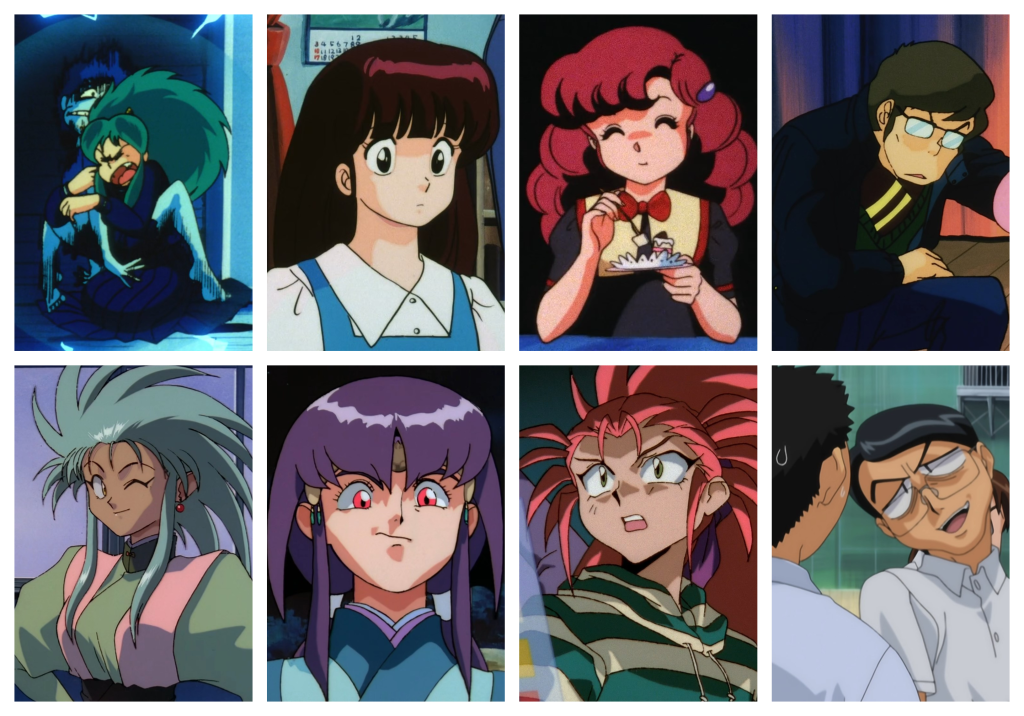
Ryoko’s spaceship – the Ryo-Ohki – is actually a small animal that transforms into the ship’s central computer when needed. This is likely the origin point for other AI mascots later seen in Onegai Teacher and Ano Natsu de Matteru, and her eventual evolution into a humanoid child inspires similar developments in To Love-Ru and Nyaruko.
The eventual spinoff series Ai Tenchi Muyo (2014) has a girl who wears Lum’s tigerprint bikini and boots under her uniform.
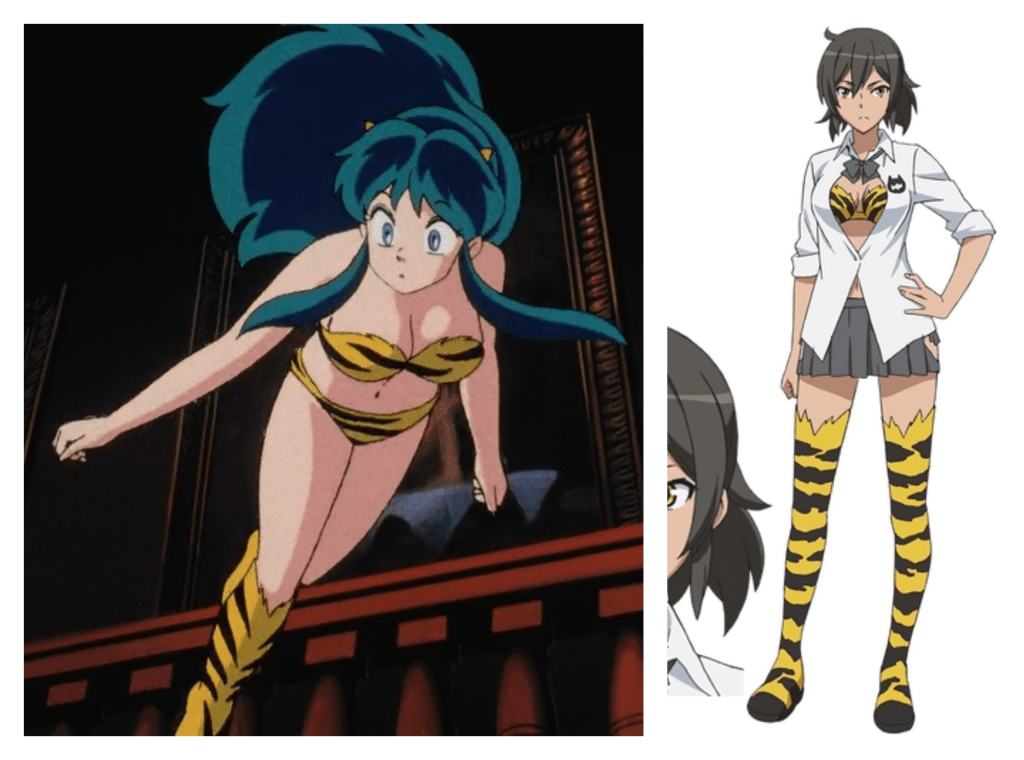

Homage: Urusei Yatsura
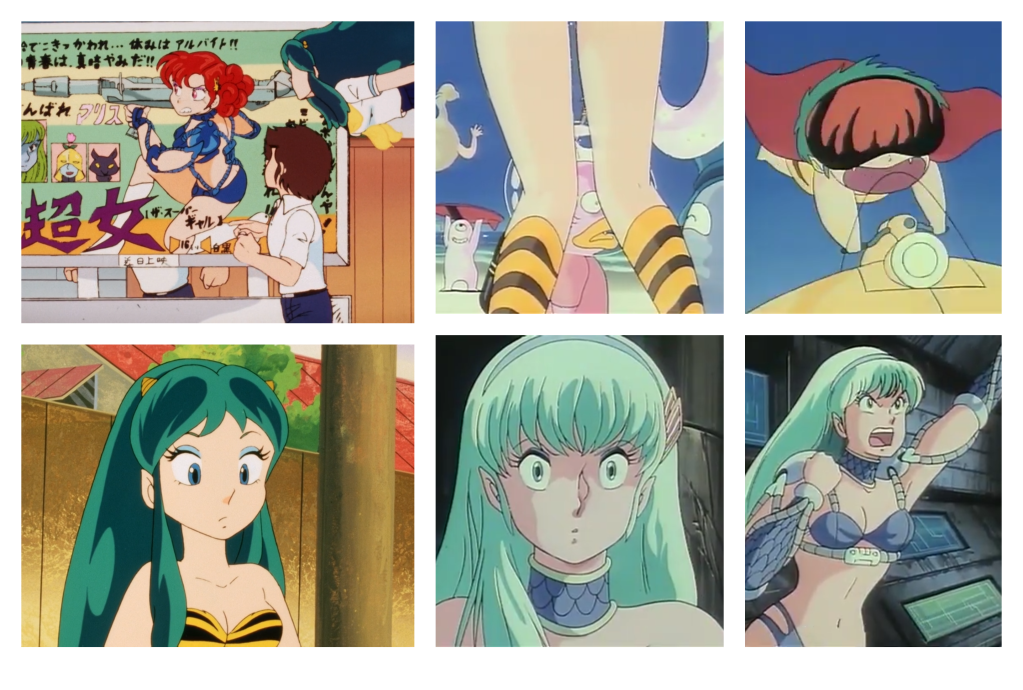
Next is Star Twinkle Precure (2019) which, although not a romcom, prominently pulls inspiration from Urusei Yatsura. Cure Milky is a sassy alien with turquoise hair, pointy ears and lightning powers. Interestingly enough her real name Lala Hagoromo is not the only Lum-a-like to be named Lala. Her “lun” speech quirk sounds like Lum’s name, and her mother’s appearance and country accent also offer that resemblance.

Its two ending themes are city pop tracks, the genre of music with which Urusei Yatsura has come to be synonymous. There are some shot references that follow along with this. PaPePiPu Romantic begins with the same silhouetted cityscape as when Lum, Shinobu and Ataru are dancing in Lum’s Love Song, with the city itself dyed in the iconic blue-pink gradient of Cosmic Cycler. Pastel stars hang upon a blue night sky; an aesthetic seen in nearly all of Ursuei Yatsura’s openings, which is one of the most common things to be referenced. The heart-shaped nebula that the Precure are trying to purify also has some level of aesthetic synergy with the hearts in Urusei Yatsura openings such as Dancing Star or Rock the Planet.
Precure endings always feature dance routines, but this is probably the spot to highlight that anyway. Throughout the history of things influenced by Urusei Yatsura you will commonly observe city pop and/or the characters dancing in the opening animation, as the dancing is quite indicative of Urusei Yatsura. This shows up in other spots like Kannagi, Seto no Hanayome, Sora no Otoshimono, and Kemeko DX, for example.
Homage: Urusei Yatsura
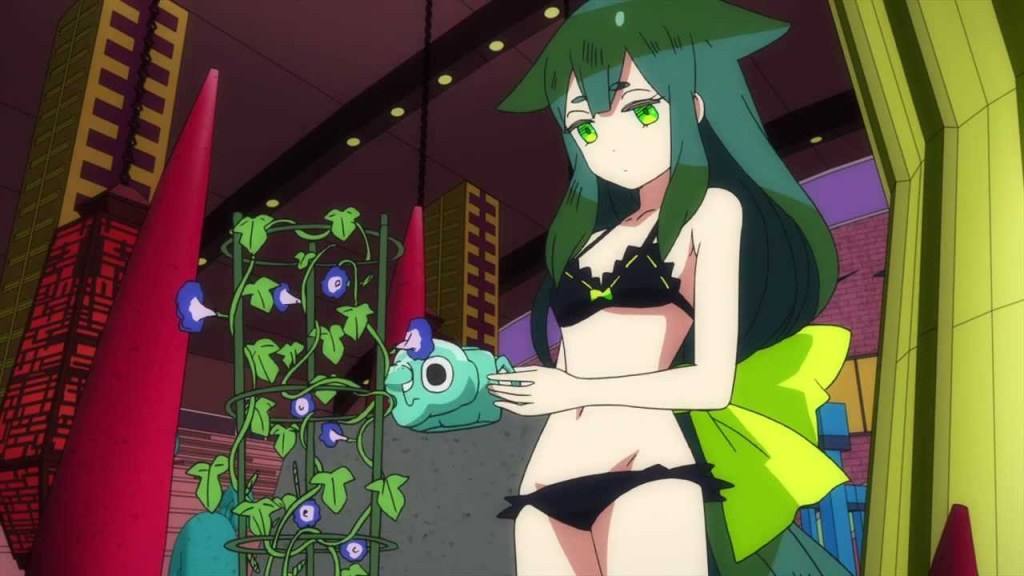
In mentioning series with an isolated amount of design homage, there is also Utsutsu Miya from Gatchaman Crowds (2013) who has similar bangs to Lum, green hair and frequently walks around in only a bikini. Similar to the multiples of “Lala” she will not be the only Lum-a-like that gets named “Mia”. But that’s the extent of any design similarities and as I recall their personalities are nothing alike. Gatchaman Crowds has nothing in common with Urusei Yatsura.
Homage: Urusei Yatsura
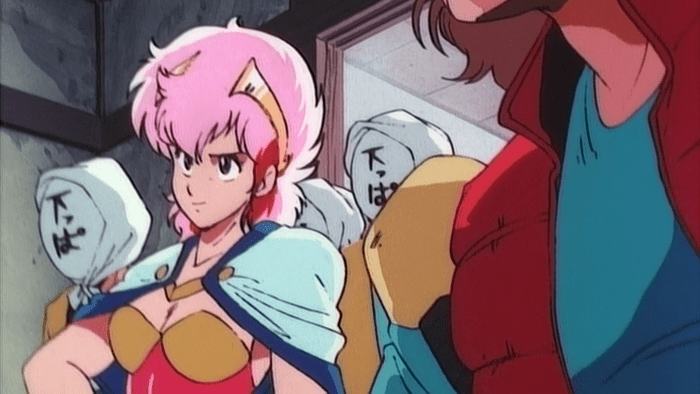
Prefectural Earth Defense Force (1986) appears to be explicitly linked to Urusei Yatsura, perhaps due to recurring episode directors Keiji Hayakawa and Tsukasa Abe, together with scriptwriter Kazunori Ito. Look at me, pretending I know anything about anime staff. Rumiko herself doesn’t appear to have been credited with the project, but the stylistic ties are too blatant to write off. It uses the same humour and art style, while appropriating some of its signature directing techniques like those over-animated running shots, or hiding single frame easter eggs inside of effect animation. When they infiltrate the school the girl wears the Tomobiki uniform and they even incorporate that stereotypical black-haired beauty whom I mentioned shows up in every Rumiko work ever.
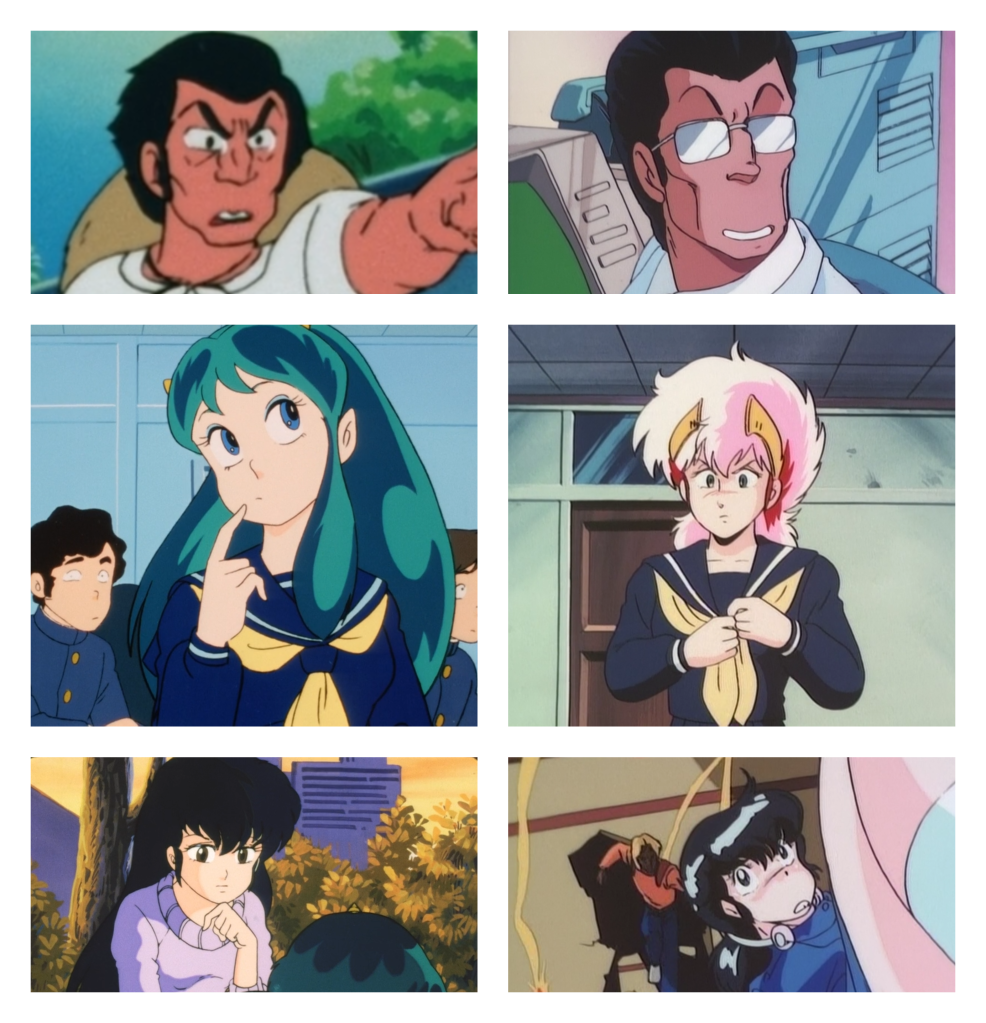
From what I know of both things (AKA effectively nothing) my gut feeling is that this may have influenced Project A-ko (1986) in the ensuing months, but I haven’t seen that and at this point I feel it makes more sense to wait for the upcoming remasters (note: yes this script has been in production for a year and a half, those remasters are well and truly released by now).

Homage: Urusei Yatsura
Has an Urusei Yatsura flair to it in how yandere demon girl Kisara and ex-girlfriend Ayano compete for a guy who is ostensibly a scumbag. Additionally there is a Mendou-esque character competing for her affections. Deals with undoing a memory reset at the end, like many Final Chapter-inspired events.
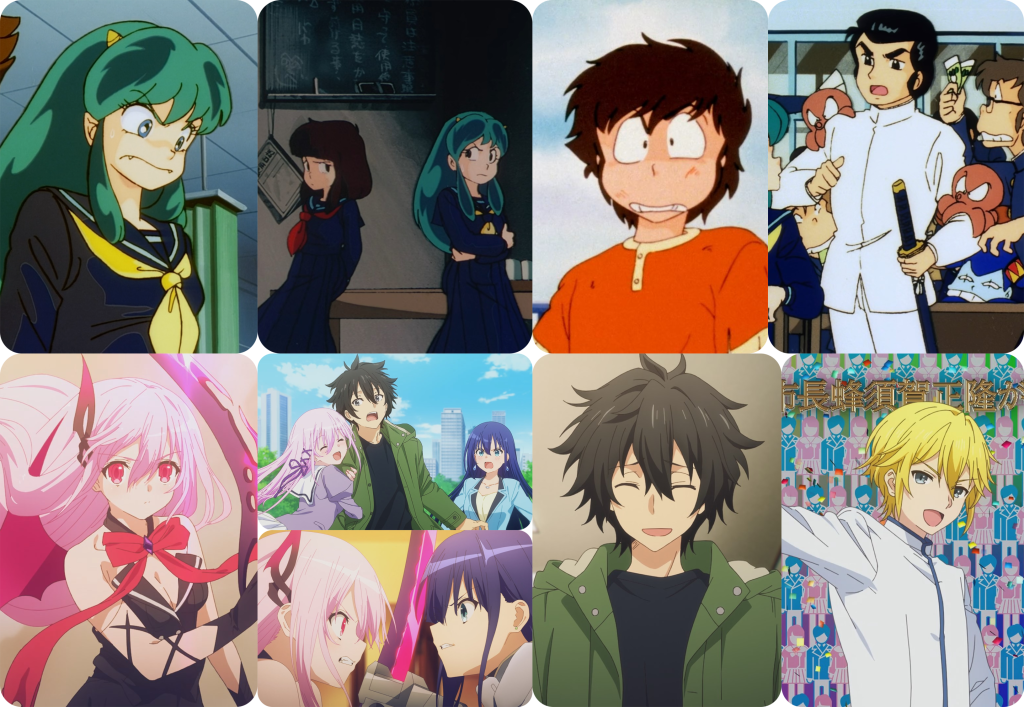

Homage: Urusei Yatsura + Megami-sama
Generally I consider To Love-Ru to be Urusei Yatsura’s main successor, but for what it’s worth Seto no Hanayome (2002) might be the most blatant one which I’ve encountered yet. The main girl is a demi-human bride with a country accent. The names Lum and Sun are similar, and if you actually look at the shapes their hairstyles are designed the same way too. The middle bit, bangs bordering the face and long parts coming off the bottom of the bangs. This shows up quite often throughout the lineage. However as a way both to draw attention to the connection as being deliberate, and to head away from any plagiarism concerns, she is a functional inverse to Lum. Unlike the bikini-clad babe who hit the scene in late 1970s to radicalize stereotypical gender roles, Sun often preaches about bridal training or how a wife should follow three steps behind the husband, and in this case it’s instead her friends who are constantly telling her off for how outdated that mentality is.

Maybe that’s a trace of Belldandy within her, from her own subniche of the ‘fantastical housewife’ (which I will address later). If so, we could use that to potentially point out Sun having her same light-brown shade of hair rather than the striking green of Lum. With the colour-scheming, Sun and Nagasumi do replicate the image of Belldandy and Keiichi. This would also explain why her hair doesn’t line up with the this series’ Ran homage’s standard pink hair either.

She comes from a yakuza household. Ruffians not unlike the Oniboshi. Many of the group accompany her to her new home. First are her parents, of whom her father is a towering brute objecting to her marriage, and her mother is a seductive nurse like Sakura. The miniature bodyguard Maki fills the role of Lum’s annoying little cousin Ten. She immediately moves in with them and pretends to be a good girl in front of Sun, but secretly attacks her husband every chance she gets. Maki flies everywhere and launches water from her shell, as the inverse of Ten’s fire breath. The first romantic rival has the Shinobu bob. Her childhood friend Luna is next on the agenda. She wears an excessively cutesy mask on the surface but is rather vile and manipulative beneath that, and although she pretends to be nice at first the only reason she shows up is to enact revenge. All of which puts this pink-haired poison as a counterpart to Ran. The Mendou parallel is somehow even more obvious. They don’t even try and hide this one. Mikawa Kai is the heir to a massive zaibatsu who transfers into their class and begins trying to court Sun. His first appearance at school features him emerging from a submarine, much like Mendou skydives from his airship. Again, much of this cast are simple inverts of the Urusei Yatsura lineup. Mikawa has black hair, a white uniform and is constantly seen wielding a katana in places where he really shouldn’t be. Kai is unapologetically just Mendou. Like Sun and Lum, or Maki and Ten, he has the inverse trait of Mendou where rather than being scared of dark and crampled places he is instead terrorized by bright and open spaces. Nagasumi is more faithful to his wife than Ataru, though that’s not a hard thing to achieve. But his parents are directly modelled after Ataru’s. They’re constantly bickering and often question who on earth their son takes after when he does anything remotely bad. The father is a simple office worker who talks about his home loan a lot. Both mothers are constantly fawning over men more handsome than their husband.

In the ending, of the anime, Sun is invited to a party without realising that it was actually cover for the host to abduct her. The stakes are completely different to when this happened in Urusei Yatsura, but the concept isn’t entirely unlike Lum’s dad inviting her back to space for a party, without informing her it was a matchmaking party. Upon hearing the news, Ataru and Nagasumi then board one of the clan’s ships to break into the hall and bring her back home, despite it being uncharacteristic and totally out of their depth.
Homage: Urusei Yatsura
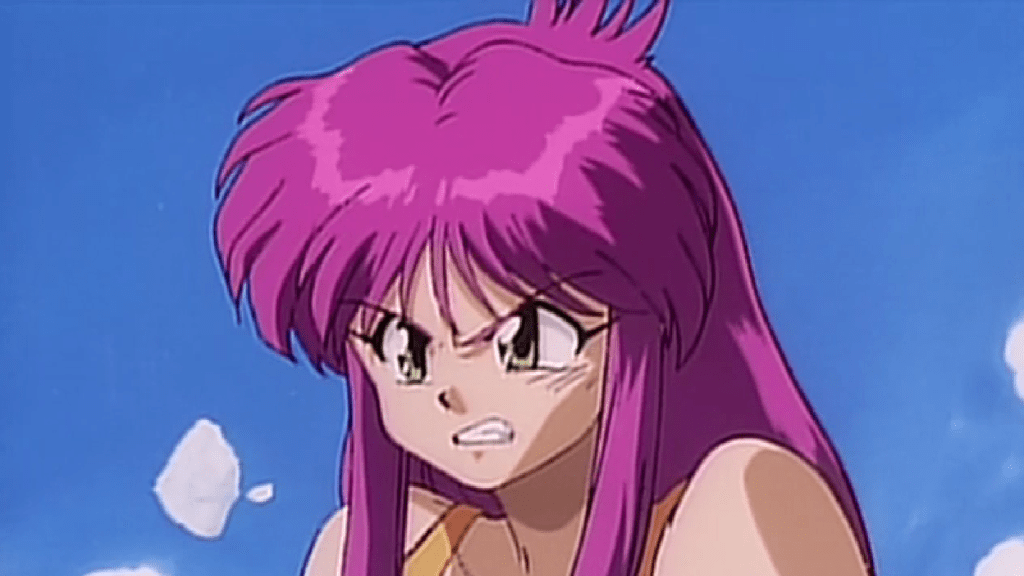
Cat Girl Nuku Nuku (1990) is one wears its inspiration loud and proud. It has no elements of romance, but instead centres itself upon the invader’s absurd comedy. The series focuses on the aforementioned Nuku Nuku, an android girl built with the soul of a cat. At the start of the series protagonist Ryunosuke and his father steal her prototype from his wife’s company, not wanting it to be commodified or turned into a weapon. A stray cat gets struck during the chase and dies. Ryunosuke begs his dad for some way to save it, and so he decides to somehow fuse its soul into the android, giving rise to the mechanical invader here. Nuku Nuku’s hair is effectively just Lum’s dyed purple. No horns, but she does have the tuft on top as some kind of feature. In the third series her design undergoes a slight redesign that turns it a light green.
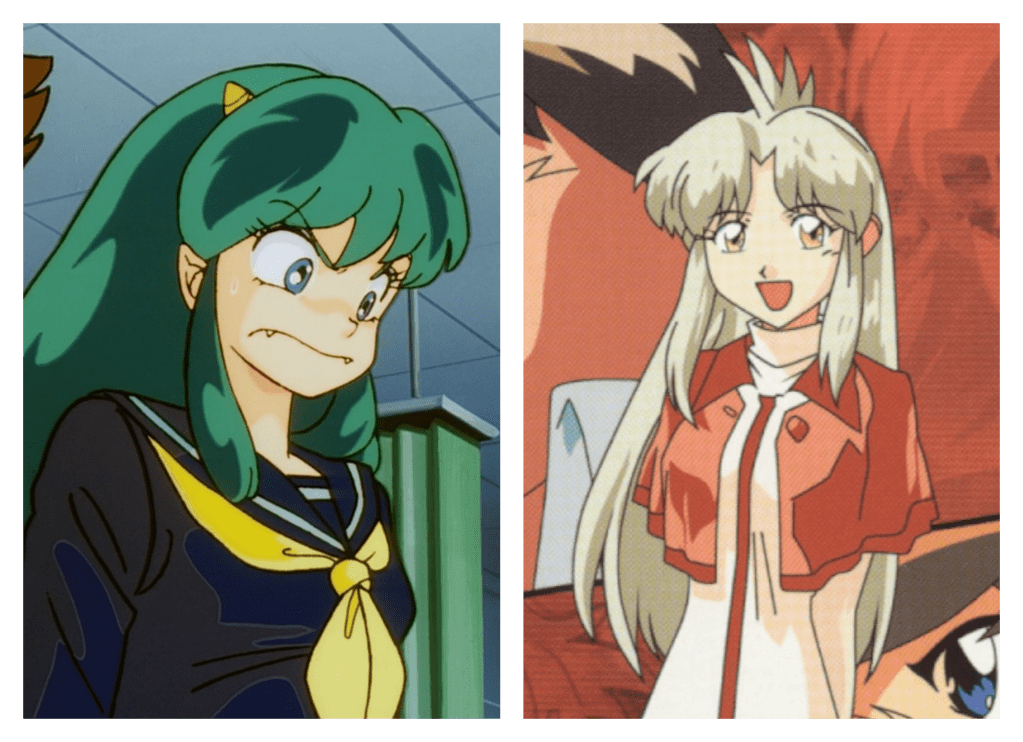
Nuku Nuku (not being human) is a girl with immense physical prowess, yet little in the way of common sense. The superwoman that any Lum-a-like will surely be. She can be spotted sleeping in a closet too, a behaviour replicated by many of her peers.
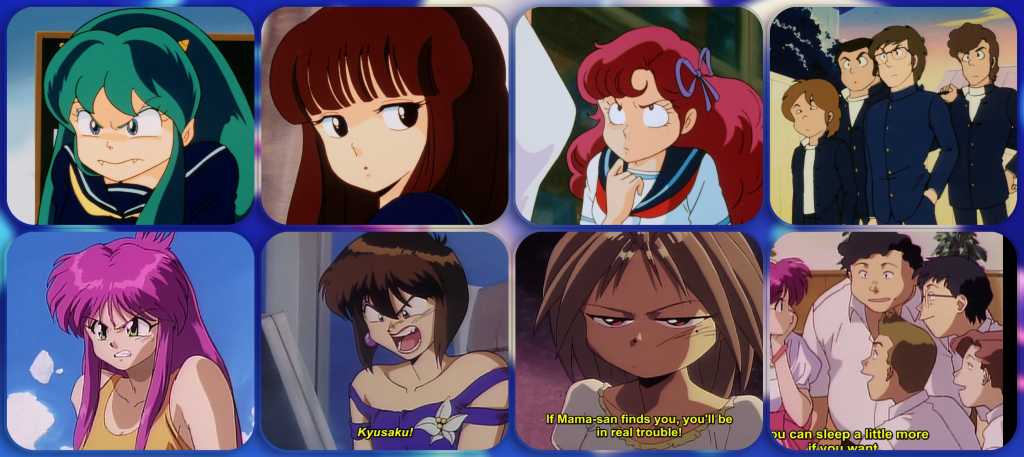
Nuku Nuku lives with Ryunosuke and his father Kyusaku, both of whom resemble the generic Rumiko male. The father is voiced by the guy who played Mendou in Urusei Yatsura. The rival character in this story is Ryunosuke’s mother Akiko. She’s divorced from the dad due to a difference in ambition and constantly schemes to take her son home. Akiko has the Shinobu bob and the same voice actor. There’s another android named Eimi who stands in for Ran, acting innocent during her introduction but then revealing her antagonistic nature toward Nuku Nuku. She’s petty and quick to violence. As an android too she’s the same kind of species as Nuku Nuku, referencing how Lum and Ran were both aliens from Oniboshi. Most of those homages are stock-standard for this subgenre, but this OVA series stands out for pulling in the entirety of Lum’s Stormtroopers. Which is decidedly rare. It’s common for a Megane derivative to be included in the lineup as the protagonist’s pervy best friend, but this is the only time I’ve seen something incorporate equivalents for the entire group.

Homage: Urusei Yatsura + Cat Girl Nuku Nuku
Usagi-chan de Cue (2001) also uses the concept of someone fusing with a dying animal to save its life, and accidentally ending up the romantic invader. Delinquent Mikami is fighting on the roof with a group of opposing ruffians, eventually getting launched off it. She falls right onto the school’s rabbit cages, injuring one. When she reaches out to it an unexplained flash of light engulfs her, and she becomes merged into a rabbit girl. This event changes her outer personality into a flirty extrovert constantly engaging in skinship with the protagonist Haru. Since he was the only one to know what was going on he invites her to move into his house. From there it’s as expected: Sex symbol to the protagonist and all-around superwoman.
Homage: Urusei Yatsura
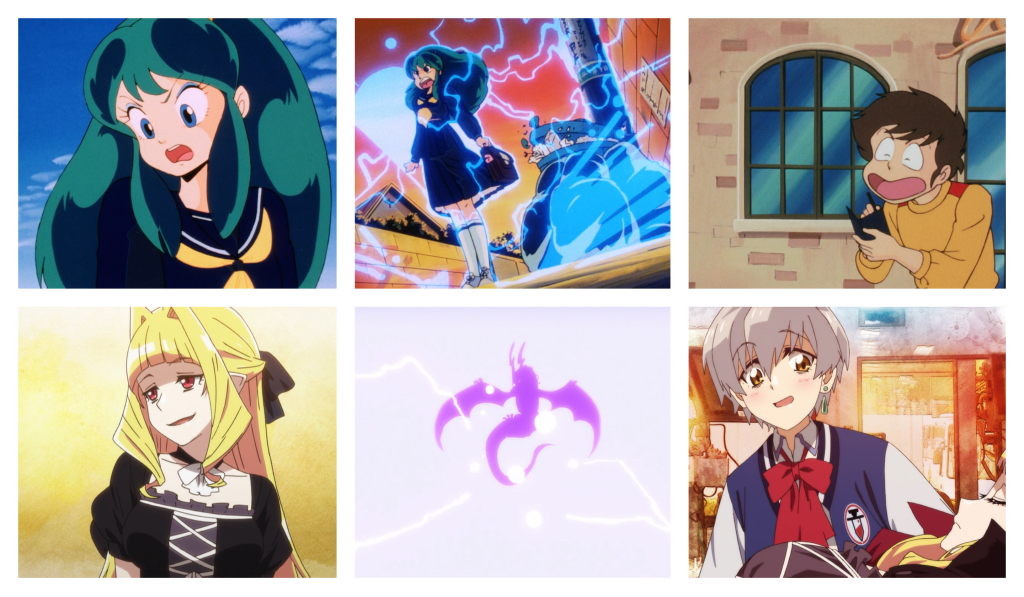
Vlad Love (2020) is another show which was deliberately styled after Urusei Yatsura’s episodic insanities. One of the characters at some point states that “references should be made clear”, and with this sentiment as the backbone of its many parallels Vlad Love is one of the most visible in how it borrows from Urusei Yatsura. In this case it has a unique air of validation due to the recurrence of director Mamoru Oshii. It’s a cohabitation romcom between Bamba and the vampire Mai, whom possess the design silhouette of Ataru and Lum. Bamba is a whimsical prankster like Ataru and openly lecherous toward beautiful girls, the most important being the vampire Mai who quickly makes her way into the same house and school. Though more specifically into the closet, which is where Lum had also slept during the nights she stays in his room.
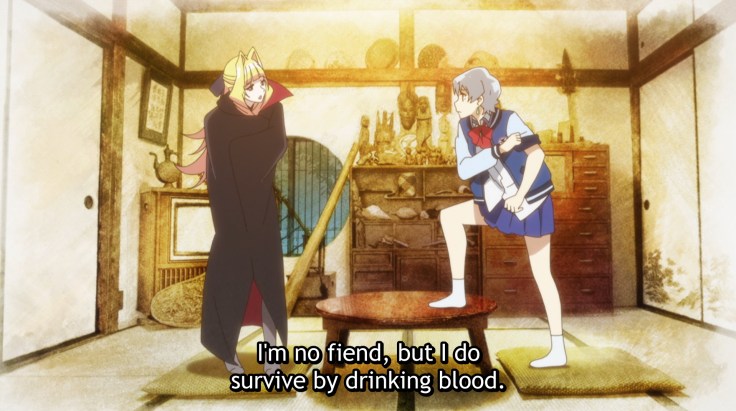
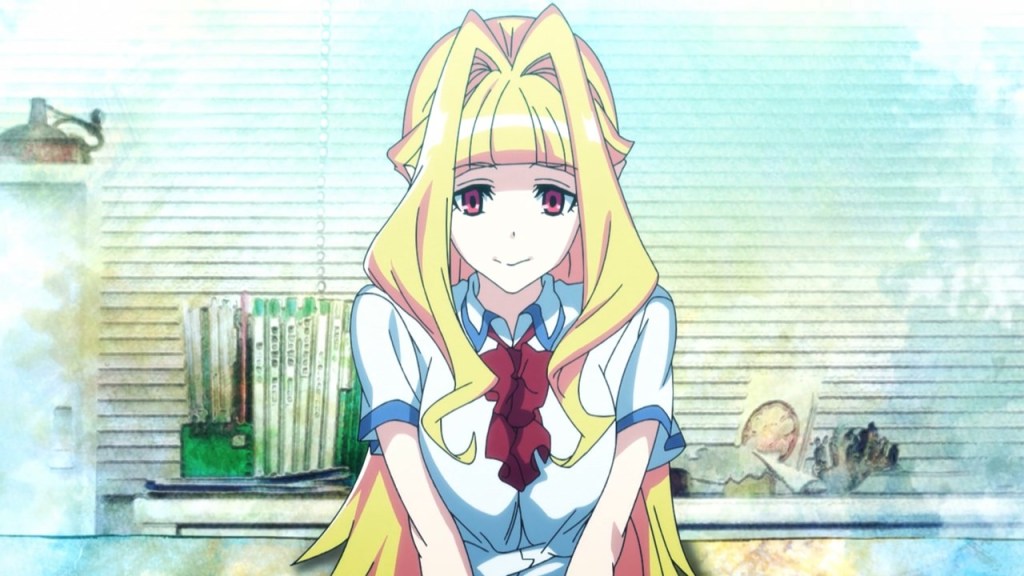
She introduces herself by saying “I’m not an oni, but I do like drinking blood”, making a knowing reference to Lum. She becomes smitten with Bamba’s kindness almost as quickly as Lum falls in love with Ataru, and with a similar lack of reason given. Mai’s hairstyle uses the same basic structure that I pointed out in Seto no Hanayome, complete with little wings that sometimes show up in place of the oni horns. She’s a tyrant who eggs on their fathers when they try to kill each other, and doesn’t seem hesitant at the idea of forcing Bamba to ruin her physical health in order to supply her with blood. She can fly if need be, has Lum’s innate ability to make friends with anything, and at certain points exhibits electricity in her transformations.
One thing I’ve always found fascinating about Urusei Yatsura’s anime is how much of a pop culture time capsule it is. The backgrounds often have cameos from things that defined that era of entertainment such as Godzilla, Star Wars, Superman and Kamen Rider. It was such an interesting moment hearing Ataru invite Shinobu to a date at “Star Wars 3” and then having to take a second to realise that at that point he would have been referring to Return of the Jedi. Vlad Love is designed the same way with pop culture references and cameos scattered all over.
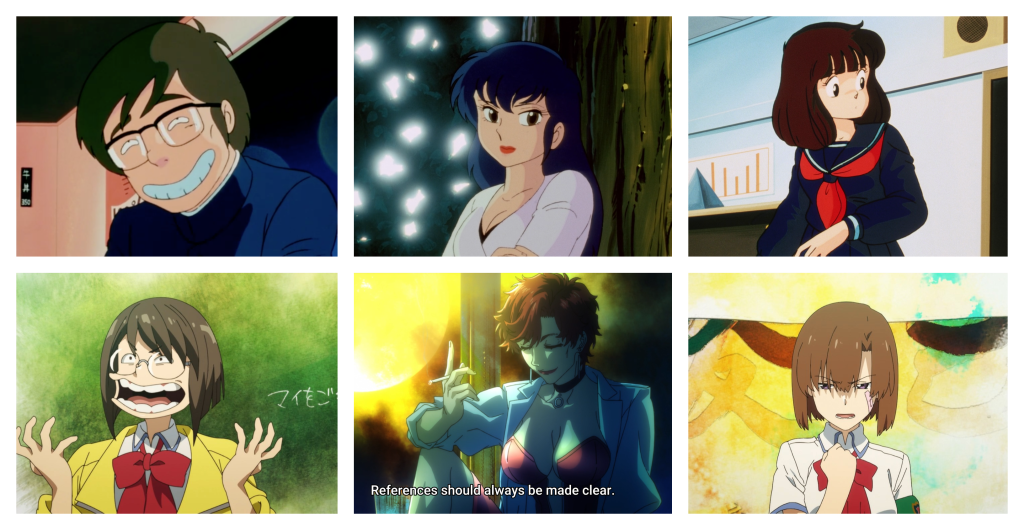
The glasses girl Maki is the captain of the cinema club in reference to Megane, and the voice acting of Nami also calls to mind his distinctively spastic screeching. Chimatsuri is faintly modelled after Sakura. She’s a bit of a maniac but the male student body still goes crazy for her anyway since she’s a beauty, and although that trope certainly isn’t anything unique it sticks out in the context of all the other Urusei references. Jinko is modelled after Shinobu. Both girls disapprove of the chaos the invader brings, and Jinko beats people up with a bin much like Shinobu and her signature table-throwing. When her father first shows up he mistakes her for a son, and when they’re arguing about why his wife let them their dynamics resembles Ryuunosuke and her dad.
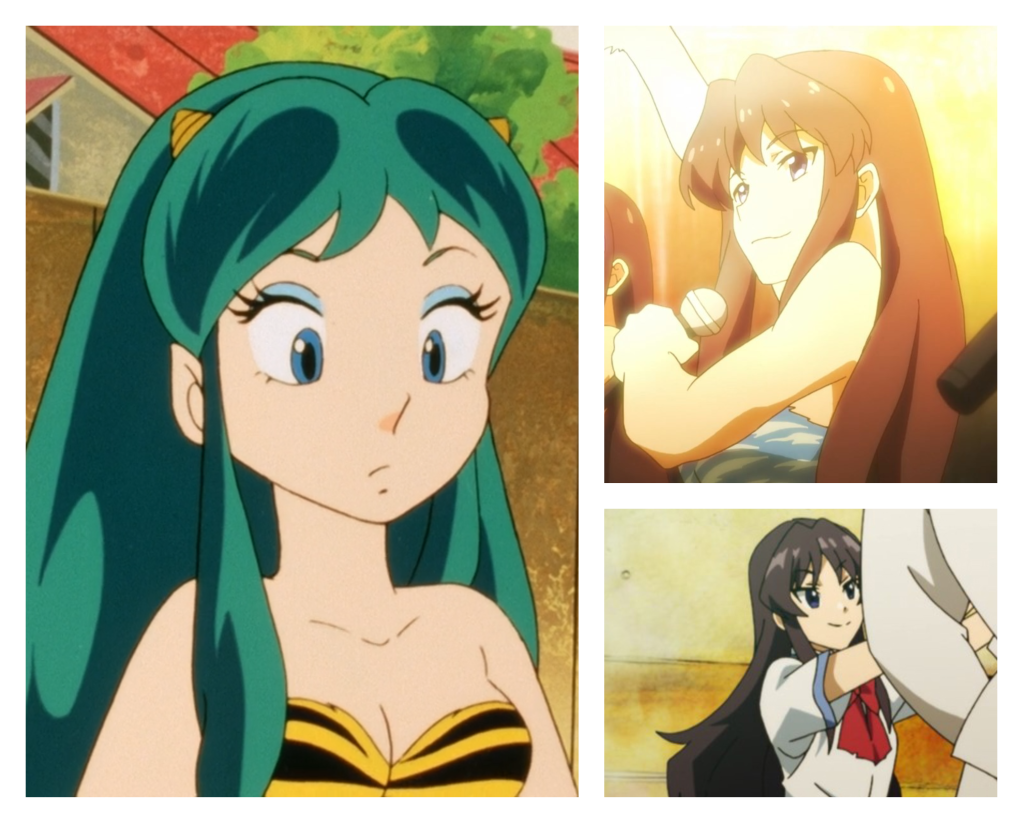
Whether it’s tangible references like the girl who cosplays as a Lum recolour or subtler things like a general familiarity in the style of the soundtrack compositions; since this is somewhat in the same tier of homage as To Love-Ru or Seto no Hanayome the throwbacks are simply too numerous for me to chuck them all into this one little summary.

Homage: Urusei Yatsura
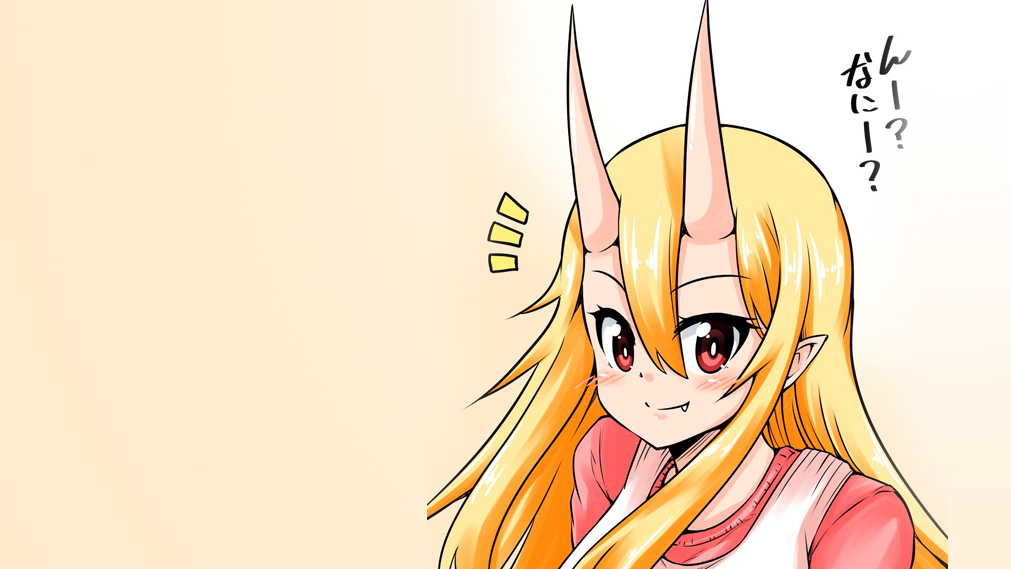
Oniyome wo Metotteshimatta (2019) is a short manga which, as the title suggests, is a forced marriage between Momotarou and oni princess Ura where they’re constantly butting heads like Lum and Ataru. Their cohabitation takes on a form resembling the romantic bout of Urusei Yatsura.
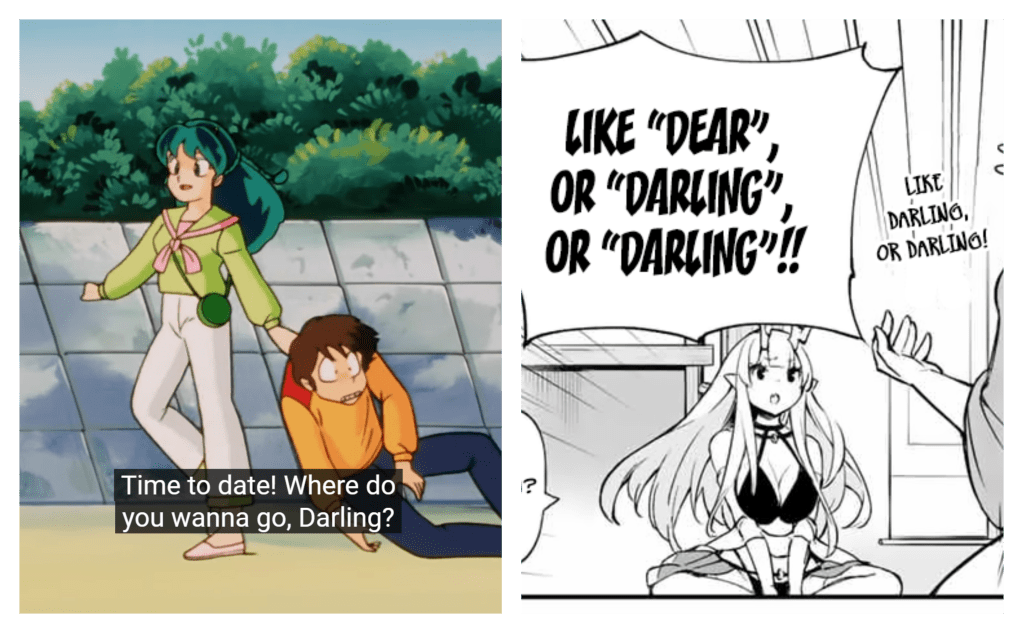
Ura is one of those Lum-a-likes who takes the more literal interpretation of being an oni or spending most of her time in a bikini, and in chapter three Momotarou vehemently tries to get his wife to start referring to him with the pet name of “darling”.
Homage: Urusei Yatsura
What I Get For Marrying a Demon Bride (2019) is another in this vein. It’s a romcom about the workaholic Tomoyuki and his energetic oni wife Mitsuki. Which, at a brief glance of MyAnimeList, seems to have started publishing only two days after the previous entry. Surely they’d have both been planning theirs for a time in advance, so that timing must have sucked considering how identical the premises are. Though unlike the previous one I don’t see any specific links to Urusei Yatsura here, it simply comes up because of its oni wife and as a point of reference for Oniyome.
Homage: Urusei Yatsura + Mikakunin de Shinkoukei
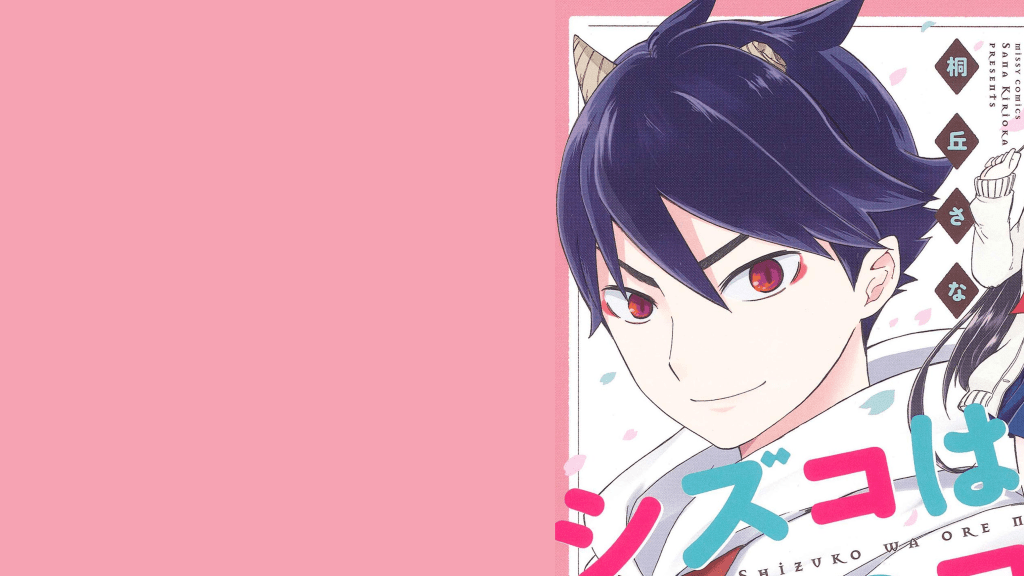
Shizuko wa Ore no Yome (2014) is a cohabitation romcom and something of an arranged marriage. Once upon a time an oni named Shuri had been wed to a girl named Shizuko. Unfortunately she was only human. This was a time before the proliferation of modern medicine, so when she falls gravely ill Shizuko passes long before he ever will. But on her deathbed she promises to love him for all time, and that surely she will reincarnate one day so that they can be together again. Shuri embraces this promise and seals himself in a stone statue. Only a millennia later would this finally come to fruition, when her reincarnation reaches a marriageable age and Shuri suddenly busts out of the statue. The two frequently end up butting heads since even though he wants to smother Shizuko with affection, she didn’t actually maintain any memory from her past life. All of the sudden a strange youkai has just become hell-bent on flirting with her. The eccentric way Shuri displays his love can make him feel as crazy as Lum was, but he isn’t violent. This series lacks much in common with Urusei Yatsura, besides being a romance story featuring an oni. Its framework actually pulls at a different series. What I would instead say is that by having a female lead character who is instead pursued by the male invader, and the story starting at her the time she becomes marriagable, this manga heavily evokes Mikakunin de Shinkoukei. As absurdist invader shoujo manga the two series have a very similar feeling.
Homage: Urusei Yatsura
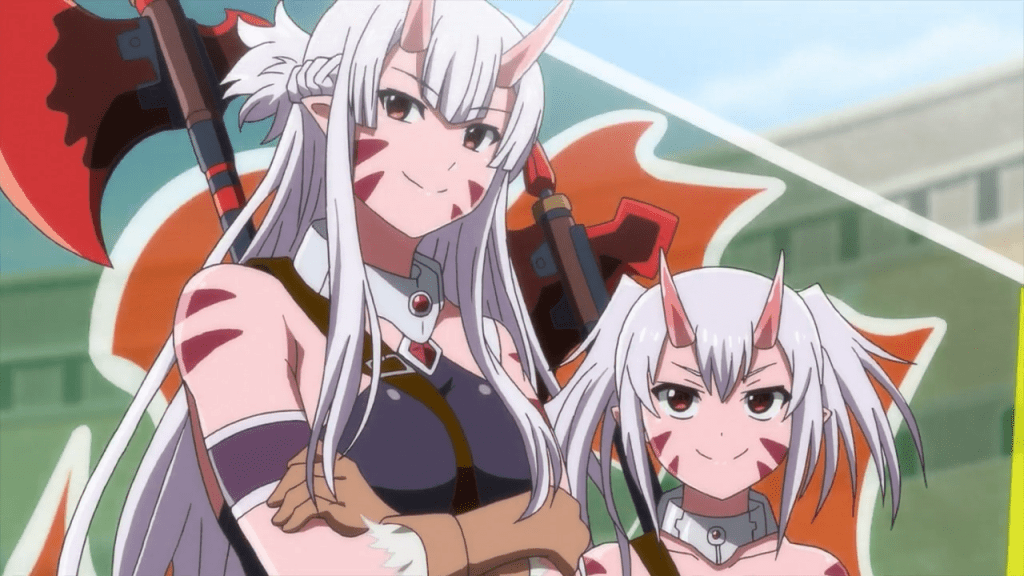
Since I decided on mentioning those last few for their oni association after all, I guess I have to profess that I did indeed watch Peter Grill to Kenja no Jikan (2017) too. It’s a fantasy setting so it’s up for debate whether it qualifies to be an “invader” story, but I’ll include it. The main conflict is about Peter’s attempts to resist the oni twins who keep trying to seduce him, because he wants to honour his engagement to a human girl. The oni girls are sex symbols pushing an aggressive agenda, while the fiancee is some exaggerated church girl that has no erotic knowledge whatsoever. That is, at a cursory glance, at some level, a manifestation of the Urusei Yatsura love triangle: the radical and the reserved.
Homage: Urusei Yatsura
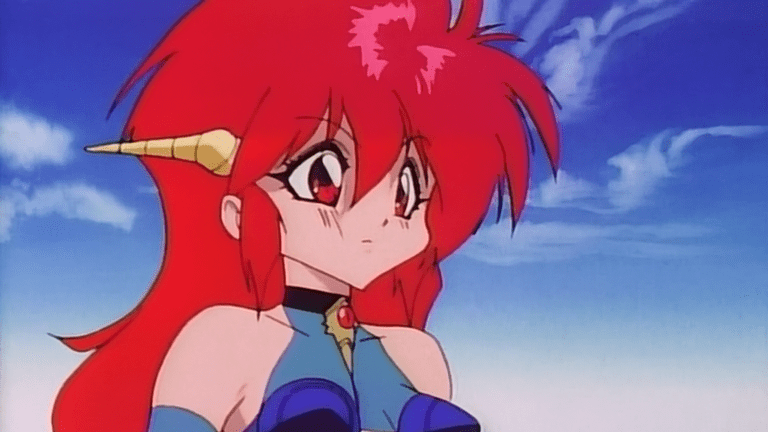
Perhaps even less connected than any of those is Dragon Half (1988) since not only is it another pure fantasy setting, but it’s not a romcom, marriage or cohabitation story either. It’s more just that Mink’s position as a demi-human 80s icon inevitably creates ties to Lum and her offbeat personality lines up well enough. Her design is obviously quite sexualised too. All things considered it doesn’t have any direct ties to Urusei Yatsura but it didn’t feel right to not mention it.

Homage: Urusei Yatsura
Dream Eater Merry (2008) is another one in that regard. Although this time it does use the familiar setup of being a cohabitation romcom set in a predominantly human world, it doesn’t have many direct ties to Urusei Yatsura. It’s mostly bits and pieces of Lum’s greedy personality that show through in Merry and the way she imposes on the protagonist’s household. If I’m mentioning Dragon Half then I may as well put this one in too, is how I feel concerning its placement. Anything with demihuman cohabitation takes a degree of inspiration from Urusei Yatsura based on genre alone.

Homage: Urusei Yatsura
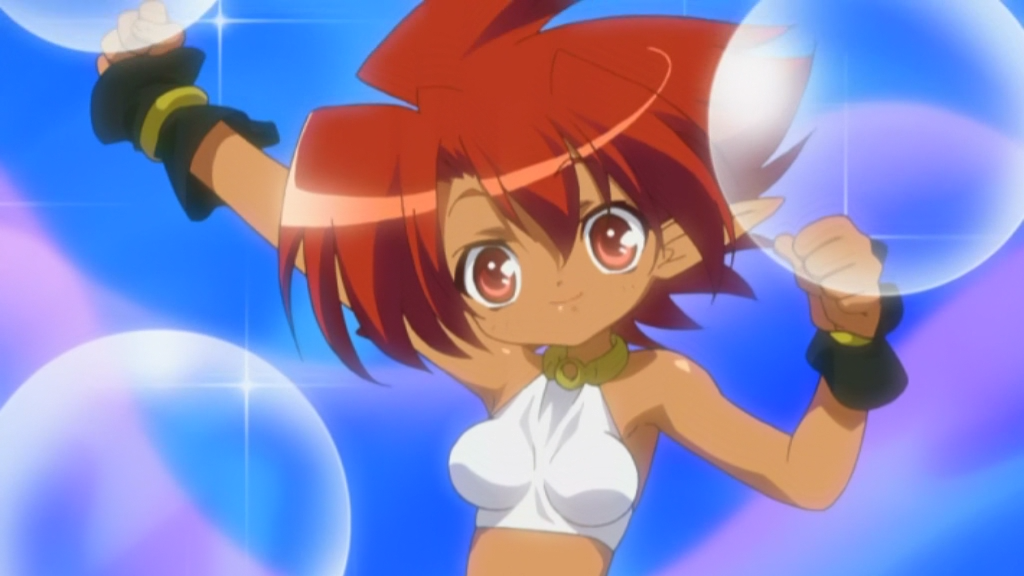
In this segment it appears that what I was doing was organising a string of entries where Urusei Yatsura is the main prerequisite. These last few were things that sprung out of the demihuman romance niche it pioneered, and not necessarily ones with tangible nods to it. So, out of nowhere, here’s Ram from Re: Zero (2014); a sassy pink-haired oni with a deceptive personality and a mean streak. Her name is similar to Ran’s and thus perhaps pointing toward this. Ran’s family live on Oniboshi but their species is never actually specified, but that can potentially be addressed by mentioning how Ram has no horns either.
Homage: Urusei Yatsura
Macademi Wasshoi (2003) is a fantastical cohabitation story where the pointy-eared girl Tanarotte is accidentally summoned as the familiar of Takuto. Sex symbol, tyrant and all that contained within. She evokes Lum by constantly clinging to the protagonist’s back and generally making him flustered with sex appeal. Her supernatural powers inspire many antics in this series’ goofy setting. At one point they hold a sports festival. There’s a cosplay race during this and Tanarotte, the Lum-a-like of this series, is chosen to wear a recoloured tiger bikini. During this event the announcer even acknowledges Lum by name.

Later on in the series a green-haired Belldandy figure joins the ensemble, but I’m getting ahead of myself in mentioning that. The idea behind this whole piece is such a nightmare for me in terms of figuring out where to best place things in consideration of their prerequisite entries. But when I do get to Megami-sama, just remember that Macadami Wasshoi has both a Lum and a Belldandy competing for the protagonist’s attention.

Homage: Urusei Yatsura + Macademi Wasshoi
I’d been curious about whether to include this one on the list for a while, and finally rewatching Zero no Tsukaima (2004) last year affirmed that I should have it on here after all. Although both characters are human, the odd circumstances of Saito’s arrival in the isekai world throw a fantastical twist on their cohabitation. His accidental summoning could perhaps be tied back to Tanarotte. Louise’s all-consuming jealousy and the severe violence she exhibits whenever her partner is unfaithful channels the relationship of Lum and Ataru. After a certain point she even gains the ability to start punishing him with electrical explosions. Marriage eventually enter the equation too.

The main love triangle calls to mind early Urusei Yatsura. In one of the later seasons we find out that Siesta’s grandfather was a man teleported over from Japan himself, and that she therefore has Japanese blood flowing through her. The short, black-haired appearance on a housekeeper is somewhat that of the traditional yamato-nadeshiko. Her energetic personality and outwardly sexual flirting are at contrast with that demure definition, but either way it centres on this battle between the racial interloper and the japanese girl, which is what Urusei Yatsura was itself originally penned as – a romantic conflict between the radical Lum Invader and the traditional Shinobu. So these two become similar.

Homage: Zero no Tsukaima
Whether Zero no Tsukaima and Toradora (2006) actually share any kind of link in the original works, or if it’s solely an anime-original connotation resulting from the legendary Kugimiya Quartet, is something I’m not equipped to comment on. I’d like to believe there’s a connection operating at that level, but I’m not exactly invested in that answer to the point of reading either LN. Toradora gets grouped into the Lum-a-like genre for a few key reasons regardless. Namely, Taiga’s brutal personality harking to Lum or Louise. There’s always this character imbalance where the insanity of the love interest is at odds with the mundane protagonist, and it creates something to the effect of a lion tamer. They have vastly different definitions of ‘normal’, so the protagonist wrestles with the invader’s aggressive behaviour in order to better understand them and avoid getting bitten. Perhaps none embody that better than the romantic warzone of Ryuji and Taiga.
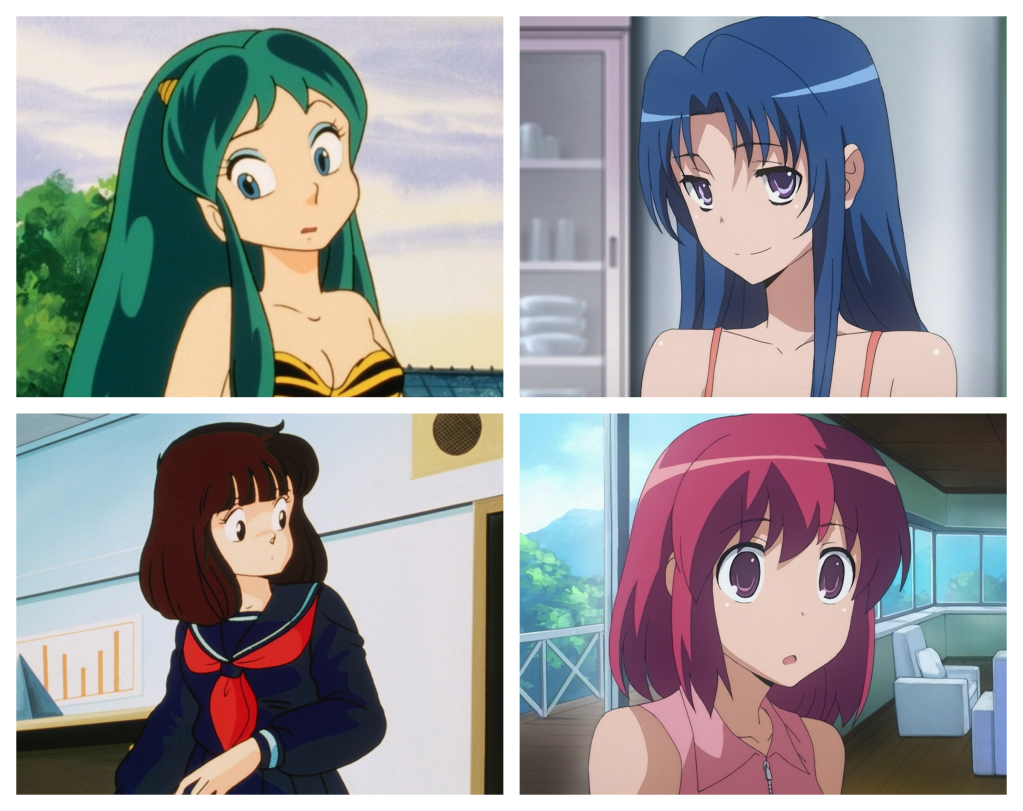
In episode 10 when the group enters the seaside cavern on a test of courage, Minori mutters “kurai yo, semai yo, kowai yo” (“It’s dark, it’s cramped, it’s scary.“), to which Kitamura chuckles and mentions that he might’ve heard that line somewhere before. This is the catchphrase that Mendou recites whenever he gets caught in a dark place, due to his phobias. So this moment reveals that Urusei Yatsura was definitely on the radar when Toradora’s anime was written. With that established, we can infer that Ami and Minori’s hairstyles are deliberately mimicking Lum and Shinobu, and that Taiga’s violence does have a history behind it.
Toradora was a massive success. A lot of people loved it, read it and referenced from it, so it has an effect on a number of later series. In the first episode, Ryuji mistakenly receives Taiga’s love letter for his best friend, and to offset her embarrassment he reveals his crush on her best friend. It’s one-sided from there on out, but the basic idea of the series is that the two of them have agreed to cooperate as insiders in their romantic pursuits. Fuufu Ijou, Koibito Miman (2018) is a cohabitation manga using that same idea. Japan’s declining birthrate (or whatever meme that was) has led the country’s school system to incorporate a mock-marriage course, where each term students are paired to act out marriage and get graded on their performance. Jirou and Akari are stuck together despite not being able to stand each other at first, and thus when the topic of romance comes out they quickly decide to support each other in their crossed relationships.

The earliest point at which I’ve seen this whole government-ordained-marriage plot was in Sore wa Totsuzen, Unmei no Aite ga (2010), while its most relevant instance would be Koi to Uso (2014). The latter also sees Ririna initially supporting Nejima on the crush he already held before their pairing, much like the situations in Fuufu Ijou and Toradora.

Homage: Seto no Hanayome
Seto no Hanayome’s yakuza bride might have inspired Final Approach (2004). This girl is human but channels the nonsensical superwoman anyway. The same can be said of Nisekoi but that won’t get its turn until much further down the line.
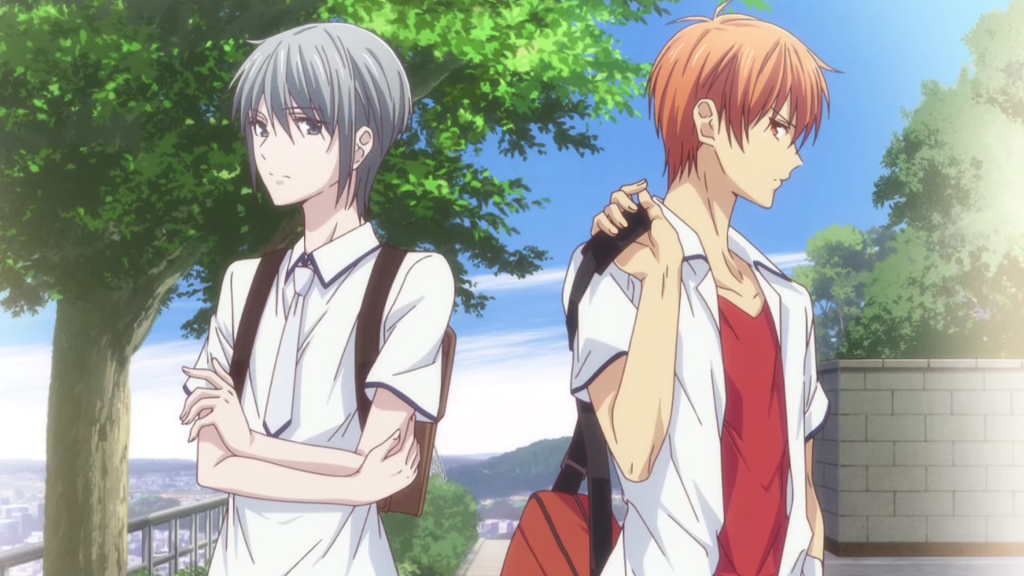
Fruits Basket (1998) is probably one of the more uncommon fantastical cohabitation romances in that, at least where I reached before falling behind in the remake, there weren’t a whole lot of visible ties to Urusei Yatsura. Though an argument could be made for Kagura’s tendency to physically injure her self-proclaimed fiance as being a trait derivative of Lum. Its supernatural participants can still be put under the lineage since Lum pioneered that whole subgenre. I have to mention it as prerequisite for the next thing anyway.
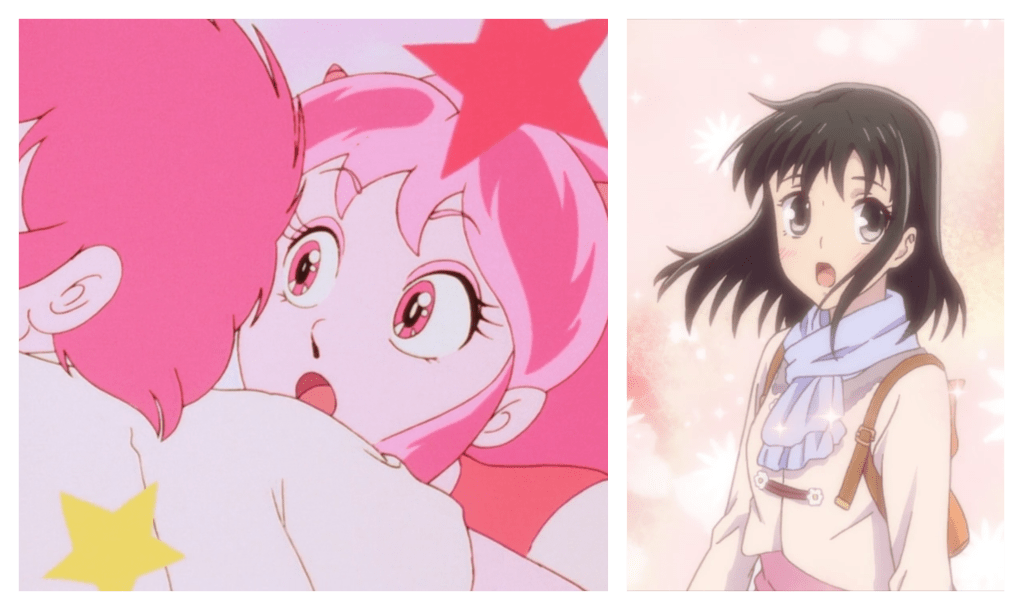

Homage: Fruits Basket + Mio’s Diary + Urusei Yatsura + Megami-sama
Mikakunin de Shinkoukei (2009), which by the way is my favourite manga and criminally underread for how beloved the anime was, is just minorly influenced by Urusei Yatsura. Really I want to call it a mixture of Arai Cherry’s previous manga Mio’s Diary (2006), Fruits Basket’s animal transformations and Urusei Yatsura, but in the context of this piece I’ll just say the latter two. It follows the Fruits Basket formula by having a female human protagonist and male invader instead, with the identity of the invaders being demihumans that can transform into animals.

Hakuya’s supernatural nature and immediate oversaturation of love is reminiscent of Lum, but what really seals it for me is his tiny younger sister Mashiro immediately moving in together with him. This is intended to replicate Ten coming to the Moroboshi household, and is one of the key parts of any Urusei Yatsura homage that gets referenced. Kobeni is a normal human, but still receives certain invader elements like her affinity for the Belldandy housewife, and being the sex symbol in an otherwise innocent series.

Homage: Fruits Basket + Maison Ikkoku
Maybe I could even argue for Inu x Boku SS (2009) as a combination of Maison Ikkoku and Fruits Basket too. It’s a shoujo series where the female youkai lives in a private dorm and is romantically pursued by her oddball bodyguard. Like Fruits Basket and Mikakunin before it the guy is the one mainly pushing the romance. The setting is an application of the same inn premise as Maison Ikkoku, since there’s a large focus on the dorm experience and surrounding community. The supernatural parts come from the youkai constantly trying to maintain human form, like the Souma clan. But I won’t commit to that notion just yet, since I got distracted and forgot to keep reading it.

Homage: Urusei Yatsura
For the most major milestone I’ve seen come out of Urusei Yatsura, it absolutely has to be Aa! Megami-sama (1988), otherwise known as Ah My Goddess. This is the first big turning point. Generally speaking in this fantastical fiancee genre you only have two story frameworks, it’ll either be an Urusei Yatsura or a Megami-sama – a Lum or a Belldandy. The basic premise is that Keiichi was born under an unlucky star, and as recompense for his bad karma a phone call he makes is accidentally connected to the Goddess Help Line. Belldandy soon appears out of the mirror offering to grant him any one wish he desires, and after weighing over some options he tries his luck at asking if she would stay by his side forever. Marriage isn’t actually in the equation until the closing volumes, but let’s be real, that first interaction was a proposal anyway. One as spontaneous as any Lum or Lala. The two of them act like an old married couple.
Their comfy cohabitation in the early chapters gets interrupted when her two sisters move in. Skuld dislikes Keiichi at first and her slapstick bouts with him are much like Ten’s. The older sister Urd’s careless personality and affinity for mucking things up with her mysterious goddess chemicals makes her a lot like Lum too – she even displays lightning powers in the film. Belldandy, however, is not stand-in for a character from Urusei Yatsura. Rather, Megami-sama is the first (and still most major) transformation of the formula. She carves out a new archetype for this subgenre that begins to get carried down.
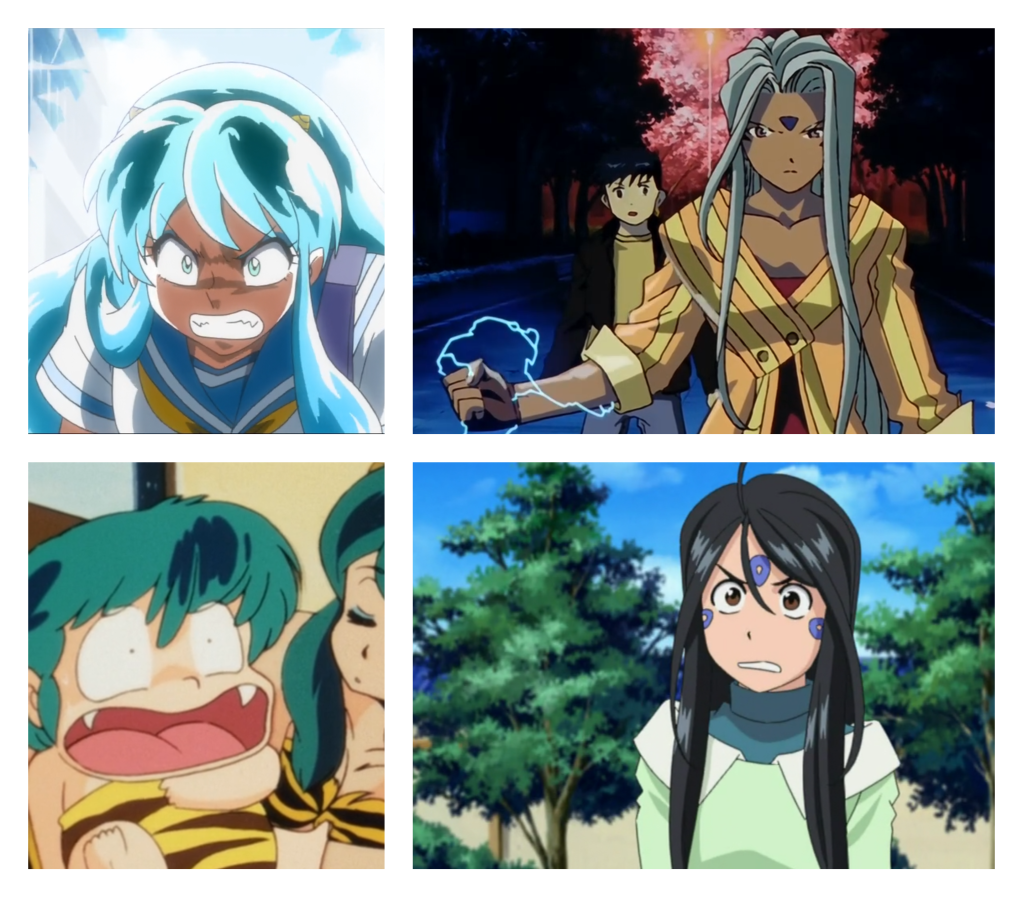
Rather than fantastical fiancee, I tend to call this subset of works the fantastical housewife. Unlike Lum and her constant barrage of violence, the goddess Belldandy is a very reserved person who finds her own joy in taking care of her lover. She for better or worse embodies the more traditional gender roles that Urusei Yatsura was trying to use Lum’s personality and appearance to challenge. Though that doesn’t mean Belldandy doesn’t get jealous or sexual at all. She definitely still does and in the manga we often see her lashing out with lightning during these moments, much like Lum.
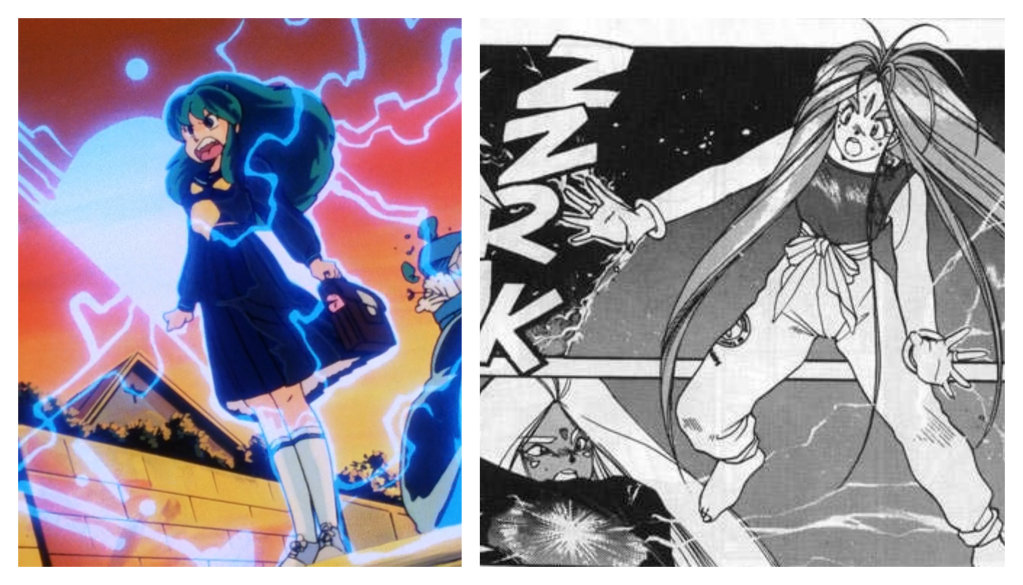
At their college a girl named Sayoko competes with Belldandy. She isn’t actually interested in Keiichi, but simply wants to take him away to get back at the girl who drained her popularity. She purrs around him, but is otherwise foul, making her like Ran. Her cousin is a guy by the name of Aoshima, who shares her wealth. He’s a rich playboy who constantly interjects in the main couple’s relationship, making him stand in for Mendou.


Homage: Megami-sama
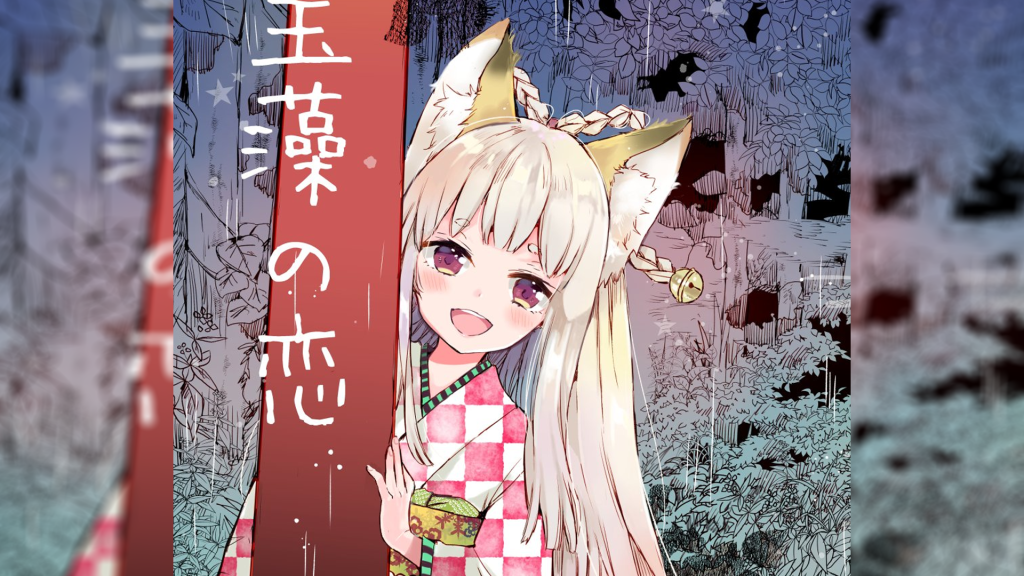
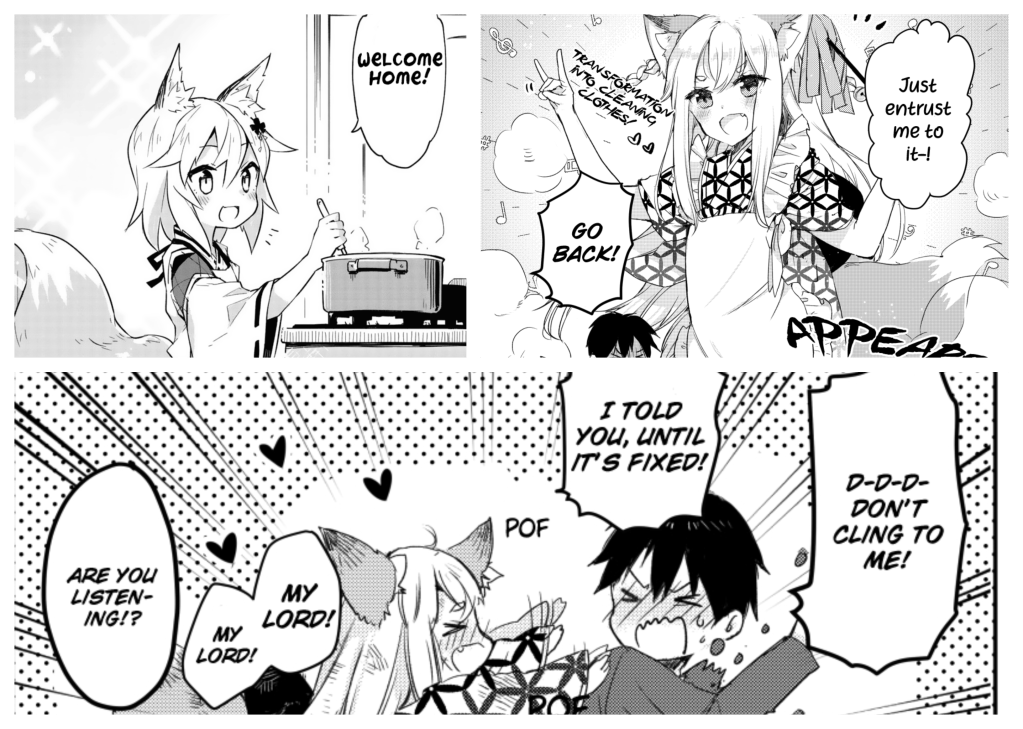
We see this base concept again show up in The Helpful Fox Senko-san (2017). This is a Megami-sama derivative that begins with the salaryman Nakano. Life always seems to be beating him down no matter how hard he tries, and it’s only when he’s visited by the fox god Senko that he finally learns his bad karma is an overhanging curse from his ancestors, much like Keiichi’s unlucky star. Senko moves into his house with the intention to aid him as ‘wife and mother’, and therein purify his bad luck. She thus fits into the fantastical housewife archetype of Belldandy, and as always there’s a large focus on the community of characters.
Homage: The Helpful Fox Senko-san
Tamamo no Koi (2020) is a story where Tamamo, the kitsune deity enshrined at a small local shrine, comes to cohabit with the recently-orphaned Haru. Her shrine was all but abandoned by the shopping arcade it was placed inside, so when Haru accidentally ends up making a wish before it she responds with vigour, moving into his house to cook and clean. This fulfills the ‘mother and wife’ of the Belldandy-derivative fantastical housewife, and is particularly styled after Senko-san. Additionally, there in an instance of Haru using the “don’t cling to me” line as Tamamo latches onto him
Homage: Megami-sama
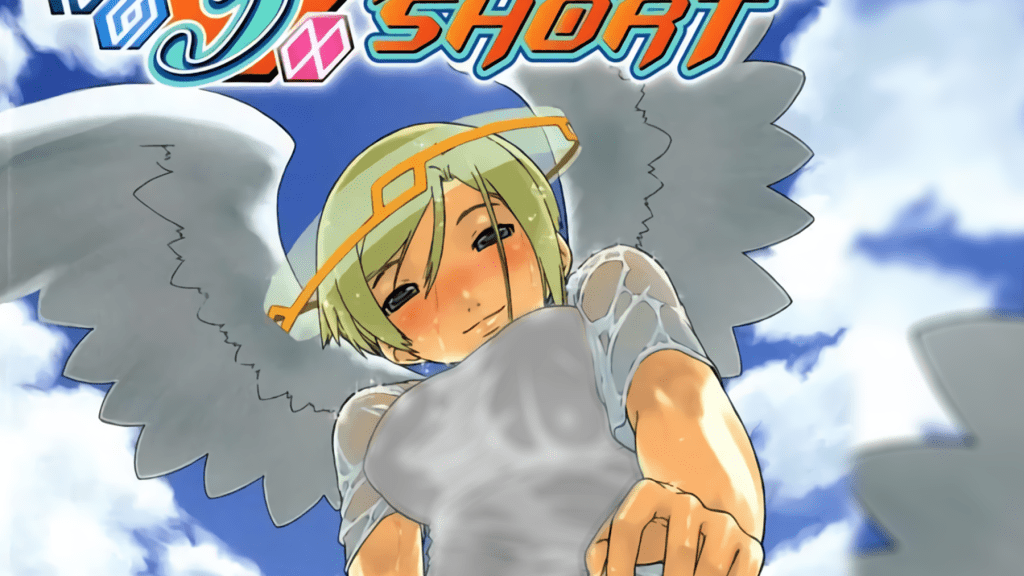
3 Angels Short (2005) is an eromanga parodying Megami-sama. Ikeyama is a fifth year college student with little going his way in life. While mulling over his current circumstances a sacred vessel suddenly crashes through his roof. The angel Snowbow emerges and excitedly informs him that his overwhelming bad luck has made their systems select him as the (un)lucky winner to be rewarded with absolute servitude for one year. All of which are lifted directly from Keiichi’s circumstances.
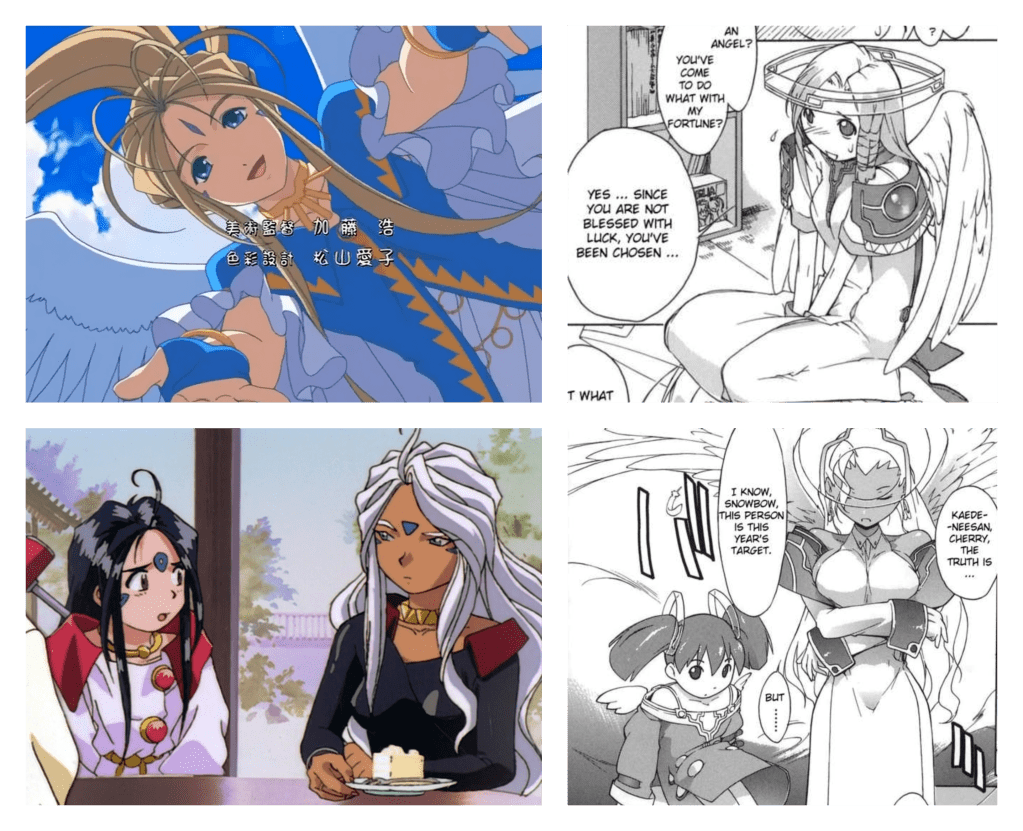
The large shoulders on top of the long plain dress mimic that of Belldandy’s appearance, and when he initially rejects her advances she references Megami-sama directly by saying “this is where people would usually go I wish an angel like you would stay by my side forever“. Seeing that he still seems keen to chase her off, she summons her two sisters for help: an older sister with brown skin and white hair like Urd, and a younger sister resembling Skuld. However as that is the part where I stepped out I can’t give any insight as to how these parallels evolve throughout the story.

Homage: Megami-sama + Urusei Yatsura
Tamamo from the Fate/Extra (2010) franchise of video games is another fox deity who makes Hakuno into their husband pretty much immediately. Like many before her she shares the same basic hair structure as Lum with the middle bit, bangs on the side and long bits coming out the bottom. She’s pushy in her attempts at getting Hakuno to relinquish his independence to her, and constantly fangirling over him. She mentions that her primary aspiration is to become a good wife, though she’s no stranger to jealous outbursts and violent retaliations either. All this leads her to come across as a fusion of Lum and Belldandy. Tamamo also refers to her partner with a pet name in the same manner as Lum does with “darling”.
Nero from the other route of Fate/Extra also brings up marriage eventually and her CCC outfit is meant to resemble a wedding dress. But she’s not a Lum in the same way that Tamamo is.

Homage: Megami-sama
Mamotte Shugogetten (1996) is another fairly standard Megami-sama derivative. Tasuke rubs a mirror he’d received from his father, accidentally awakening the supernatural guardian spirit Shao who moves in with the intention of protecting her new master. But upon discovering how peaceful the current era is, she instead opts to take charge of all the chores.
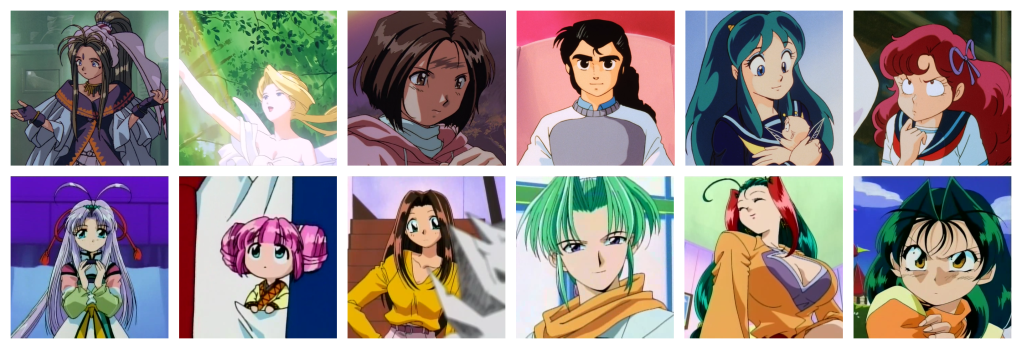
She’s accompanied by a little assistant named Rishu, who fills the spot of Ten and Holy Bell. Tasuke’s older sister resembles Megumi. Izumo attempts to woo Shao with his money, filling the role of Urusei Yatsura’s Mendou and Megami-sama’s Aoyama. The green-haired Ruan is constantly throwing herslf at the protagonist, and wears a tiger-stripe swimsuit at one point. Kaori falls in love with Tasuke for seemingly no reason and starts scheming on how to make him fall for her, often feeling like Ran. Given how obscure this series was I doubt this is the true origin for everything following, but interestingly Kaori is also the earliest point at which I see a Marika-like character. She’s neither a transfer student nor a surprise fiancee, but the hilarious way she tries to win over the protagonist with her schemes creates a similar perception. The character settings don’t line up, but the character performances certainly do.

Homage: Megami-sama + Urusei Yatsura
Megami-sama is again adapted for the opening of Mansen Maou Shoujo Ena-sama (2014) where the demon Ena appears from a mirror in Kento’s apartment. The demon setting is in parallel to the goddess Belldandy, and the two share that diamond mark on their forehead. Ena herself however is a Lum more than a Belldandy; moody, violent and frequently latching onto the male lead to scorch him in the same manner that Lum would electrocute Ataru.


Homage: Megami-sama
Tonikaku Kawaii (2018) is a story where the immortal Tsukasa abruptly arrives at Nasa’s doorstep in order to become his wife. As always, marrying off for a reason that won’t be discernable until far later. Tsukasa’s seeming divinity is frequently hinted at. But it never becomes the main focus of the narrative. They deliberately dance around the issue. That’s the point of this story. “Tonikaku kawaii” or “anyway, she’s cute”. There’s all this conspiracy moving beneath the surface but Nasa willingly chooses to overlook and instead focus all his energy on blushing at how cute his wife is. In that sense it’s kind of like Mikakunin de Shinkoukei pushed to the max, since in that series there it’s entirely hidden for the first couple of volumes that Hakuya and Mashiro aren’t human for the first couple of volumes. Tonikaku Kawaii instead opts to centre itself on the mundane. Tsukasa and her husband learning what it means to be married . Her true identity ends up being no god, but with all her quirks in tow Tsukasa can be classed as the fantastical housewife. Her husband Nasa is an all-around handyman, which often evokes Keiichi being part of the mechanics club, and in general both of these romcoms place a huge focus on their wider community. Kanami is the Ten or Skuld of the series, and at one point she references Lum directly.

Homage: Megami-sama + Urusei Yatsura
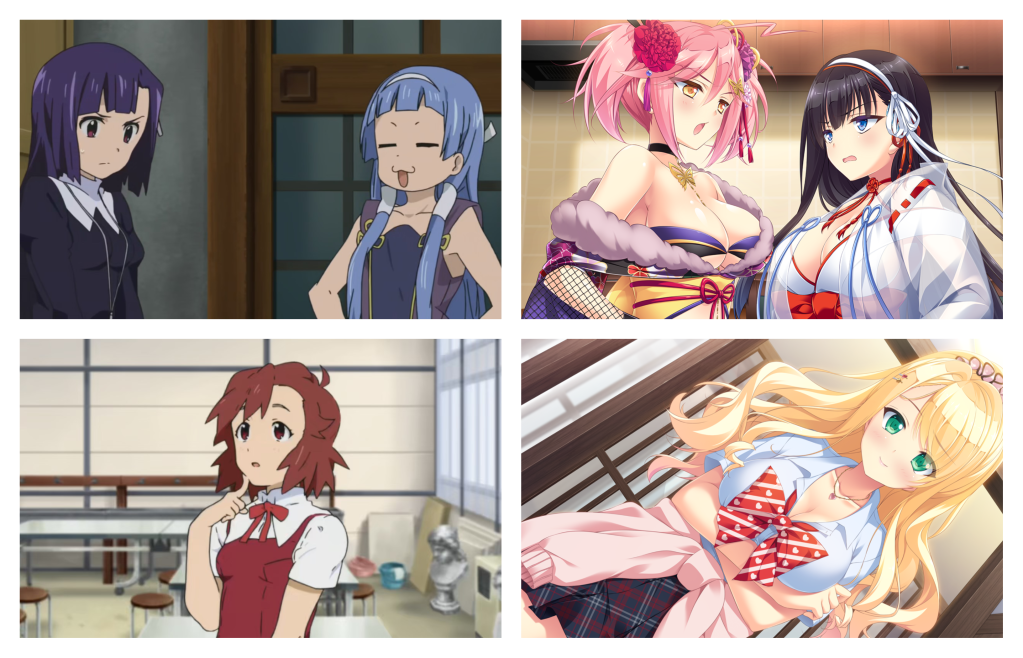
In Kannagi (2005)‘s goddess cohabitation story, Jin carves an effigy using wood from a guardian tree and its divine attributes accidentally causes Nagi to be summoned from within it. The mythological nature of her arrival puts her somewhat in line with Tenchi Muyo’s Ryouko sealed inside the cave (which I believe was supposed to be in reference to Amaterasu sealed in Amano-Iwato). Nagi ends up living with him since she has no other place to go, and quickly intrudes into the school. Jin isn’t used to this at all and constantly becomes flustered, fulfilling her role as sex symbol. Though this may fall on the Megami-sama side of the lineage due to her holy nature, Nagi’s personality is like most Lums in that she’s rather prideful and will start wailing on her housemate at a moment’s notice in slapstick fashion. At a lot of angles her hairband creates the illusion of horns, and she’s yet another Lum-a-like to be voiced by Tomatsu Haruka. The opening theme is city pop, Urusei Yatsura’s signature genre.

Nagi is a tried-and-true god of the land. She may be in a limited vessel, but Nagi never lets go of the grip on her divine nature. So she never looks at Jin romantically. That doesn’t stop his childhood friend from being concerned about it though. Tsumugi is the short-haired ‘rival’, which once more means that when the two girls stand together their silhouette comes to resemble Lum and Shinobu. A few episodes later her younger sister Zange arrives. She hits the scene as a popular local idol. A real overnight sensation due to her radiant personality. But that turns out to merely be an act she puts on in order to gather followers. She becomes the Ran’s substitute once she reveals her cutesy persona was just a mask, and her true wish is to get revenge on Nagi by usurping her position as local deity. Takako is a fujoshi that wears glasses and lets her perverted side slip every now and then, making her feel as though she is intended to be Megane for this series when the other parallels are used as context.
If Nagi is never actually positioned as a real romantic option for Jin, and interest is expressed in neither direction, why mention the show in this “romantic invader” piece? Aside from the fact that it by and large embodies the same sort of supernatural cohabitation vibe irrespective of its comparatively absent romances, I introduce it because as far as this topic is concerned Kannagi’s selfish blue-haired deity and focus on hunting down impurities combine with Tenchi Muyo’s harem dynamics to pave way for Tsugumomo (2007).

Homage: Kannagi + Tenchi Muyo + To Love-Ru
Tsugumomo focuses on the supernatural cohabitation between Kazuya and his tsukumogami Kirika. After reaching his teenage years he’s visited by a mysterious girl who reveals herself as a divine being, and enlists his help in chasing down impurities before they can cause disaster. The ‘tsukumogami’ (where an object is believed to obtain a soul after being used for enough time) is a part of japanese folklore, and is therefore in the same realm of story as Tenchi Muyo and Kannagi. Kirika’s blue hair further denotes this callback to both. She is the invader of this series. A constant sex symbol teasing the protagonist, since this is a very major ecchi work in the wake of To Love-Ru’s revolution, and she is just as violent as any Lum. When she transfers into the school Kirika immediately comes to be adored by the masses for her smug personality, great looks and athletic feats. Kazuya is the spitting image of Tenchi, while Kirika’s blue hair and kimono channel Ryoko. As has been seen multiple times throughout this list, when the pairs stand together you can see the design inspirations quickly. Kirika has been watching over him since he was young, even if he never knew about it, similar to Ryoko watching Tenchi from her cave.
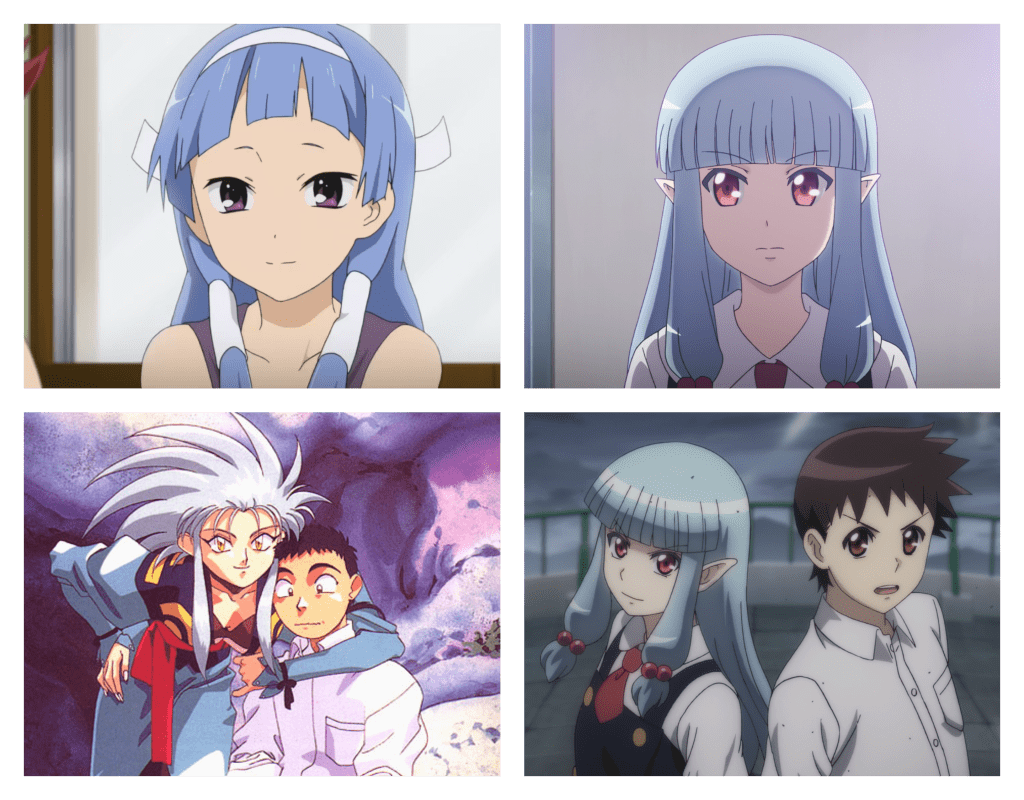
Homage: Kannagi + DanMachi
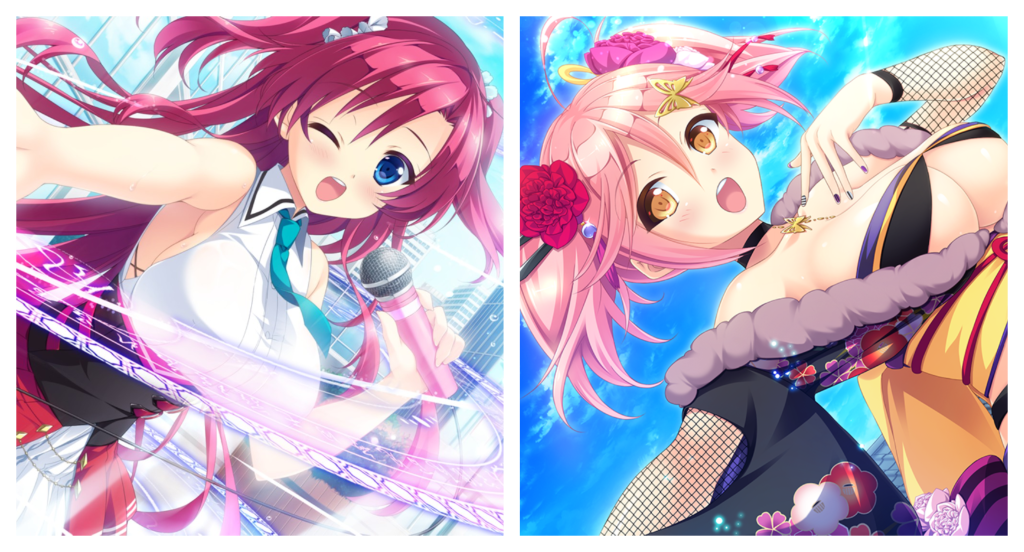
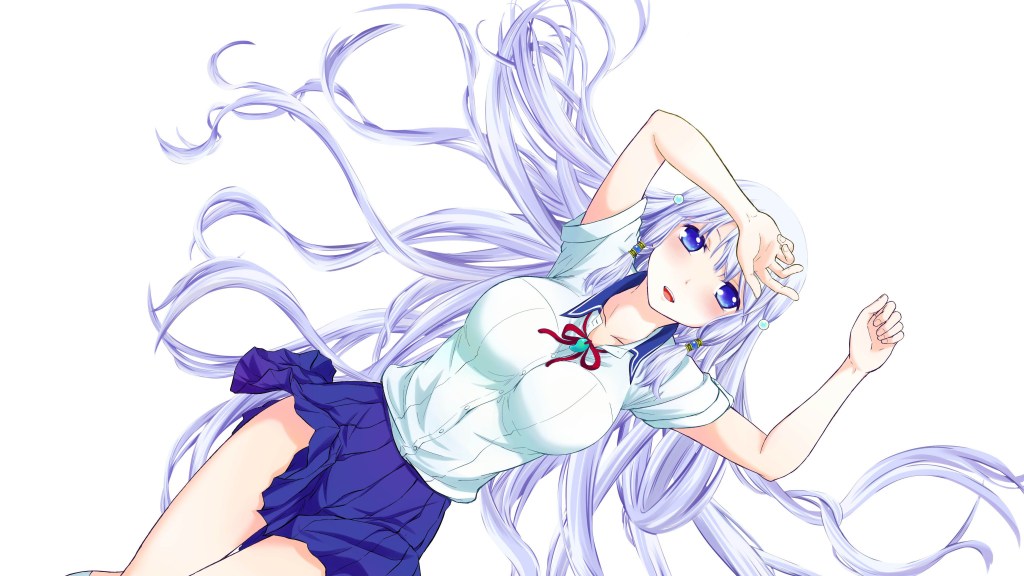
LoveKami -Sweet Stars- (2016) is a visual novel focused on the same myriad gods concept as Kannagi. Not particularly unheard of in japanese media, but this sticks out for also borrowing its idol-centric imagery. The gods that descend think it over and decide that becoming an idol is the most efficient way of gathering worship, much like Zange and Nagi. Its sequel LoveKami -Useless Goddess- (2017) is even set in the very town of Kannagi no less. Complete with a love triangle involving the protagonist’s childhood friend, the god who makes her way into the residence to cause trouble, and another god whom has long black hair and anger issues beneath her usually demure personality; effectively borrowing Kannagi’s main trio. The “useless goddess” subtitle reveals it to be part of the ‘damegami’ branch that comes off of DanMachi, which I’ll get to soon.
Homage: Megami-sama + Kannagi
Maga-Tsuki (2011) is a manga where the Yasuke awakens the goddess Orihime when he accidentally breaks the sacred mirror at her shrine. Having a mirror involved in the summoning of the goddess reminds one of Belldandy. From this event his soul accidentally gets sucked into the goddess, placing him under a curse where if they don’t keep holding hands his life essence will slip away. This calls to mind the beginning arc of Megami-sama, where the wish counterforce punishes Keiichi any time he strays too far from Belldandy’s side. Both this and Kannagi begin at shrines and then launch into cohabitation romcoms with the enshrined god after something goes wrong, and Orihime somewhat resembles Nagi. Her darker-haired younger sister Amaterasu shows up to spite her, based on Zange, and Akari is the red-haired childhood friend competing with the goddess, based on Tsumugi.
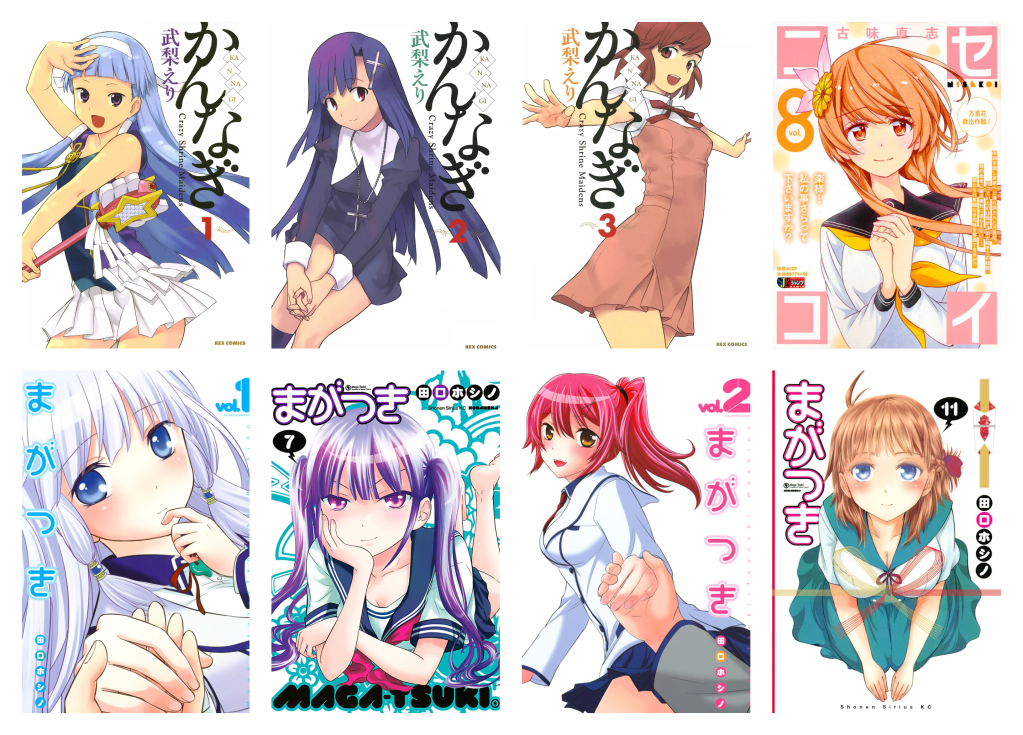
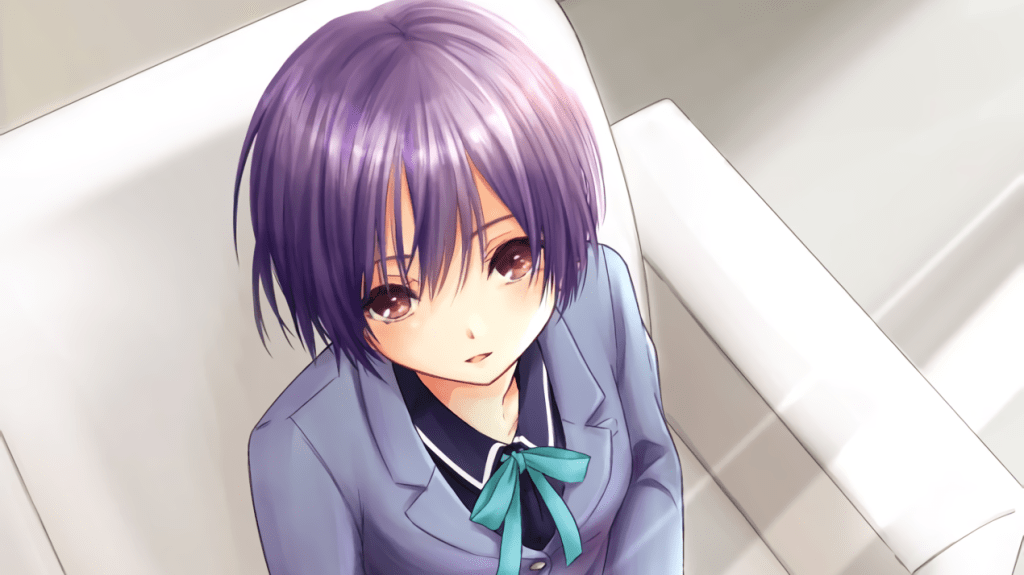
Additionally the brown-haired girl who abruptly appears in the later volumes and declares herself the fiancee of Yasuke seems to be clearly inspired by Nisekoi’s Marika.
Homage: Maga-Tsuki
That then continues on directly into Ojou-sama no Shimobe (2017) which is another manga by the same creator. At this level of separation it doesn’t necessarily carry anything from Urusei Yatsura or Megami-sama anymore, but the mangaka does unabashedly recycle the harem setting and character dynamics he used in Maga-Tsuki. So it warrants mentioning. The designs and personalities of Akari and Izuna from Maga-Tsuki are copied pretty much straight into Minori and Tsubasa. If we really wanted to take that a step further then we could even suggest that Hand Shakers (2017) is lifting its hand-holding premise.
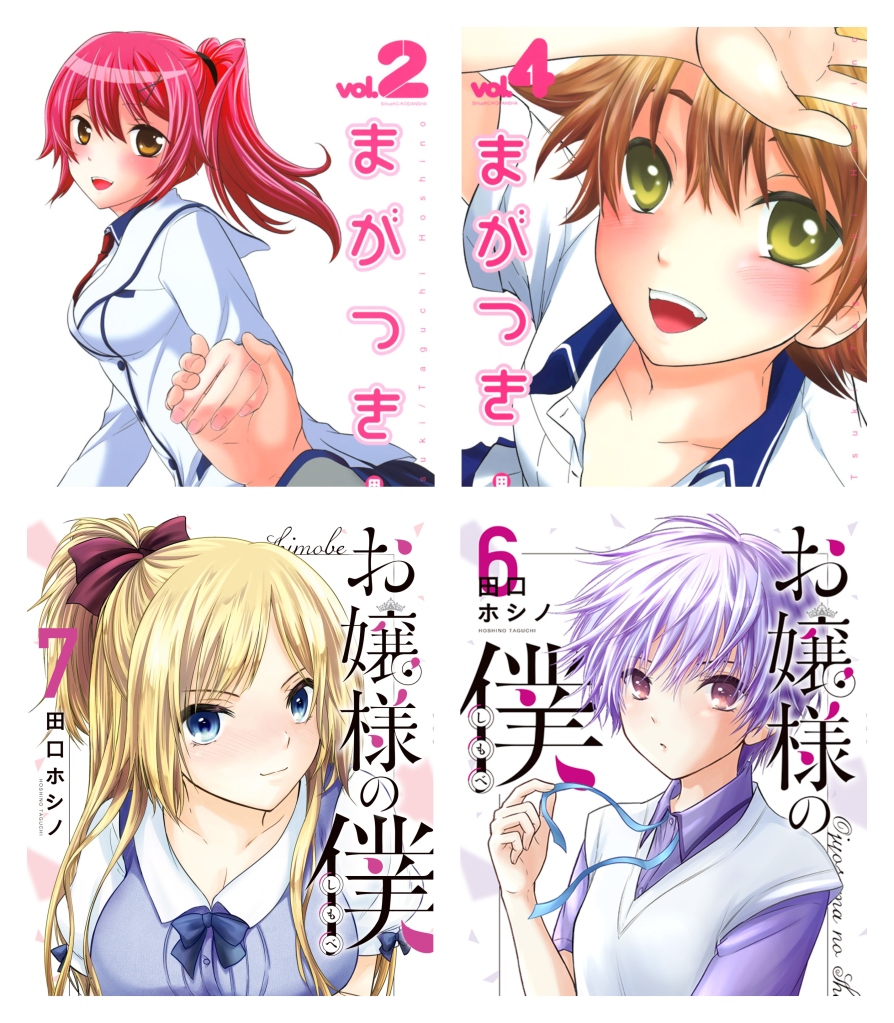
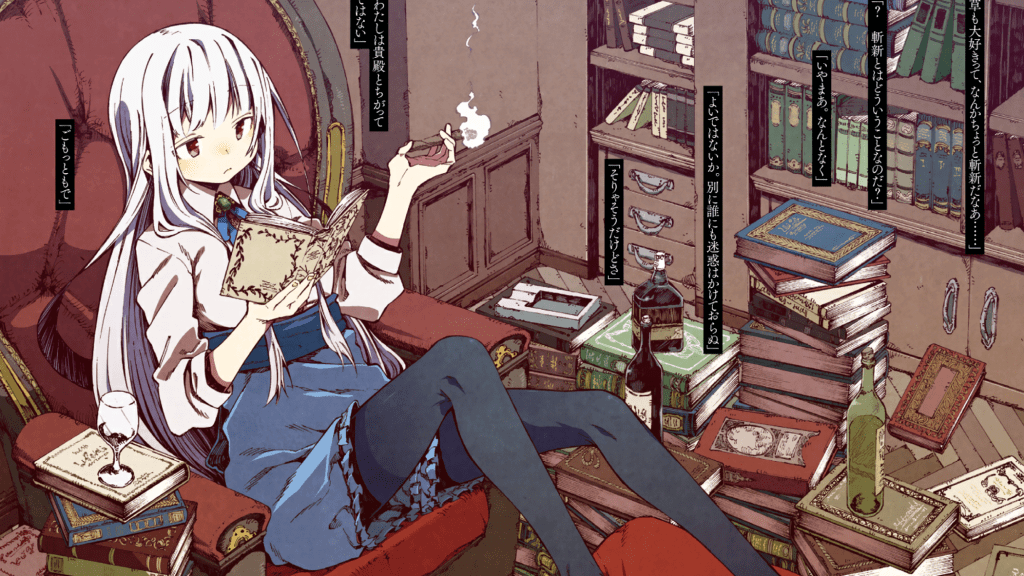
Homage: Megami-sama
The introductory premise of Megami-sama shows up quite commonly. Like in the manga Monku no Tsukeyou ga Nai Love Comedy (2014), where Kirishima is randomly selected to be the ritual tribute offered before the goddess Sekai, and when he’s offered one wish in compensation he figures that the best way to avoid being killed is by asking her to marry him. Cohabitation comedy ensues.
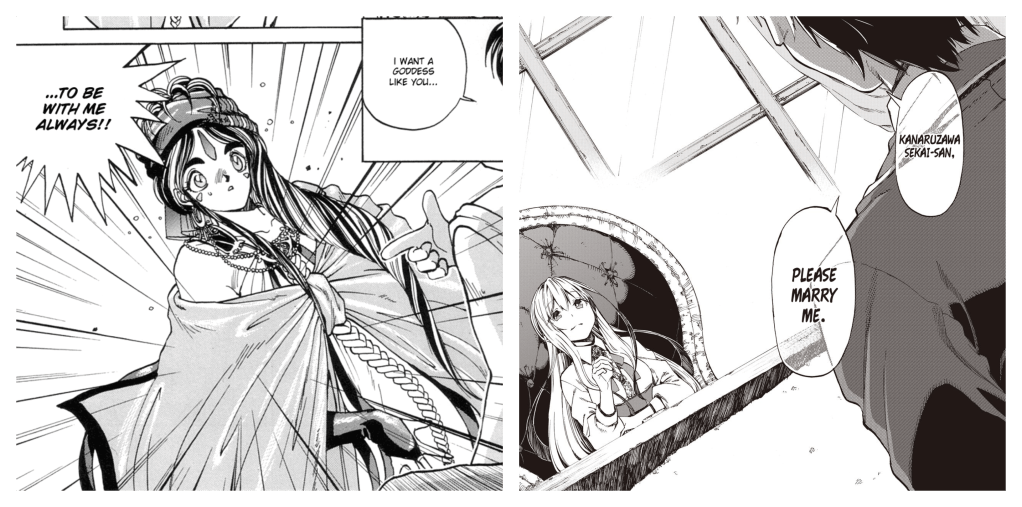

Homage: Megami-sama + Onegai Teacher + To Love-Ru + DearS
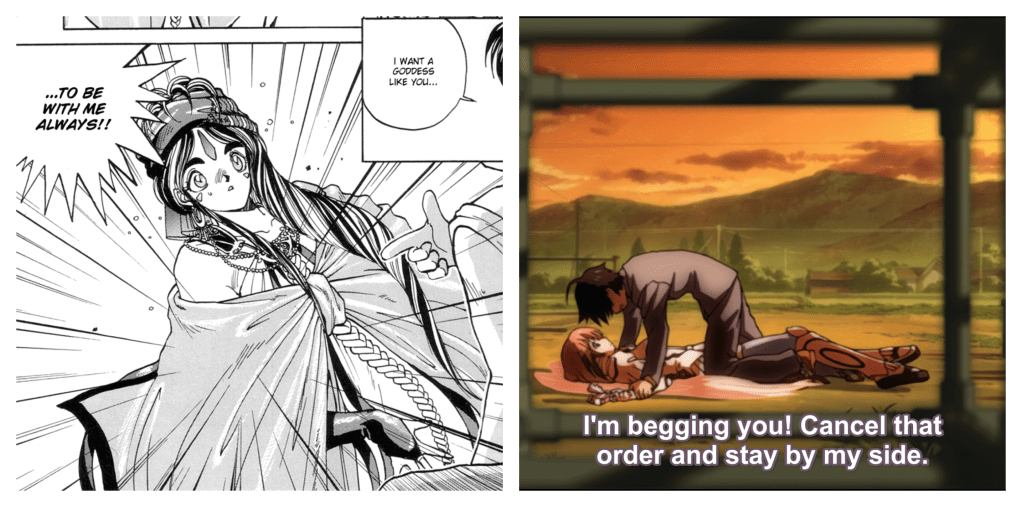
Heaven’s Lost Property (2007) also does this when the angel Ikaros offers to grant the wishes of Tomoki. He runs through a variety of scenarios, exploring the limits of his selfishness. But by the end he finds himself empty and alone. Breaking down in tears, he ends up asking her to undo it all and simply stay with him. Just like Keiichi and Belldandy. Furthermore, having run through all those perverse scenarios only to reject it in the end is something Ataru has done with reality-alterations in two of the movies. Its depiction of the heavenly realms is near identical to Megami-sama’s, and we can additionally say that the bright flash of light which Tomoki spots at the beginning is referencing Onegai Teacher, and that the overwhelming ecchi flair for our pink-haired invader is at least somewhat influenced by To Love-Ru.
Ikaros can be taken as quite a mashup of design elements, if we’d so like her to be. The busty pink-haired invader aesthetic is likely to be foremost influenced by To Love-Ru, given how heavily the ecchi is laid on. She has large covers where her ears should be that make her resemble Chi (Chobits). She has a similar presence too, with her largely blank personality hiding deeper conspiracies. The heavy focus on her wings in the art calls to mind Steel Angel Kurumi, especially so when she falls under the influence of her sinister, red-eyed combat mode. And perhaps most obvious would be that Sora no Otoshimono takes the maid robo/slave route to a certain degree, and Ikaros thus wears a chained collar like the DearS.

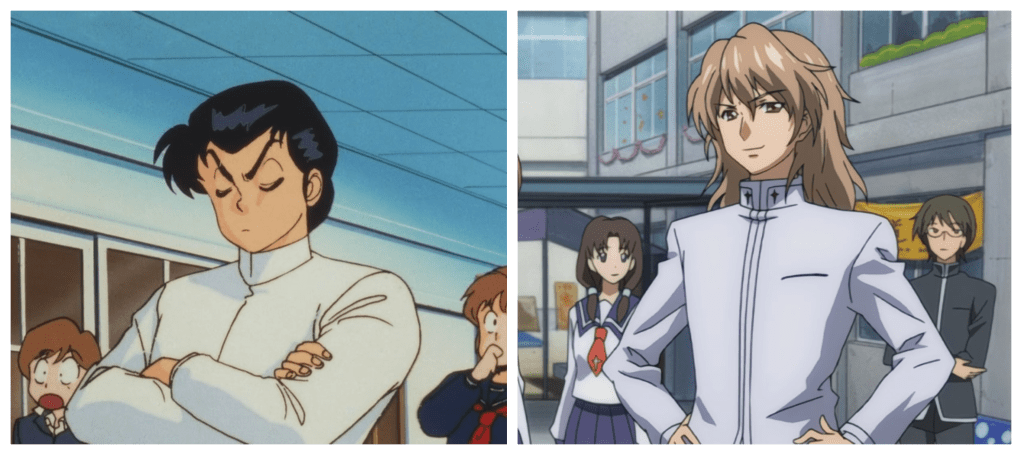
Tomoki is characterised much like Ataru, a hopeless pervert that commonly preaches about how he values his peace and quiet before all else. His childhood friend Sohara competes against the supernatural sex symbol Ikaros, aligning with the initial conflict of Shinobu and Lum. She is shown to be skilled in martial arts, much like Shinobu’s uncanny strength. In his club the two older members are Sugata, a handsome guy with a lack of common sense which inspires feeling distinctly like Mendou, and his rich girlfriend Mikako whose sadism is applied in a way that resembles Ryoko harassing her brother. The story begins when all four decide to go stargazing at the town’s famous 400-year old sakura tree. This is mentioned a couple times in the introductory segment but becomes wholly irrelevant after it’s destroyed in the first episode, and so in conjunction with the other elements there is grounds to look at the tree and point to it as a reference to the Mendou estate’s Tarouzakura that played a central role in Lum the Forever.
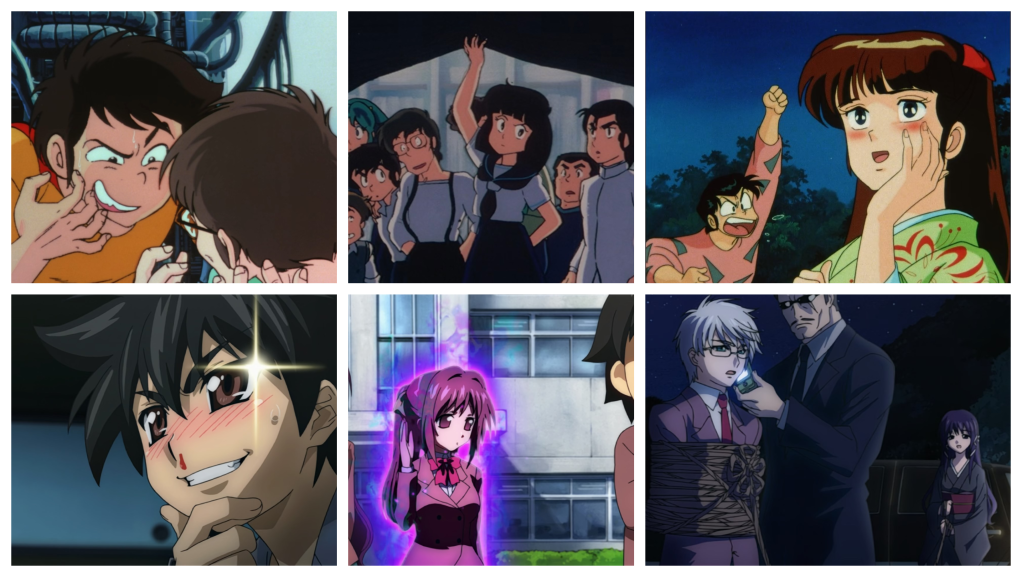
Later in the first season, an antagonistic rich guy wearing Mendou’s iconic white outfit comes to jeer at the main lineup.
Homage: Megami-sama
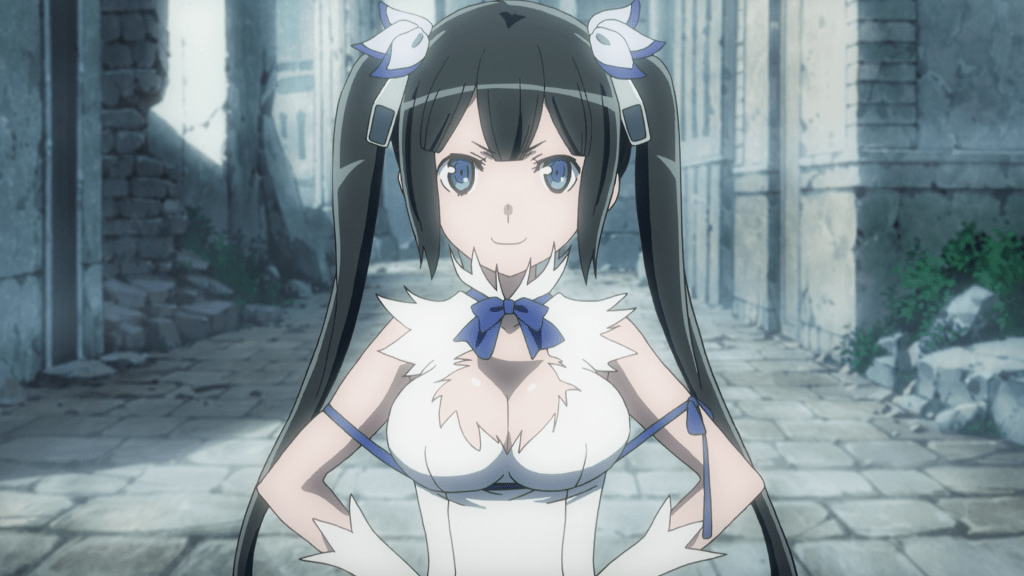
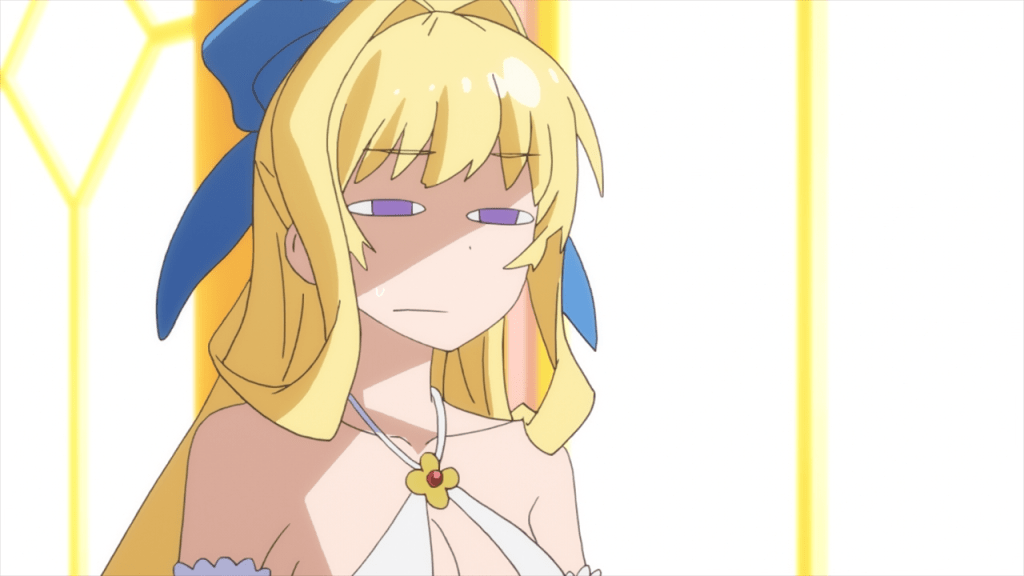
DanMachi (2013) doesn’t necessarily resemble anything previous in here, but since it’s something of a goddess romcom and ties into the next entry I’ll mention it. As far as I’m aware Hestia is the one who pioneered the “damegami” or “useless goddess” trend we’re seeing quite often nowadays and that influence is relevant for quite a few entries.


Homage: Megami-sama + Zero no Tsukaima + DanMachi + Urusei Yatsura + Rance
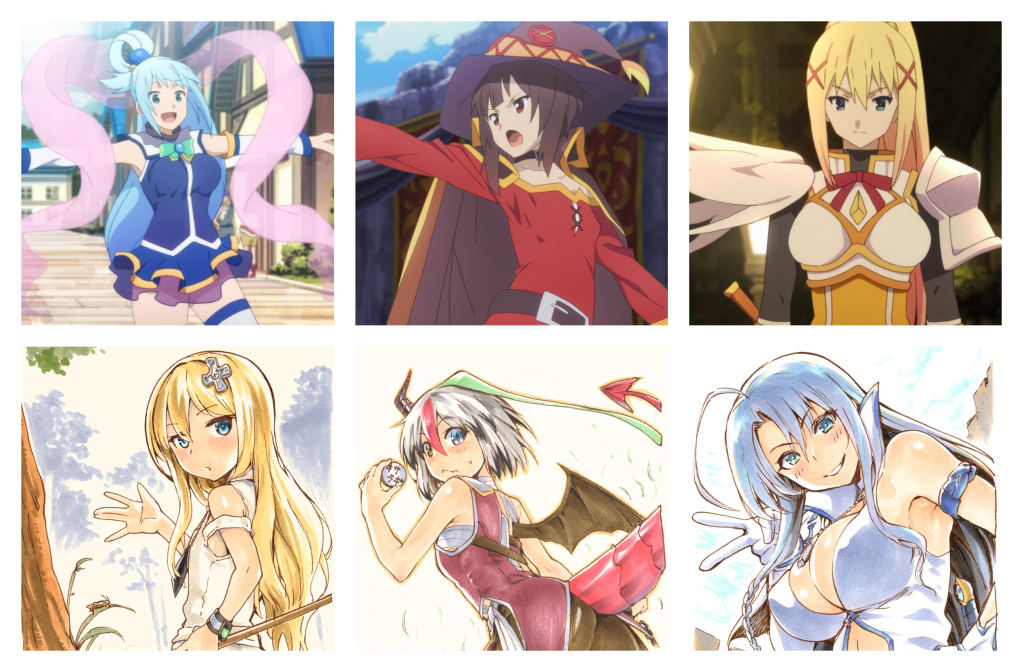
The main entry in question, to the surprise of no one, is Konosuba (2013). The light novels began mere months from each other so it’s arguable that with the amount of required planning it might have been sheer coincidence, but I have to mention them in relation regardless, since Aqua certainly embodies that same “damegami” character archetype as Hestia. She’s far and away the most well-known for it now. Konosuba begins from Megami-sama’s premise. Kazuma dies after being struck by a tractor and, to entice him into reincarnation, is offered one wish. Fame, power, wealth – any one advantage that he can bring with him into the new world. The cheat item he chooses to take with him is the goddess Aqua herself. The nature of his wish makes this the same situation as Keiichi and Belldandy.
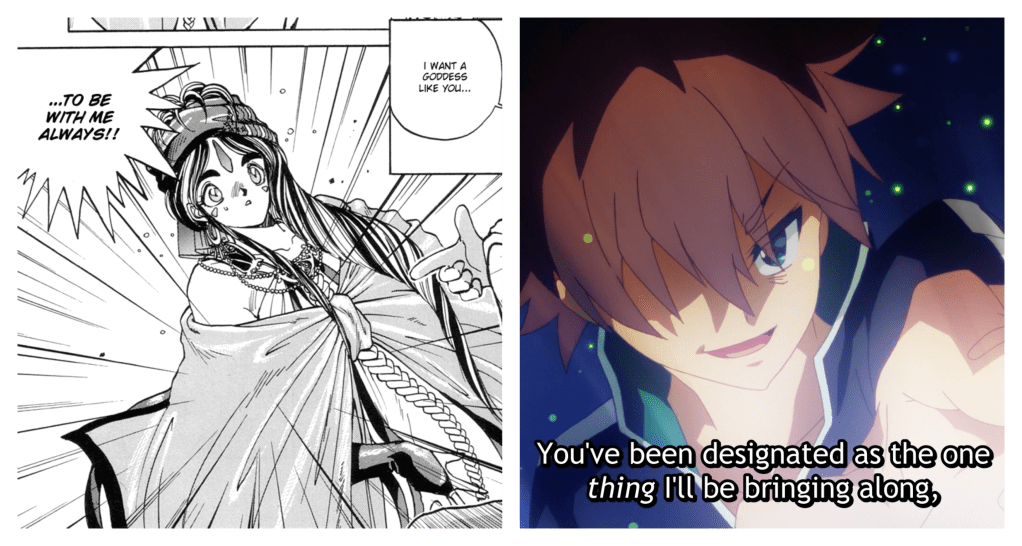
Though not just Megami-sama, but also Urusei Yatsura and Zero no Tsukaima can be found in this one. The appearance, attitude and unfaithfulness of Kazuma make him reminiscent of Ataru. This faint visual connection gets solidified once his romance with Megumin begins.
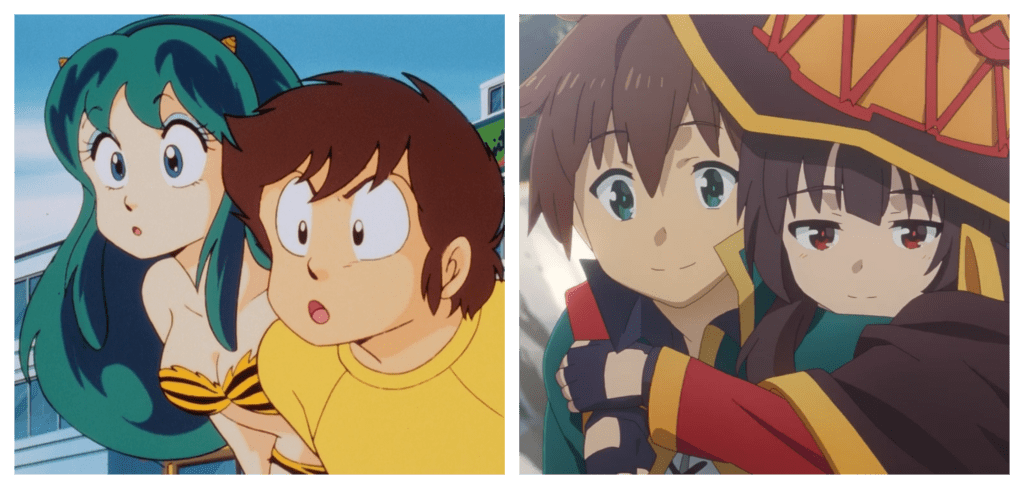
Their couple dynamic is one where Kazuma constantly leers at other women, despite so often claiming he wants to commit to her. Megumin is then spending most of her time in the relationship trying to put a leash on her willful boyfriend. She lashes out at him when needed, warns others to not make any moves on him once it becomes public, and is not so subtle about her hints that she wants to hurry up and get married already. This lion tamer act makes them come across as very similar to Lum and Ataru. Next, we can pin Megumin’s role as a short magician shunned by her peers for only having one overpowered explosive spell in her arsenal, as being a design heritage that has trickled down to her from Louise. In both settings most of the sacred relics are items transported from Japan. I’m not saying that it invented this story beat or anything, but that given the threads already existing in here I do see a link to that particular series. I don’t think it’s such a difficult story concept to come up with so I’d imagine there to surely be earlier instances but I’m not familiar enough with the isekai genre to know what they were.
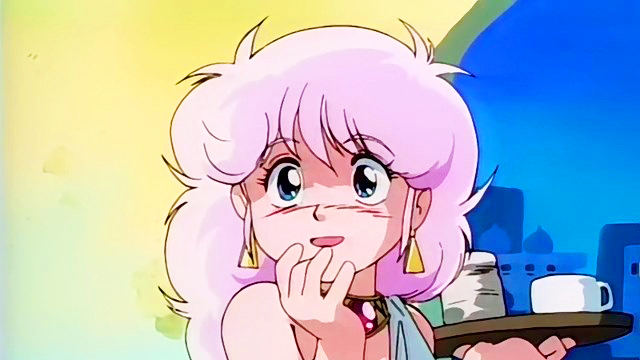
Additionally you could pull in Rance (1989) as part of its visible inspirations if you want to, with Kazuma’s scummy personality and green clothing often being cited as a Rance-lite. Because of the dynamic he eventually develops with Megumin I nevertheless still want to say there’s a higher concentration of Ataru DNA in there instead, but it’d be disingenuous to not at least mention Rance here.
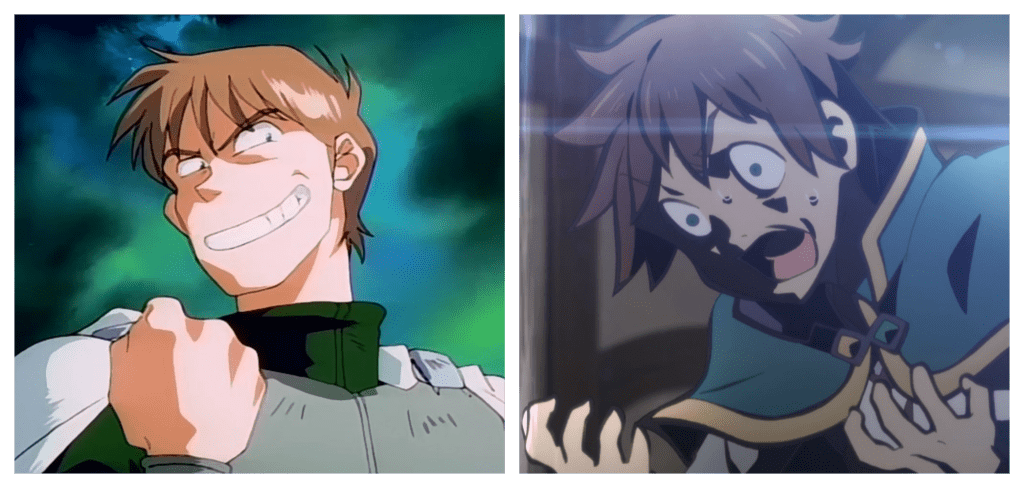
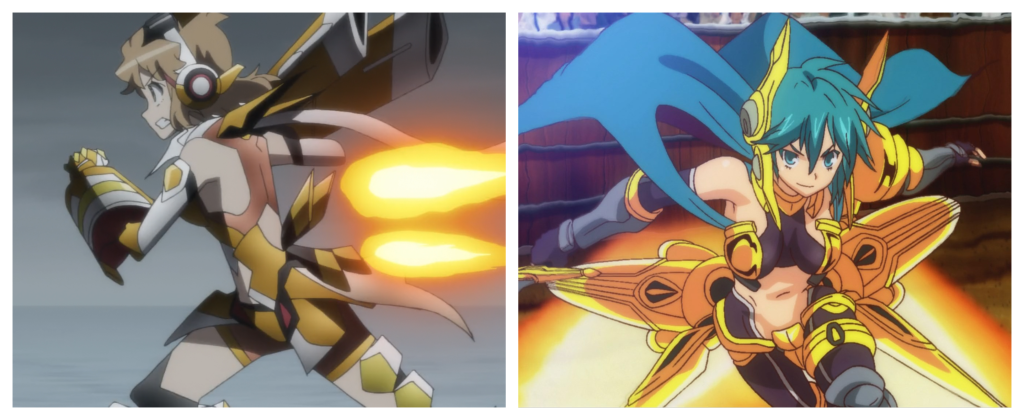
Which, interestingly enough, after seeing a random clip on Youtube I had wondered before if Sill’s floofy pink hairstyle from the 90s OVA was copying Ran’s. I don’t know much about this series however, so I watched it for the list. But after doing so I saw no reason to believe Sill was connected to Ran, and her appearance in the newer series doesn’t give me the same impression, so I guess that was just the art style of the era naturally creating a sense of familiarity. Though for an unexpected and non-related design reference in Rance I did find it hilarious that one random chick straight up has a Symphogear (2012), although from what little gameplay I could find of the original I think that’s a redesign that happened after the Sympho franchise.

Homage: Konosuba
The massive success of Konosuba then leads into the creation of Combatants Will Be Dispatched (2017), since it’s by the same author and copies its character frameworks. The story begins with a scummy protagonist and his dumb goddess partner. They work for a sci-fi villain organisation and are sent to invade a randomly-selected fantasy world. Once they’ve reached the planet they gather a party comprised of a dumb chuuni girl whose design resembles Megumin, and a dumb knight. Although as the inverse to Darkness this girl has foregone any defensive capabilities in favour of only strengthening her attack skills. They don’t happen in the same world but a crossover entry does exist.
Homage: Konosuba
Cautious Hero (2017) is another satirical isekai obviously inspired by Konosuba with the hero’s partner being a very dumb and vain goddess.

Homage: Konosuba
Princess Connect Re:Dive (2020)‘s satirical fantasy humour is similar in style to Konosuba’s. The party is comprised of a braindead hero, a young magician like Megumin and a dumb princess knight. The group silhouette looks very similar when the three stand together. There is also a goddess supporting them, but admittedly I’m not good at keeping up with seasonals anymore so I fell behind while it was airing and thus dunno what her character quirks are or whether she joins the party proper.

Homage: Konosuba | DanMachi
The opening act of capturing the goddess from Megami-sama and the cynical isekai humour of Konosuba influence Isekai Monster Breeder (2016). But I don’t think many chapters of that ever got translated and it’s been ages since the last update, so I can’t comment on where it goes beyond that. Another manga that I definitely started but forgot somewhere along the way is Shinja Zero no Megami-sama (2019) with a similar damegami like Hestia and Aqua. As per the title and what little I can manage to recall, the premise is that the protagonist is the goddess’s first follower. That setting would make it a self-explanatory copy of DanMachi.
Homage: Megami-sama + Urusei Yatsura
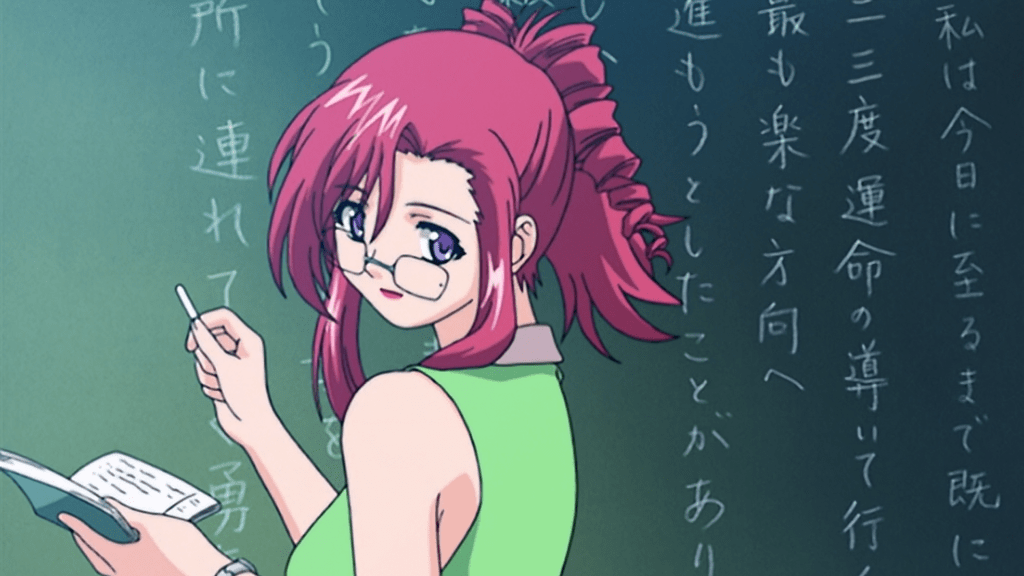
Megami-sama’s fantastical housewife genre and Urusei Yatsura’s alien setting combine to form Onegai Teacher (2001). One night highschool student Kei is out lying in a field watching the stars. He has a rare condition where his biological functions occasionally freeze, so his mind’s growth has outpaced his body. Because of this he enjoys soaking in the stillness as a form of therapy. Suddenly a bright flash of light appears before him and an alien spaceship settles in the adjacent river. He sticks around just enough to spot Mizuho teleporting out onto the pier before he runs off. However, to blend into Earth’s society she pulls some strings to transfer into his school as a teacher. When the two inevitably recognise one another, she pulls him into the spaceship’s virtual space. Mizuho had come to the planet independently and, in doing so, was violating a galactic treaty not to interfere with underdeveloped species, so she needs to silence him. After fighting over it for a bit they end up both agreeing that the easiest way to smooth it all over is to get married and link their fates that way. Due to the age gap Mizuho is a mature presence, yet her cluelessness about men means she inadvertently leaves herself open, establishing her as a sex symbol for the series.
Homage: Onegai Teacher
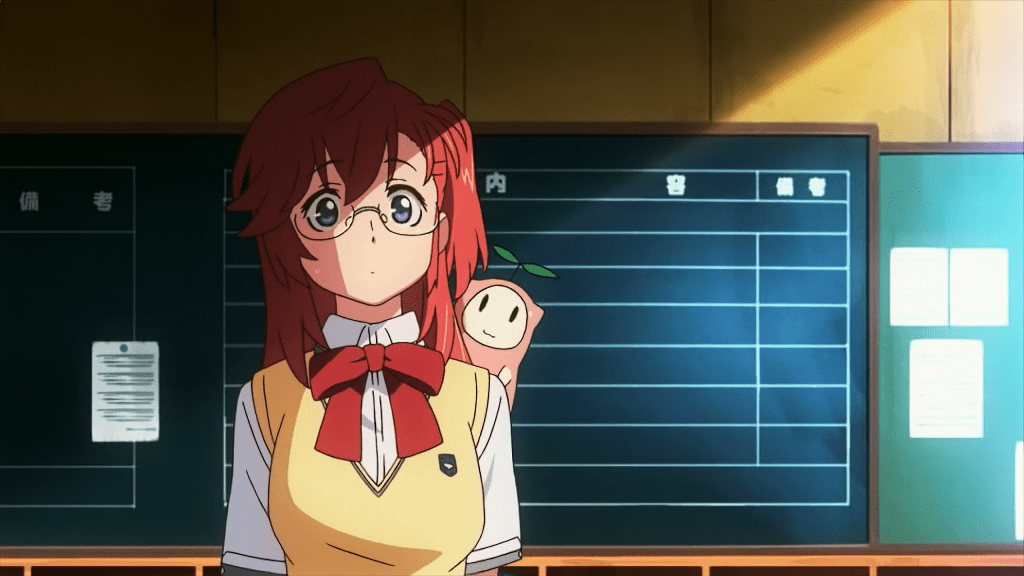
Onegai Teacher then leads directly into Ano Natsu de Matteru (2012), since that’s a pseudo-remake and sequel to it which copies all its major story beats, character designs and character dynamics. It’s to the extent that you can pick out which characters will end up together before anything even happens, since it runs off Onegai Teacher’s script that closely. The staff list doesn’t credit the same creator so at first I actually thought this was the biggest plagiarism case to ever occur in anime, but nah it turns out we’re just supposed to assume that it’s the same creator under a different moniker. You can notice this right from the very beginning since the opening animation copies the iconic shot of Mizuho looking back from the pier. This is something I’ve written about a bit more properly on my blog before.
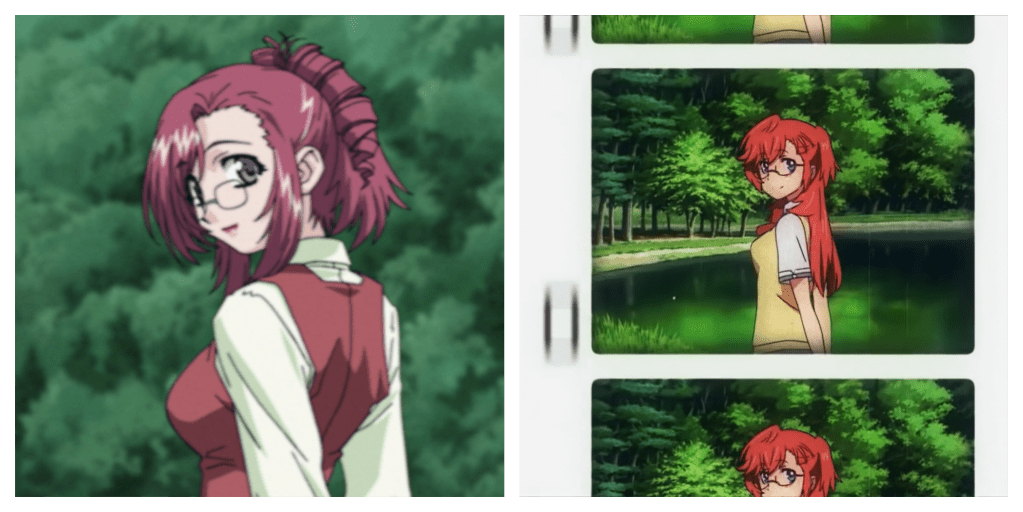
The main character designs are visibly linked between the two shows. The bespectacled red-haired alien beauty Ichika accidentally crashes into the grey-haired protagonist Kai while he’s out at night, and in order to assure his silence she eventually makes her way into his household. In both series the girls have come to Earth to investigate an image mysteriously present in their memories, despite having never even seen the planet before. They wear very similar spacesuits, and they use the same kind of chibi AI interface. No marriage this time, or at least not until later, but Kanna does make reference to Onegai Teacher at the start by joking about a marriage arrangement. Kanna is his childhood friend with a longstanding crush on him, same as Herikawa in the previous series. Lemon is literally just the same character design as Ichigo, with the same voice actor to boot.
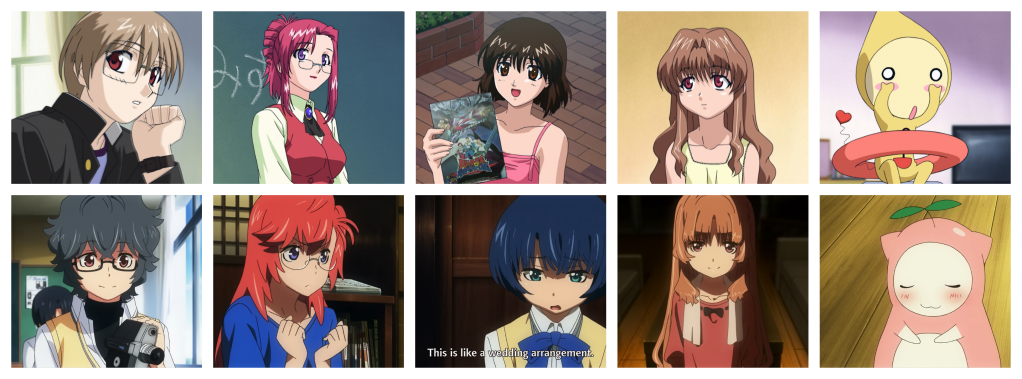
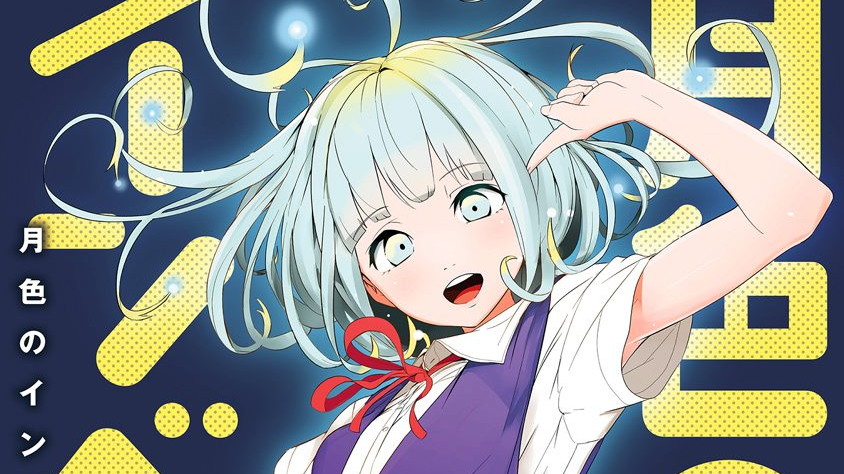
Then additionally we once again see the long-haired invader and romantic rival with the short bob invoke the silhouette of Lum and Shinobu.

Homage: Ano Natsu de Matteru
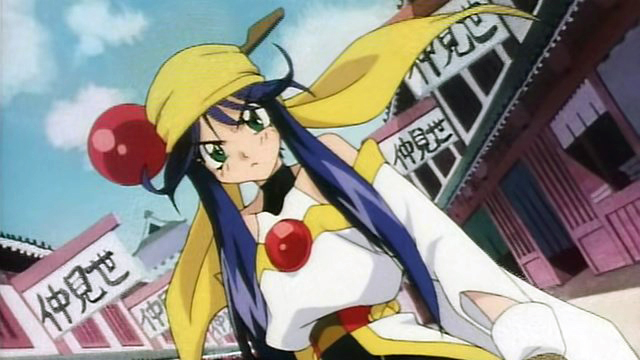
Tsukiiro no Invader (2018) opens on a similar premise as that of AnoNatsu. Sakuma and his classmate Minamochi belong to their school’s astronomy club and are out observing the moon. The night turns sour when the appearance of UFO triggers a landslide which nearly kills Minamochi, and it’s only when the alien fuses to her body that her health is restored. By being out at night, facing death due to the ship and being healed by the invader, the first chapter somewhat class to mind the way in which Ichika saves Kaito during their initial meeting.
Homage: Urusei Yatsura
1995 saw the release of the Saber Marionette J (1995) light novel, where the spastic super android Lime is awakened by Otaru and immediately becomes infatuated with him. Note the obvious naming similarities to Lum and Ataru. Lime is fleet-footed and selfish, not having much in the way of common sense and often causing problems in her relentless pursuit of Otaru’s love. Although the episodes are mostly comprised of zany slice of life and battle harem antics, a complex sci-fi conspiracy of planetary devastation and intergalactic exodus looms beneath the surface. There’s assuredly something earlier but for my own frame of reference this is the earliest android I have on the list.
Soon the second marionette named Cherry is discovered. She causes incidents such as hiring gangsters to pretend to kidnap her in an attempt to kickstart her romantic development with Otaru, and lashes out at their inability to follow the script. This persona imbalance embodies Ran’s deceptive personality. There is a rich friend whose attempts at being cool often fall flat on their face, like Mendou. But here he ends up moving into the same shabby apartment complex, and unlike the deep hatred between the Urusei boys he ends up crushing on Otaru just as much as the girls are.


Homage: Saber Marionette
Xenogears (1998). A JRPG revered and sung of as wholly unique in the gaming sphere, though actually borrowing much of its DNA from other prominent psycho-religious anime works including Evangelion, Ideon and Devilman, then situating them atop a setting created by fusing elements of Megazone 23 into the relics of Final Fantasy VII left in its script. Those connections are all self-explanatory and hardly surprising. But out of seemingly nowhere, much of the imagery and setting conventions from the Saber Marionette series seem to greatly influence this cult classic. Why? Who knows. But frankly there’s too much in there for me to overlook it. Both series begin from the story backdrop of an interstellar calamity that forced a certain spaceship’s crew to colonize the planet they’ve crashed onto in order to survive. In both cases the “humans” are actually artificial lifeforms created through advanced technologies.

Fei’s olive skin, ponytail and clothing mimic specific elements of Otaru’s design. The way Abel reincarnates through the centuries is fairly similar to all the flashback scenes between Otaru and the original Ieyasu whom he was cloned from. All of Abel’s incarnations hold a deep affection for Elhaim, similar to each Ieyasu clone becoming enraptured with the memory of a lady named Lorelei. She was the one female scientist aboard their ship before the crash, which puts her in a similar narrative position to Elhaim being created by the Zohar in the wreckage of the Eldridge long ago. Elly’s orange hair and blue eyes channel her design, and this is only accentuated by a similar white jumpsuit with black stripes, and a giant painting of her in a white dress that was also a hugely important symbol in Saber Marionette. Elly is technically non-human and thus the invader. Although the main demihuman in the game is the nanomachine colony Emeralda, whom is the protagonist’s daughter rather than a love interest, but does have green hair.

Homage: Megami-sama + Expelled From Paradise
Perhaps the marionettes themselves are what would lead to the franchise’s forthcoming fascination with its numerous robot girlfriends. As they continue across multiple companies, subseries and eras we eventually receive Xenoblade 2 (2017), which has a ton of anime DNA in it. It still contains flavours of Megazone, and its aesthetic is greatly borrowed from an anime film known as Expelled From Paradise. However neither of those are necessarily relevant to this “romantic invader” topic. The game begins with Rex traversing into a large room in an abandoned ship and unleashing the Aegis by touching her sword, which presents imagery somewhat reminiscent of Ryouko’s seal being broken in Tenchi Muyo. Pyra herself is a loving caretaker who once more embodies that ‘wife and mother’ sentiment that most Belldandy derivatives act as. However despite being a sass queen, the reserved nature and easy embarrassment of her other personality Mythra make her unable to be called a Lum-a-like (she’s more like Moka Akashiya than anything). Though if it counts for anything their true form Pneuma has green hair and a horn.
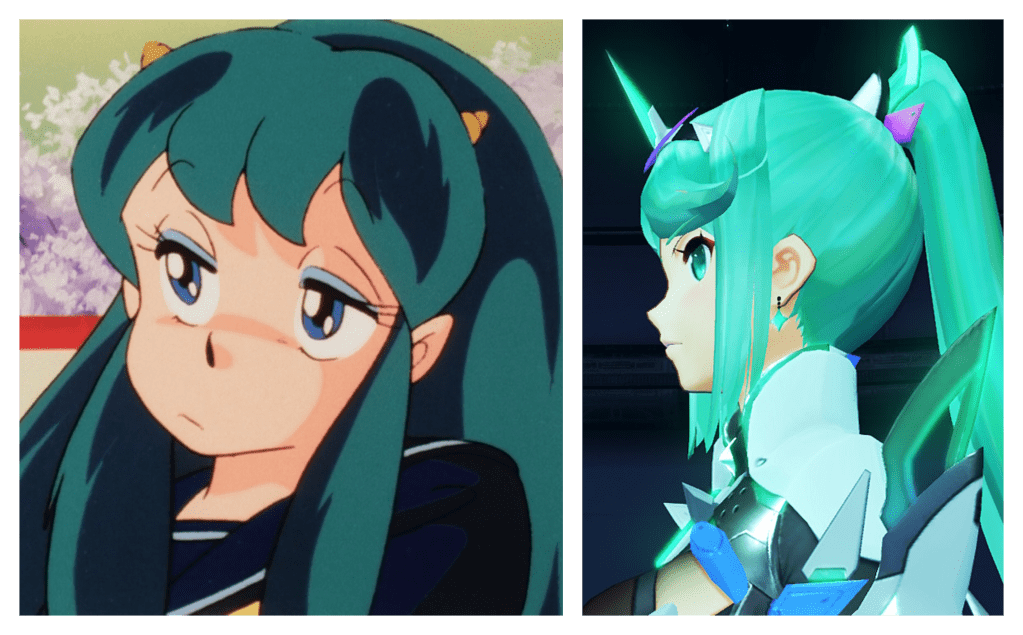
We can link together certain things in homage such as the Mesopotamia and Trinity Processor, or the similar setup of their finales, but for the most part outside of this overhanging ‘fantastical lover’ story beat Xenoblade 2 has almost nothing in common with the rest of this list.

Homage: Saber Marionette + Urusei Yatsura + Megami-sama
The next in line I’ve seen is Steel Angel Kurumi (1997). Like Saber Marionette it’s another battle harem series about a guy awakening a dormant robot warrior inside a research lab, with a similar focus on special devices known as Angel Hearts which serve as equivalent to the Maiden Circuits. Nakahito is pressured into investigating the mansion of a supposed mad scientist and accidentally triggers Kurumi’s activation when an earthquake causes her lips to brush against his. She imprints upon him immediately as all romantic invaders do. The Steel Angel girls show up as a trio like the Marionettes and Belldandy’s family. Kurumi is the Lum-a-like of the series. Like so many of Lum’s other descendants she once more has pink hair and is a sex symbol who constantly throws the protagonist for a loop when she smothers his face in her chest or sneaks into his bed. She’s incredibly selfish in her pursuit of Nakahito’s affections and often disregards everyone and everything around them in favour of him, even having to be taught that it isn’t okay to resort to violence. This is something that takes Lum a long time to reconcile too, since in the early chapters she frequently mentions wanting to kill Shinobu. Saki is her younger sister who wears the Shinobu bob.
The decision to focus on a trio of invaders like this traces back to Megami-sama. Karinka has the blue triangle of the angels on her forehead and they’re occasionally depicted with wings, tying that visual link together.

The ordering of this list has been an absolute nightmare so forgive me for only having the grounds to mention it now, but Kurumi’s appearance and personality may have been the design basis of Poppi in the previously mentioned Xenoblade 2. Saki too shares obvious design elements with Kiku, and both of these robots are introduced as sisters to the main one.
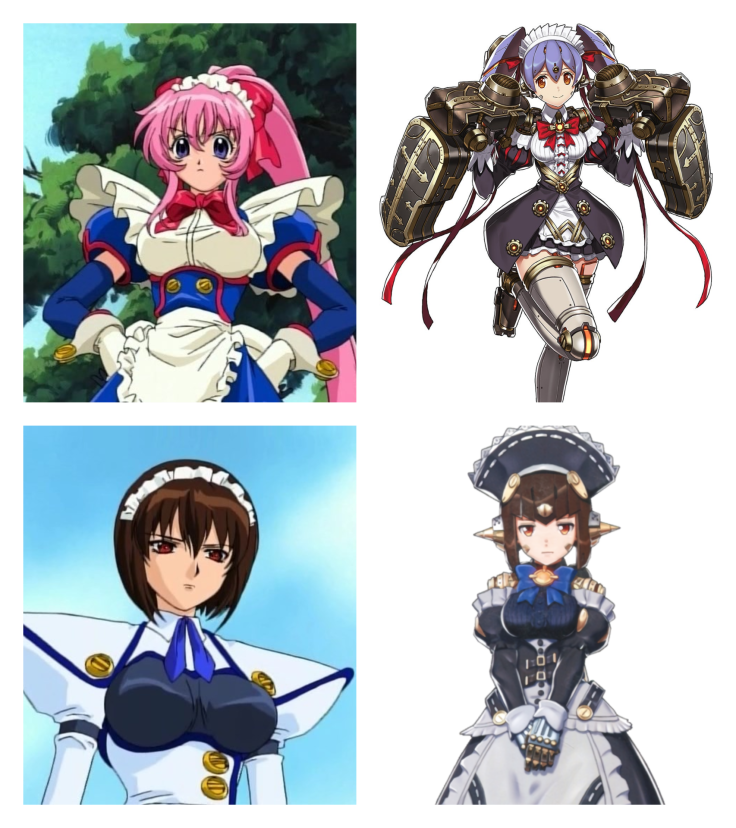

Homage: Megami-sama + Steel Angel Kurumi
The maid robo aesthetic established in Kurumi then might have led into the next year’s contender. In Mahoromatic (1998) the combat robot Mahoro is urged to retire due to her dying battery, opting to spend the last of her days in Suguru’s home as a maid. She enacts the housewife trend from Megami-sama, while also filling the same robot-combat-maid character description of Kurumi. She’s followed by a partner that dislikes her male companion at first, though this time around it’s a robot panther rather than any kind of mini humanoid. The alien war hidden behind the scenes calls to mind Saber Marionette J’s deeper conspiracy mechanics, and given the melancholy undertones of her expiration date I do question if Yokohama Kaidashi Kikou (1994) was part of the works that influenced its inception.
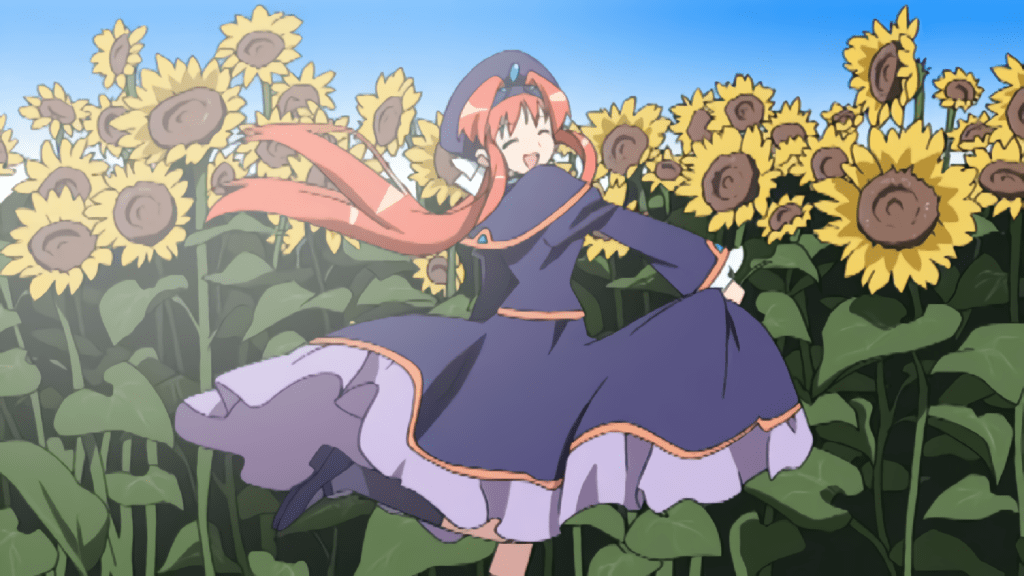
Homage: Mahoromatic + Onegai Teacher
Mahoromatic again goes on to spur the creation of a whole slew of robot bride cohabitation stories, but first I’ll mention its sister project This Ugly Yet Beautiful World (2004). This has many of the same animation staff and the same voice actors all in basically the same role. Kawasumi Ayako voices the main romantic invader, and Shimizu Ai voices their little sister. Takada Yumi voices the lusty teacher again. Asamai Sanada and Kikuchi Yumi voice female friends in both. Etc. The only real shuffling of roles is that Suguru’s voice actor is no longer the protagonist but his best friend. There’s also a bit of Onegai Teacher present in there, since each sister has a small partner robot like Marie and the series begins with another of those nighttime flashes that I also mentioned got reused for Heaven’s Lost Property. There’s also one point where they reference Lum by placing Hikari in a tigerprint outfit and giving her the hairstyle.


Homage: Mahoromatic
As the first of Mahoromatic’s subgenre derivatives I’ll mention Ponkotsu Ponko-chan (2019). It’s fairly different in execution but the premise is near-identical, a housekeeping maid robot nearing the end of her lifespan is sent to old man Yoshioka’s place in order to comfortably live out her last days.
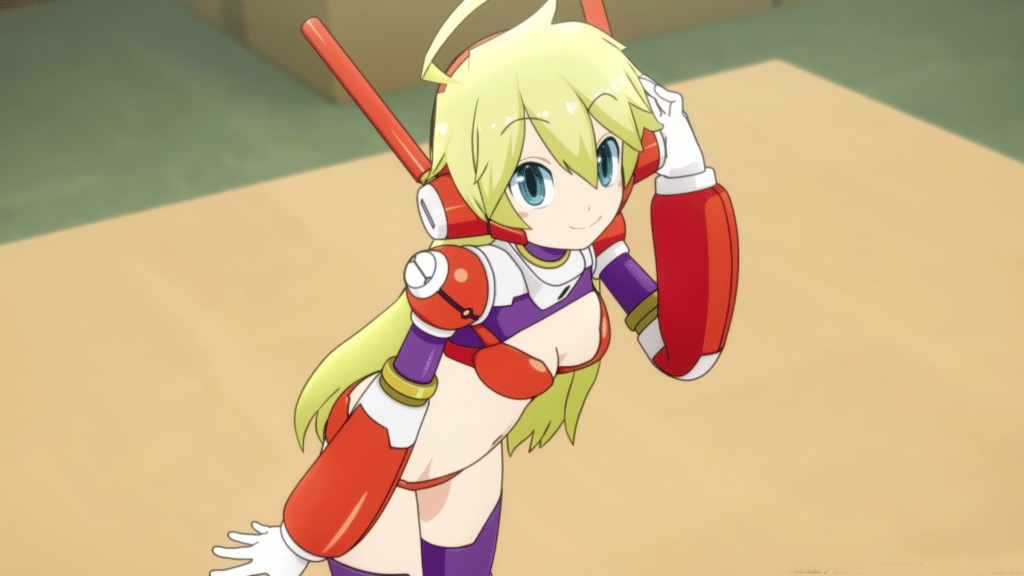
Homage: Mahoromatic
Chou Kadou Girl (2012) is a series where the mind of a fictional combat robot from an in-universe anime series somehow transfers into one of her figurines. She awakens prepared for battle, however since the Earth she arrives in is a peaceful world she quickly retires. The series beginning from the point where she deliberately abandons the battlefield makes it similar to Mahoro’s retirement. Before long she’s prompted to arrange a marriage of convenience to the guy that bought her merch. Though even if it begins from a place without love she does still punish his unfaithfulness, and her skimpy outfit then makes these character traits reminiscent of Lum.

Homage: Mahoromatic
Plastic Memories (2015) is another series to let us follow an android’s last days in the workforce. By the point the series begins Isla is struggling to do basic tasks or maintain her memory banks, since her expected lifespan is almost up. Unlike Mahoro she’s adamantly refusing to retire until the very last moment, despite everyone feeling pain at watching her decline.

Homage: Mahoromatic
Planetarian (2006) is another one of these. In the remnant society that formed after nuclear warfare decimated most of the planet, protagonist Kuzuya is wandering the city ruins in search of old technology. When a shower of acid rain up he wanders into the ruins of a nearby planetarium for shelter, and is unexpectedly greeted by an android named Yumemi who insists she must give one last presentation before she and the facility shut down forever.
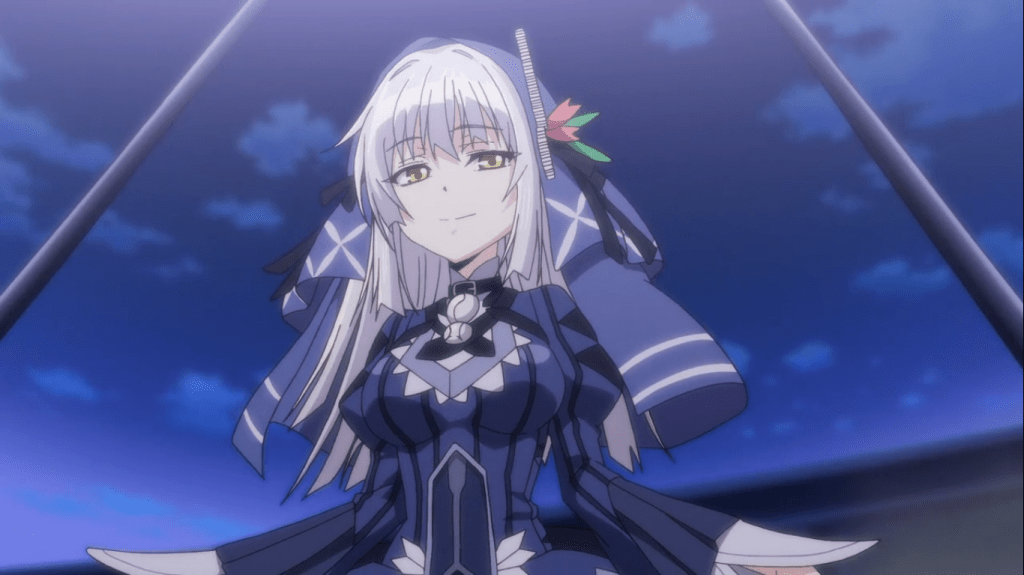
Homage: Saber Marionette
In Clockwork Planet (2013) Naoto is investigating ruins one day, using his extremely fine-tuned sense of hearing to navigate. Through this he eventually reaches the bottom, where he finds a capsule containing a robot. The battle maid RyuZU reactivates and pledges to follow him. She’s overwhelmingly sassy and often teases him with fanservice or dirty jokes. These factors place it under the umbrella of Saber Marionette J and Mahoromatic.
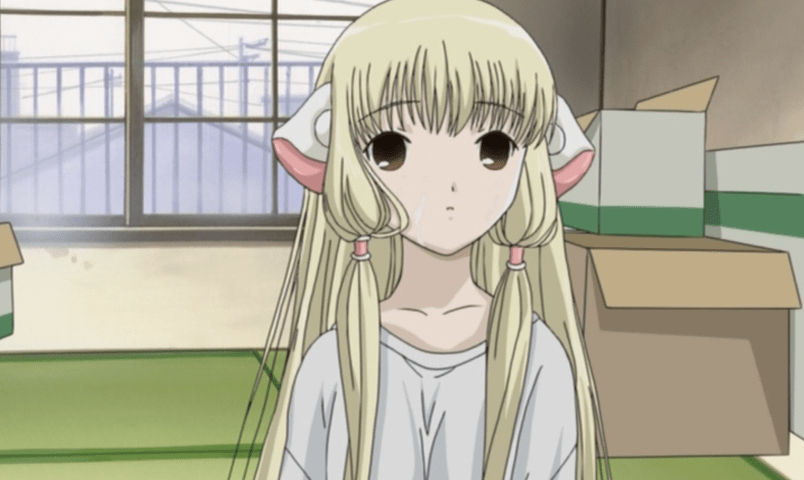
Homage: Mahoromatic
Perhaps most significant of these robot derivatives is Chobits (2000), since aside from being surprisingly popular it also creates its own set of offshoots. In a world full of androids, a poor college student named Hideki finds Chii discarded in a roadside trash pile. Once he moved to the big city he had dreamed of finally getting his own persocom, but this had been cut short by his aforementioned lack of funds. Presented with this opportunity he decides to take her home and see if he can get her to boot up. The massive ports on each side of her head can serve as an adornment equivalent to Lum’s horns, and she has a tendency to tackle Hideki. Much like Mahoro she hides many darker secrets. and there are no lack of underworld organisations pursuing her. But most of the show focuses on their airy cohabitation.
There are three things branching off of Chobits that I’m aware of.
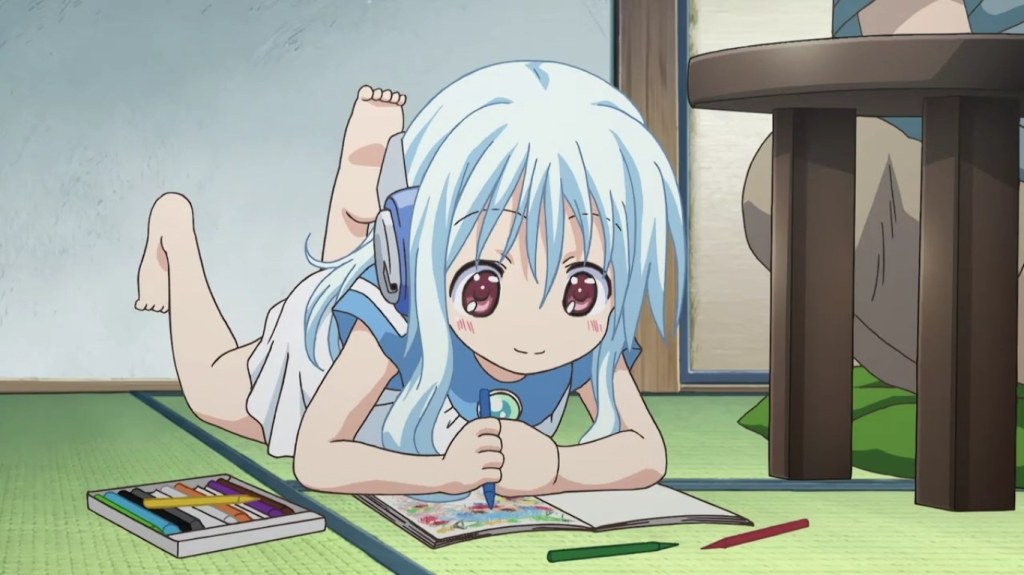
Homage: Chobits
Kowarekake no Orgel (2009) is a short OVA where the protagonist Keiichiro again finds a robot lying in the trash and decides to bring her home for a second chance. Flower introduces herself, and for a time the two of them heal each other through their presence. The series differs past the premise since there’s no sci-fi conspiracy. It instead focuses on the underlying melancholy, because they both know she’s fault and her battery’s end is only a matter of time. This tinge of sadness borrows from Mahoromatic.

Homage: Chobits + Urusei Yatsura
DearS (2001) is much inspired by Chobits and Urusei Yatsura. It follows Takeya and the antics ensuing when he accidentally invites a green-haired alien girl named Ren to move into his apartment. He tries to maintain his ground against her since he is distrustful of the invaders. She’s an alien with green hair, her affinity for ending up either naked or in revealing outfits calls to mind Lum’s bikini, and she has a blue mark on her forehead like Belldandy. Her hairstyle is a rearrangement of the shapes present in Lum’s, with Belldandy’s crazy hair antennas tacked on top. Ren leaps onto the protagonist often and can fly with her gravity manipulators if need be. She also sleeps in the closet like Lum and Mai.
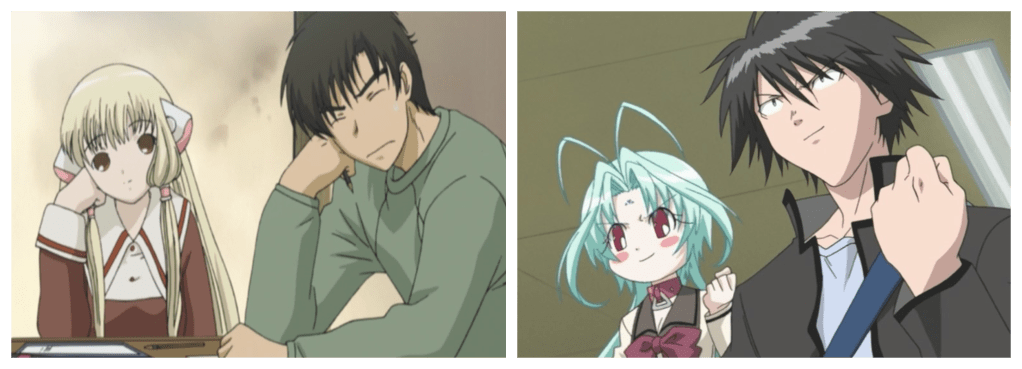
Similar to Chii she begins unable to speak the human language and lacks the common sense to perform even basic tasks like eating or getting dressed. This is the most major part of the show’s mystery plot since both Persocoms and DearS are supposed to have already mastered human culture before deployment. Even once she absorbs all the necessary info she still spends a large amount of time merely mimicking her master’s actions like Chii does. She also glows any time she activates her powers which leads to many shots that feel familiar to scenes in Chobits.

The other main DearS in the series has pink hair and puts on a polite Belldandy-esque act at first but quickly snaps at Ren for her careless personality, evoking that of Ran and Lum’s friendship while also establishing their recurring pink and green hair set. There’s also Oikawa who fills the role of the protagonist’s sleazy, monkey-like best friend. His childhood friend Nene has short hair in juxtaposition to the invaders, like Shinobu. The younger sister Natsuki wears a beanie with what are most likely cat ears, but could be seen as referencing the oni horns and thus that of Lum’s own younger relative Ten.

Homage: Chobits
Chotto Ippai (2016) is a manga that at first glance should have no business being here, since it’s a fairly standard workplace moe with no sci-fi whatsoever, but it’s interesting to note that Momiji gets her job in the same accidental manner Hideki does. While taking a moment to figure out the way around their new town, they loiter near a service entrance to an izayaka. An employee mistakes them for the new applicant and rushes them inside. They’re in a uniform taking orders before they even have the time to process what’s going on. The workplace is so busy that it’s too much of a struggle to explain the mixup so they decide to just do the job anyway and end up getting hired afterward.

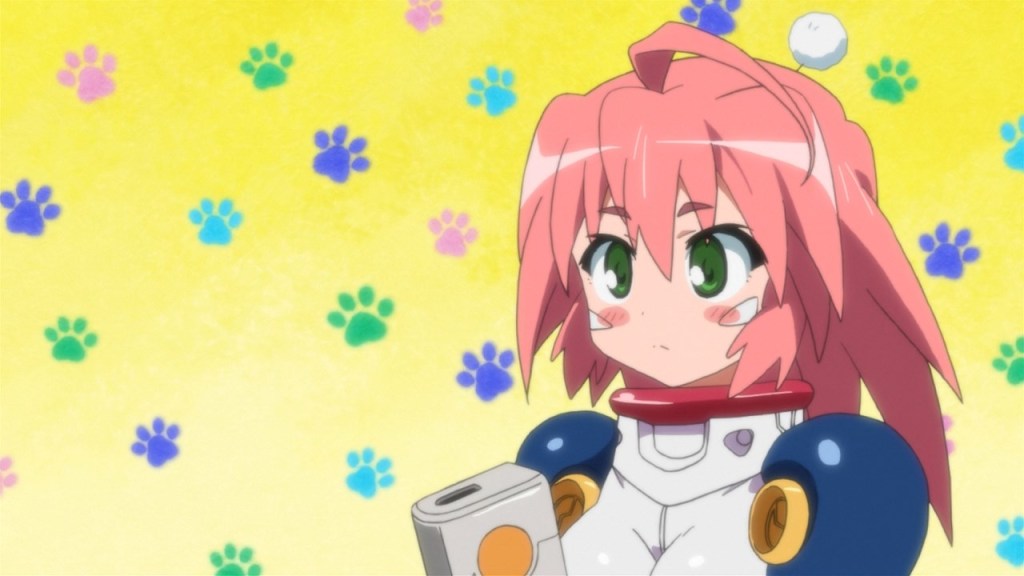
Homage: Mahoromatic + Urusei Yatsura + Cat Girl Nuku Nuku
Mixing together elements of the robot bride Saber Marionette and Urusei Yatsura’s general brand of insanity we have Kemeko Deluxe (2005). The setting centres around Mishima Electronics Corporation, referencing the Mishima Heavy Industries from Cat Girl Nuku Nuku. The show begins with a green-haired robot crashing its ship into Sanpeita’s house and abruptly declaring that she is now his wife. But inside that weird robot shell is actually a much cuter girl named MM, who has pink hair.
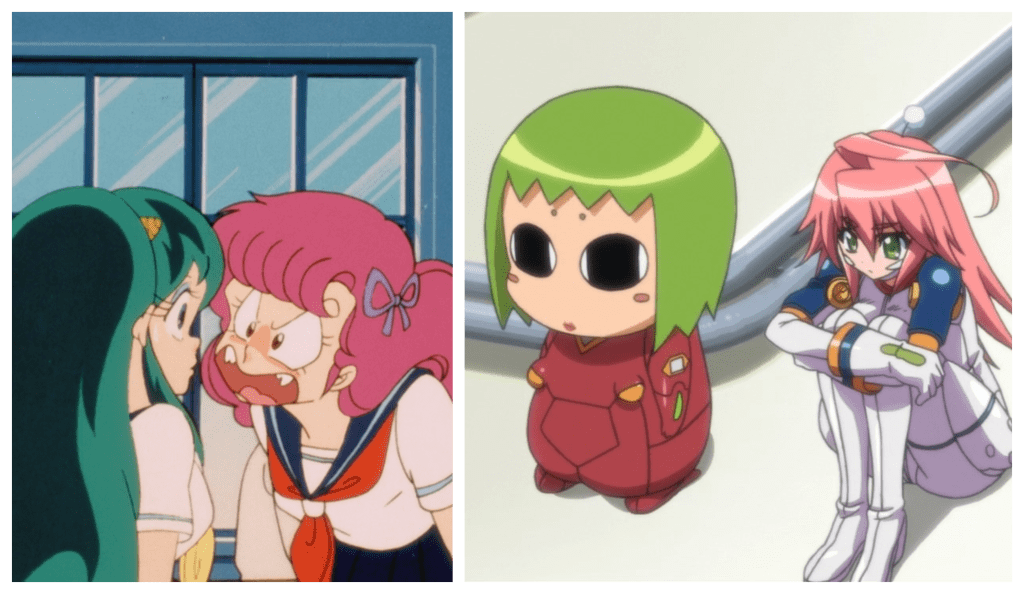
She frequently wears skimpy clothing akin to Lum’s bikini and is the first in a series of multiple pink-haired Lum homages voiced by Tomatsu Haruka.
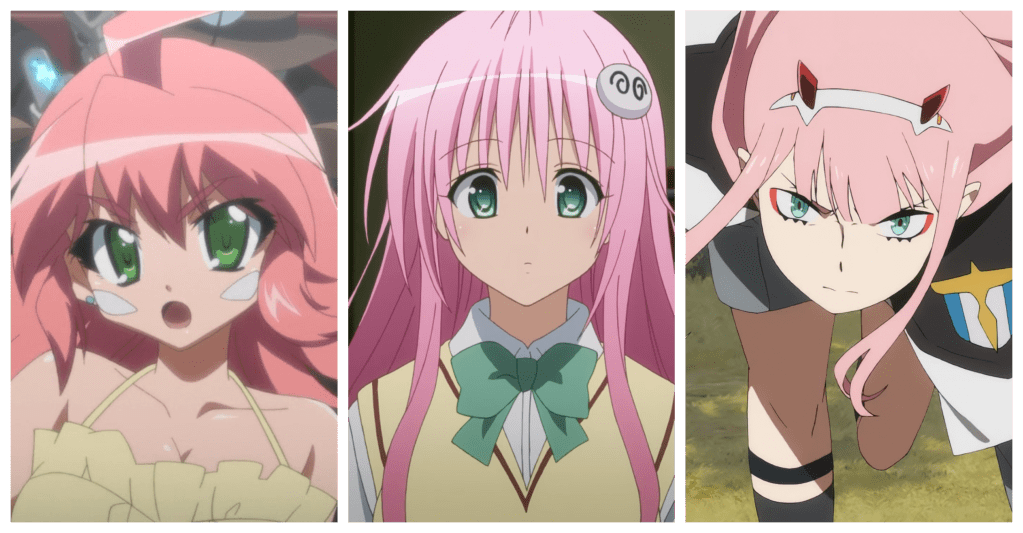
In this show there are cosplay cameos from Magical Witch Punie-chan (2001) and Bludgeoning Angel Dokuro-chan (2003), two offbeat and violent magical girl parody series.
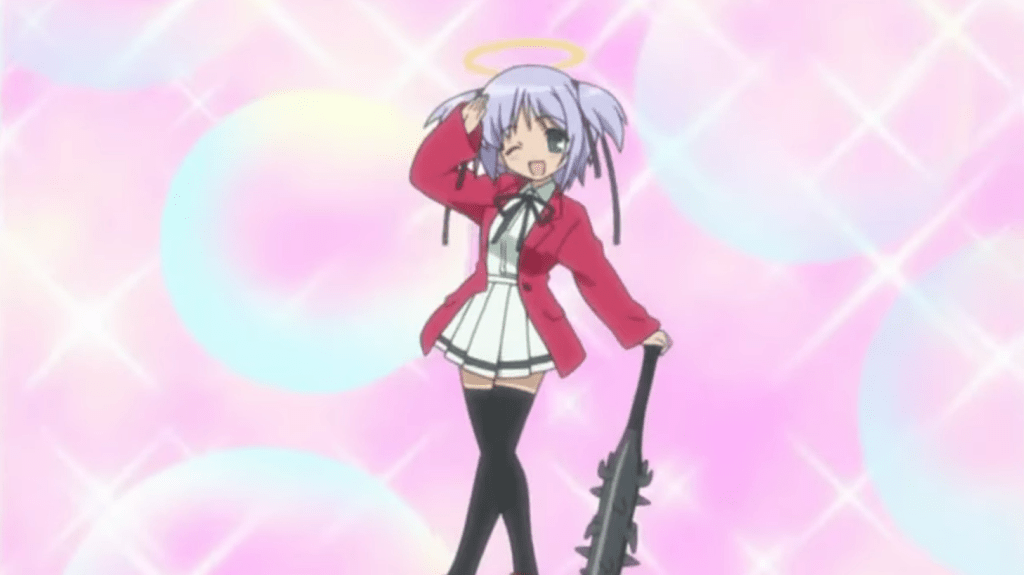
Homage: Urusei Yatsura
None of them have the same source creator, but each adaptation was directed, storyboarded and scripted by Tsutomu Mizushima and retained many key creative staff. The shows form a clear stylistic set. Punie is purely a mahou shoujo satire and has no need to be added to the list, but Dokuro is a maniacal lover and sex symbol toward the human she lives with and can thus be added as a descendant of Lum. She is an angel and thus should ordinarily fit the spot of Belldandy, but her obscene degree of violence puts her as far away from the fantastical housewife trope as possible. She’s one of them more extreme interpretations of Lum and Ataru’s abusive back-and-forth.

With the Megami-sama side of the collage and its Saber Marionette subroute now finished, I can finally move on to highlight what I believe is the single most significant successor to Urusei Yatsura – the To Love-Ru (2006) franchise. It’s the historical meeting between the old and the new, whose immense popularity defined much of the direction invader anime would take for the foreseeable future. Lala is one of the three pillars of the invader. Within this subgenre your main girl is pretty much always going to fit neatly into the character archetype of either a Lum, a Belldandy or a Lala.

Homage: Urusei Yatsura + Megami-sama + Tenchi Muyo + Onegai Teacher + Seto no Hanayome + Kemeko DX + Black Cat
This claim particularly applies to the first manga series. It catches a lot of flak but To Love-Ru is my second favourite manga and it’s a property that means a ton to me. I think its merits are severely (or even deliberately) misunderstood and treated very unfairly because many see the need to shut down the potential of anything with ecchi – let alone the king. Genre bias, bad experiences, virtue signalling or whatever else, To Love-Ru is a series commonly denied its accolades. Although despite going that far in its defense, I do have huge misgivings about the direction the series took in Darkness, where it traded all its charm for rapid perversion, and ended up largely feeling like a porn parody of itself. But that’s a discussion for another day. In a prior video I called Love Live Sunshine the “Serial Experiments Lain of idol anime”, and if I’m following on from that dialogue then I would also say that To Love-Ru is ‘the Gurren Lagann of cohabitation harems’. It adapts, transforms and interprets main elements of Urusei Yatsura, Megami-sama, Tenchi Muyo, Onegai Teacher, Seto no Hanayome and Kemeko DX, among other things which I have apparently forgotten to note down, threads it together with characters plucked from Yabuki’s Black Cat manga and then encases them all within its own semantic core. This is another one that I’ve dedicated its own blog post to exploring before. I won’t dive especially deep due to the sheer quantity of references here. That segment would become the same length as the entire script until this point, so instead I’d prefer to just rush through some key points of interest.
First is Lala, who is the first Lum-a-like with that name and the second of these pink-haired Tomatsu Haruka characters whom I’ve alluded to. Much like Lum she’s a princess from a race of alien devils who forces her way into the husband’s home after stealing a confession meant for somebody else and almost immediately becomes suffocating with her displays of affection. Lala is one of the most major sex symbols in a genre where their presence is one of the identifying components. She’s reckless and frequently pushes Rito into danger, somehow manages to cook food equivalent to an intergalactic catastrophe, and uses flight as one of her main methods of movement. Personality-wise she’s more innocent and outwardly gentle like Belldandy, so all of the chaos that follows her around stems from her airheadedness. She’s accompanied by a little companion named Peke who objects to Rito at first. While this is akin to Ten, its design and name also pull in Marie from Onegai Teacher. Furthermore their first meeting involves warping into Rito’s bath, much like Yukiho and Kei doing the same to escape the void. Shockingly, Lala doesn’t really ever call Rito by the “darling” pet name even as a nod, but the franchise does have multiple character songs using the world, including Sai-ai Darling and Darling Honey Sweet Emotion.
Like Lala being an inverse Lum, the cowardly Rito is also an inverse of the girl-obsessed Ataru. He’s somewhat afraid of interacting with girls but ends up with a harem regardless, whereas Ataru is the exact opposite situation. Whenever he gets his personality reversed through some alien device he comes to act near-identical to Ataru.
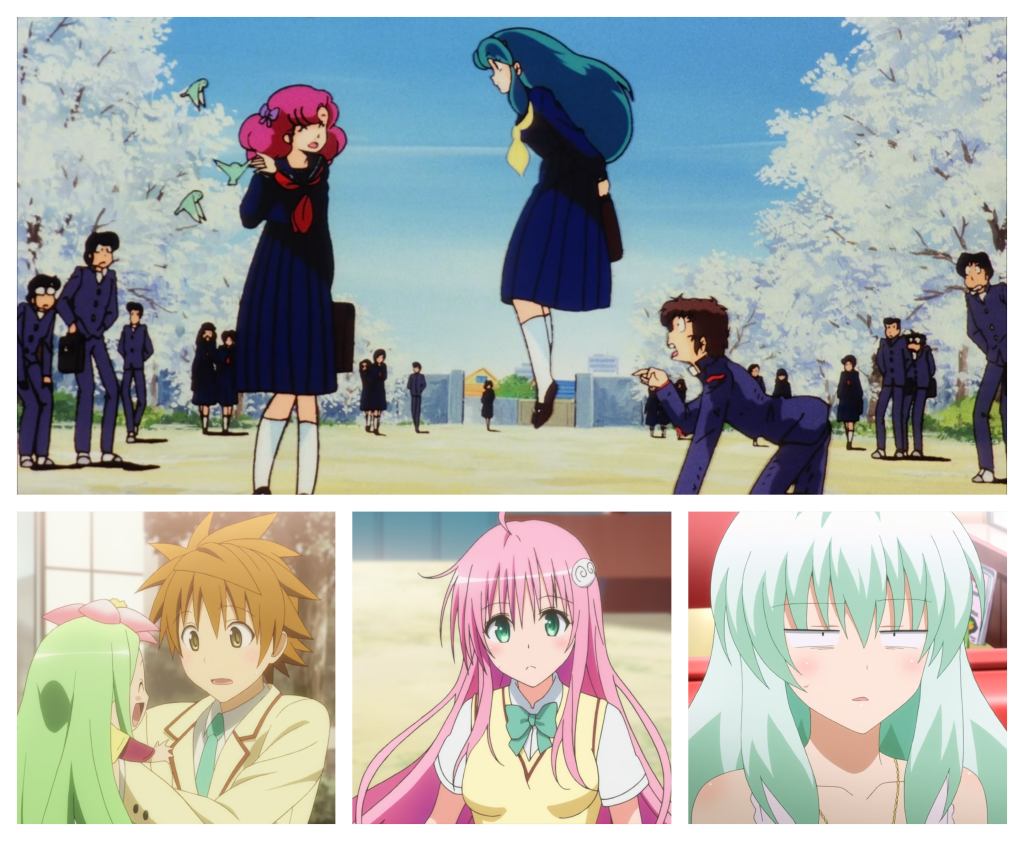
The Deviluke are war-mongers tantamount to the Oniboshi. The protagonist’s pervy best friend Saruyama ties all the way back to Megane in Urusei Yatsura, but the monkey element in his design is quite obviously taken from Saru in Seto no Hanayome. That one in particular I kinda feel is less homage and more plagiarism, but I digress. Run is a two-faced childhood friend seeking revenge, and therefore very obviously stand-in for Ran. The idol component of her character is likely pulled from Luna, the Ran homage featured in Seto no Hanayome. Run somewhat resembles Lum, and this swapping of who has the green or pink hair is something later seen again in Star Twinkle Precure. Her struggles sharing her body with her brother call to mind Ranma 1/2, but in the context of this discussion we can instead say the gender identity issues and Ren’s constant affirmations of masculinity are an opposite to Ryuunosuke’s attempts at chasing her femininity. Ren’s transformations, ikemen appearance and constant challenges to Rito place him to be Rei as well. Tenjouin heir Saki serves as the Mendou heir Shutarou. You get the point.
The anime-original ending of To Love-Ru’s first season sees Rito challenged to a marathon by galactic warlord Gid. He’s become impatient with the so-called fiance’s slow progress with his daughter, and decided to issue a challenge. If he can’t run to Gid’s UFO within the allotted time he’ll destroy the earth. This channels the oni tag events from Urusei Yatsura’s beginning and end. During both instances one of the alien characters remarks that they’re opposed to it, since they’ve become rather fond of the humans. Rito runs and runs, and through the help of his newfound friends manages to reach the goal, discovering that Gid had prepared a wedding ceremony at the end. But after arriving successfully, Lala comes to decide that she should use a device to erase their memories regardless, so that this time she can meet Rito without any invader advantage and win his love normally. This action is inspired by Lum threatening to erase all the aliens from Tomobiki’s memory unless Ataru wins the tag in Final Chapter. However, when Lala tries it things don’t quite go to plan. With a bittersweet feeling, she steps into the classroom prepared to introduce herself. Only to find that her device has messed up as usual so everyone remembers her anyway, which is the same as what happened when Mizuho attempted this at the end of Onegai Teacher.
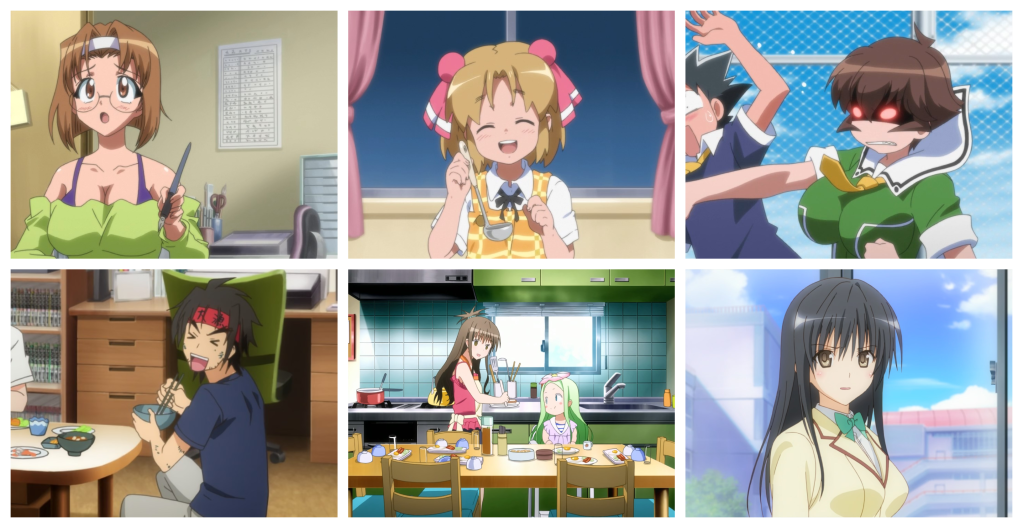
Furthermore it borrows from the previously mentioned Kemeko Deluxe quite heavily. Sanpeita and Rito both have mangaka for parents. Their little sisters Tamako and Mikan are the one in charge of household chores, and Sanpeita’s childhood friend Izumi is constantly berating his accidental acts of perversion with an “unhealthy” catchphrase in the same way Yui is always yelling at Rito for being “shameless”. The second season sees the introduction of a new central character named Mea, who shares hairstyles with Kiryuu from Mamotte Shugogetten. In Tenchi Muyo the space rabbit Ryo-Ohki eventually evolves to a humanoid form, and the cast then all begin to take care of her as a communal daughter. You can feel the effect this had on Celine, as that’s also her exact function in the cast.
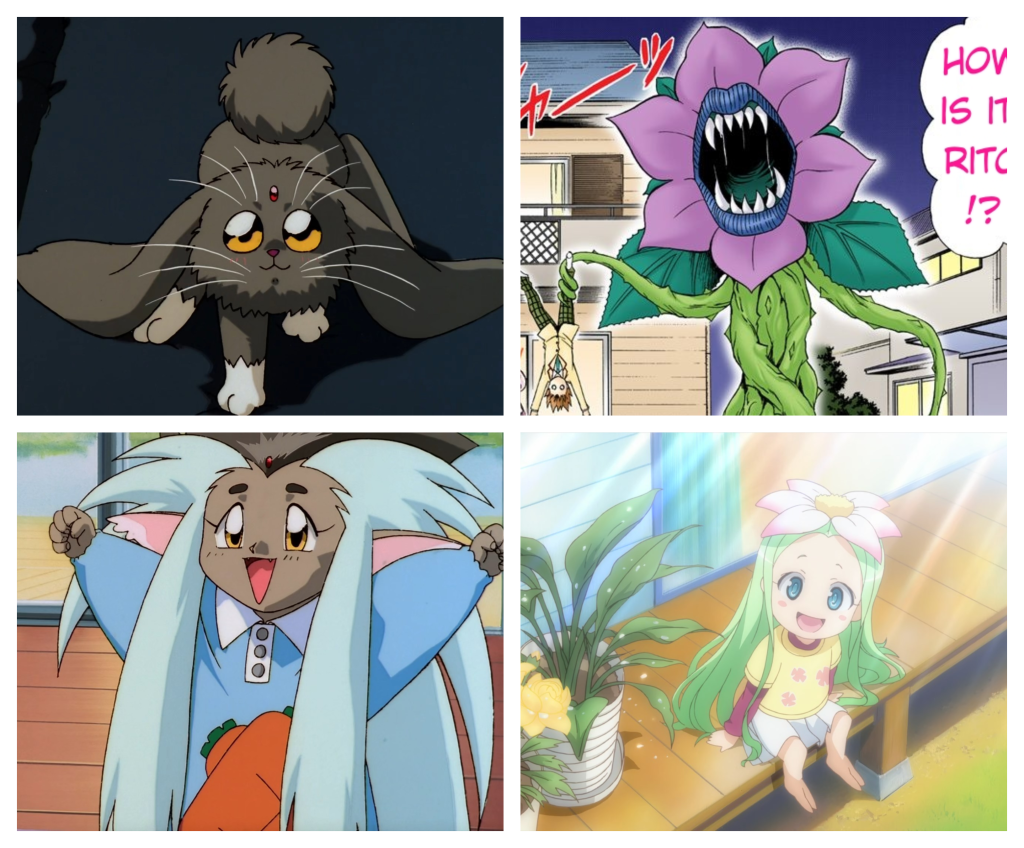
To Love-Ru is a genre celebration that pulls in key elements of many adjacent works, paying homage both direct and transformative, even if sometimes it looks to be going quite a step too far. This is the piece that set me down this rabbit hole, and indeed still the one that I feel makes for the most interesting and complete comparison point.

Homage: To Love-Ru
I have a number of things which branch off To Love-Ru. It created a new space for fanservice harems to exist within. But as as is the standard, the first to mention will be that which is just one of the creator’s next works – artist Yabuki Kentarou’s manga Ayakashi Triangle (2020). Except that I can’t find where I left my notes. But basically the To Love-Ru DNA runs strongly in this I guess. Trust me.

Homage: To Love-Ru + Urusei Yatsura
Moving on, it seems the only non-transformative To Love-Ru derivative I currently have noted down is a manga called Nadenade Shikoshiko (2013), which parallels the central love triangle of To Love-Ru and early Urusei Yatsura: traditional values vs the radical interloper. Totoki is in love with a prim and proper girl. He believes that he loves tidy girls who embody the traditional ‘yamato nadeshiko’. Yet before he could ever approach her the rowdy pink-haired time-traveler Cherry bursts onto the scene – and into his house – to fulfil a promise for marriage they made as children. She’s a caveman without much in the way of modern modesty, so she’s always inadvertently exposing herself to Totoki as a sex symbol or trying to solve issues with brute force. Reading it with the context of To Love-Ru highlights these parallels.
Homage: Urusei Yatsura
Next, because organising this list coherently is a task beyond me, I return to the Urusei Yatsura segment due to Saya no Uta (2003) being relevant for a few things down the list. It doesn’t have a lot in common with the rest of this list, but Saya is a supernatural invader nonetheless. How centrally she demands Fuminori’s attention and her green hair are perhaps evocative of Lum, but not in a significant capacity. I have it on here primarily as prerequisite for the next two entries.

Homage: Megami-sama + Saya no Uta
Fate/Stay Night (2004) is an invader story in two of its three romantic options. Saber is technically a human but becomes supernatural through her status as a Servant, and Sakura hides an abomination within. Her cohabitation with Shirou is evocative of Saya no Uta due to all the undertones of eldritch horror, sex and death. In particular I do want to highlight Heaven’s Feel since, apart from simply being the best route, it has the most connection to this topic. The main focus of Sakura’s character arc is that everyone is trying to teach her what real family and love are, or give her a place where she actually feels like she belongs. Because of this, one of the main things she likes to do is cook and clean, creating a link to the fantastical housewife Belldandy. Like all of these invaders she is also the biggest sex symbol in the story. Sakura is the one who I would point to and say embodies Fate’s place within this list. There are others that fit the description as well. In the linked routes of Hollow Ataraxia and Today’s Menu For the Emiya Household we see Medea becoming a bride so she kinda fills that role too, and in Fate/Zero Kiritsugu is married to the homunculus Irisviel.
Fate is its own cultural phenomenon, so there’s surely a ton of clones and derivatives that could be pointed out. By those who like, and are thus familiar with, the battle royale genre at least. Which isn’t especially the case with me. I don’t have much a frame of reference for it. Off the very top of my head the only two that immediately jump to mind as steps after Fate are Soul Buster (2016), which was terrible enough to where I genuinely don’t want to waste any time talking about it, and Tokyo Xanadu (2015).

Homage: Fate/Stay Night
Tokyo Xanadu is a JRPG that borrows much of Fate/Stay Night’s character dynamics and then places them into a standard Persona-esque environment. Hiiragi is an effective clone of Rin’s personality and design sentiment. The story begins with her doing shady magic stuff at night to keep the town’s karma balance in check, when Kou accidentally wanders into the scene and gets attacked. This scene evokes the first time Shirou wanders into the fight between Archer and Lancer. Kou’s character serves the same role as Shirou. The PTSD flashbacks about a ruined cityscape begin almost immediately, and he shares the same fascination with working part time jobs. Kou has a childhood friend named Shiori who tends to cook and clean for him. Her purple hair and red ribbon are lifted straight from Sakura. Kou has an older sister figure who works at the school as their goofy homeroom teacher. She’s often late to class, and with her ditzy personality the students have little respect for her as an actual teacher. She has the nickname “tora”, which is the native word for “tiger” instead of the english loan word that “taiga” uses in Fate. It’s another blatant parallel. Right from the beginning it feels less like homage and more like straight up Fate/Stay Night fanfiction.


Homage: Tenchi Muyo + To Love-Ru + Urusei Yatsura + Saya no Uta
Combining stylistic elements of Urusei Yatsura and To Love-Ru with a premise that’s hard to argue isn’t influenced by Saya no Uta, we have the Haiyore! Nyaruko-san (2009) series. Nyaruko is a Lovecraftian alien taking the form of an anime girl. She falls in love with Mahiro at first sight, sneaks into his home and immediately starts to try and convince others that she’s his wife. By the end of episode one she’s already hit a bunch of romantic invader standards like her sudden transfer into the school and inhumane cooking. Her character traits are immediately aligned with the usual invader profile as someone treading the line between comic relief and sex symbol. She establishes herself as a superwoman with her great looks, popularity and physical abilities. Her personality is nonsensical and as always she seems to have an affinity for breaking things. Nyaruko does put her best effort into everything, but as expected that always seem to conflict with human common sense. How quickly she leaps to violence might echo Lum too. Mahiro gets called “darling” every now and then, but this isn’t a consistent part of Nyaruko’s character framework as a Lum homage. It’s more because this series is chock full of anime references in general. Similar to the lightning bolts when Nyaruko is forced to watch Mahiro on a date, or Kuuko referencing the title of Urusei Yatsura’s final film “Itsudatte My Darling”, which are only references and nothing more. The pop-art in the first ending animation also has those Urusei Yatsura-style stars, and the second opening has Cosmic Cycler’s pink and blue background which is commonly referenced.

Her childhood friend and rival Cthuko is the next alien to join the lineup. She’s not two-faced like Ran and completely contrary to the usual loathing between the two, Cthuko is in love with Nyaruko. That causes a similar amount of friction regardless. In season 2 she widens her net to include Mahiro as well, in hopes that gaining his love will catch Nyaruko in the process. With the dynamic this presents, where the Lum-a-like’s childhood friend is attempting to steal her lover for ulterior reasons, we could potentially spin that into a parallel for Ran’s attempts at seducing Ataru to spite Lum. The way the two alien girls banter and constantly try to get a lead over the other is executed in a way visibly reminiscent of Urusei Yatsura.
The series also prominently lifts from Tenchi Muyo. In both stories the main girls arrive to the planet through connection with a galactic police force, and despite looking youthful they’re all thousands of years older than the protagonist. Nyaruko is a brutish woman from the galactic patrol who is partnered up with a transforming animal called Shantak. It spends most of its time as a little mascot character, but can transform into a flying, devilish giraffe is the situation calls for it. During the second season, Shantak develops a humanoid form that the others take as their daughter, revealing her to be in homage to both Ryo-Ohki and Celine.
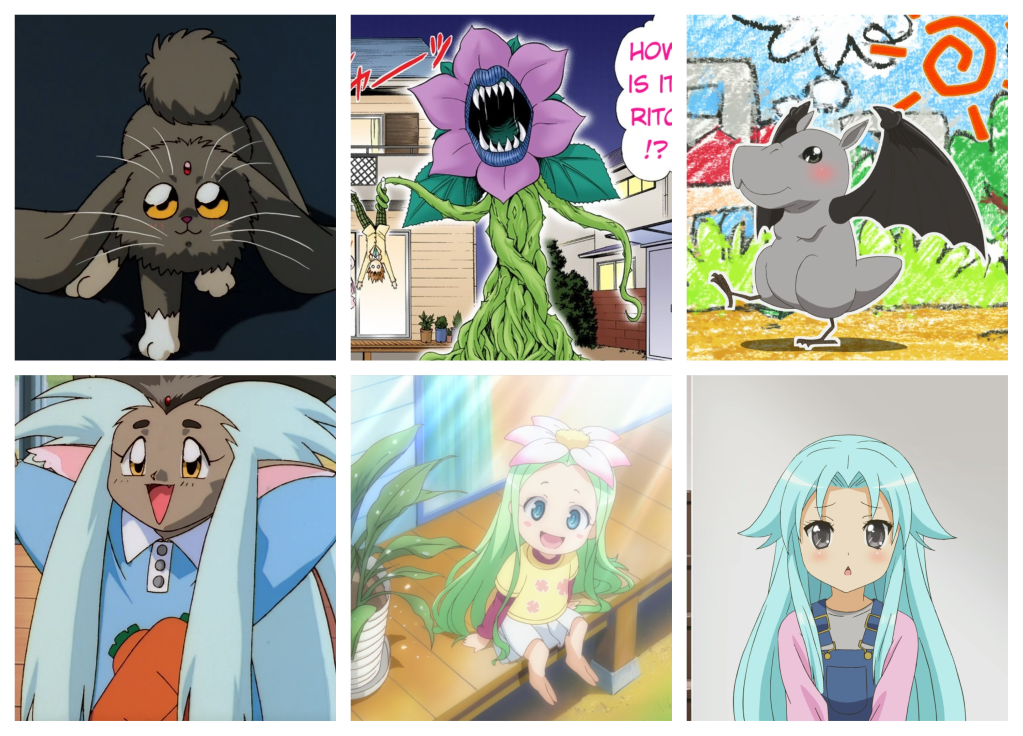

Homage: Urusei Yatsura + To Love-Ru
If you know anything about anything you would know that it was only a matter of time til this was brought up. One of the most prolific Lum-a-likes in recent times: Urusei Yatsura and To Love-Ru fuse to form Darling in the FranXX (2018).

Zero Two is the third of the pink-haired Lum homages voiced by Tomatsu Haruka I mentioned, and what a Lum she is. The design is a mix of Lum and Lala Deviluke, so much so that To Love-Ru artist Yabuki was brought on to do the manga. She’s pink-haired, busty and has the same voice actor as Lala, but before any of that she’s effectively a recolour of Lum. In aesthetics, Zero Two parrots Lum more obviously than any other. Both characters are oni who call their lover “darling”, she has the same little horns and coloured eyeshadow. Equally as possessive too, and the entire show revolves around her being a sex symbol. Her love rival Ichigo is the Shinobu of the series. The long-haired invader and short bob human girl is a dynamic carried down from Urusei Yatsura, much as it is in many other series. This time you get an additional component to it as well. Unlike the standard green and pink, this time the two main girls have long pink hair against the short blue hair, choosing to also nod to To Love-Ru’s Lala and Haruna in that decision.
Homage: Megami-sama + Urusei Yatsura
FranXX was far from Trigger’s first Urusei Yatsura reference, since we also see a couple things in Kill la Kill (2014)‘s second ending animation and Space Patrol Luluco (2016)‘s set design. But those are mere visual references and they have nothing significant structured to resemble the show itself. That chibi animation and the spinning from Lum’s Love Song are relatively common selections for Urusei references all things considered, also showing up in the opening of Kobayashi’s Dragon Maid (2013).

On that note I suppose if we wanted to we could call Tohru a Megami-sama derivative housewife while simultaneously being an aggressive, jealous lover like Lum. But I haven’t explored that option enough before to know if I’d actually pitch it. For what it’s worth Dragon Maid rather obviously led to the mangaka making his later series Mononoke Sharing (2015). I’m sure by this point Tohru has probably developed her own lineage, but aside from Yugioh’s Dragonmaid archetype and the half-dragon maid in Modern MoGal (2018) I don’t think I’m well-read enough to follow down that line.


Homage: To Love-Ru + Urusei Yatsura
Monster Musume (2012) is something I have as an offshoot of To Love-Ru since it utilises its distinctive style of ecchi cohabitation harem. This is something that really could have only happened in a post-To Love-Ru world. However as far as the characters go Miia is a Lum. Her gigantic pointed ears stand in for the oni horns, she’s hyper-possessive and she calls her partner “darling”.
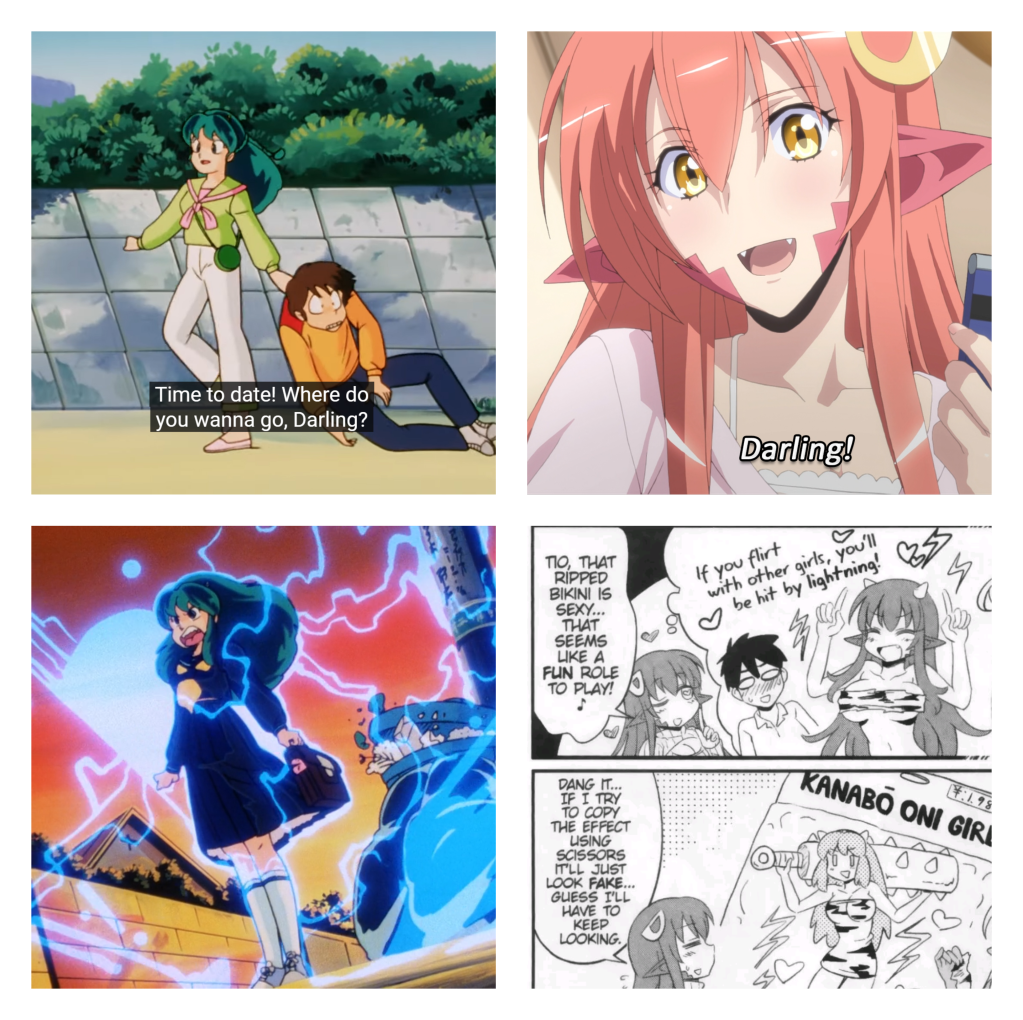
One of the anthology chapters even has her don the tiger print bikini and horns to joke about zapping ‘darling’ for flirting with other girls, as well as a Lum cameo on the bottom panel.

Homage: Monster Musume no Iru Nichijou
From here the concept alone is probably enough to put Monster Musume no Oisha-san (2016) and its lamia female lead as a next step, but once again I can’t say I’ve explored that possibility enough to really comment. Yet it’s difficult to believe that another manga also titled ‘Monster Musume’ and using a lamia as its main girl wouldn’t have been influenced by Miia.

Homage: Monster Musume
Yokai Girl (2014) is probably parroting design elements of Monster Musume and To Love-Ru. It’s an ecchi demi-human cohabitation story where the main girl has pink hair. There’s a particular narrative focus on the protagonist’s little sister, like that seen in To Love-Ru and then Nisekoi. The selection of demi girls has more in common with Monster Musume since you’re getting traditional yokai like a rokurokubi or human spider.
Homage: To Love-Ru + Love Hina
Another one based on To Love-Ru’s distinctive episodic ecchi antics is, of course, the next king of ecchi which took its place after it ended, Yuragisou no Yuuna-san (2016). People were quick to label this the successor and it’s easy to see why, though it’s more of an intuition based on the manga’s style than it is ties between any specific character. The delivery of its ecchi feels similar and they share troublesome events like Kogarashi getting turned into bathroom amenities or the magical board games. I’ve also heard that this has elements of Love Hina, though I’ve yet to see that myself to confirm. From what I think I know about Love Hina we could potentially establish a pathway going Urusei Yatsura > Maison Ikkoku > Love Hina + To Love-Ru > Yuragisou Yuuna, but again that all hinges on Love Hina, for which I don’t actually have anything other than vague thoughts acquired through media osmosis.
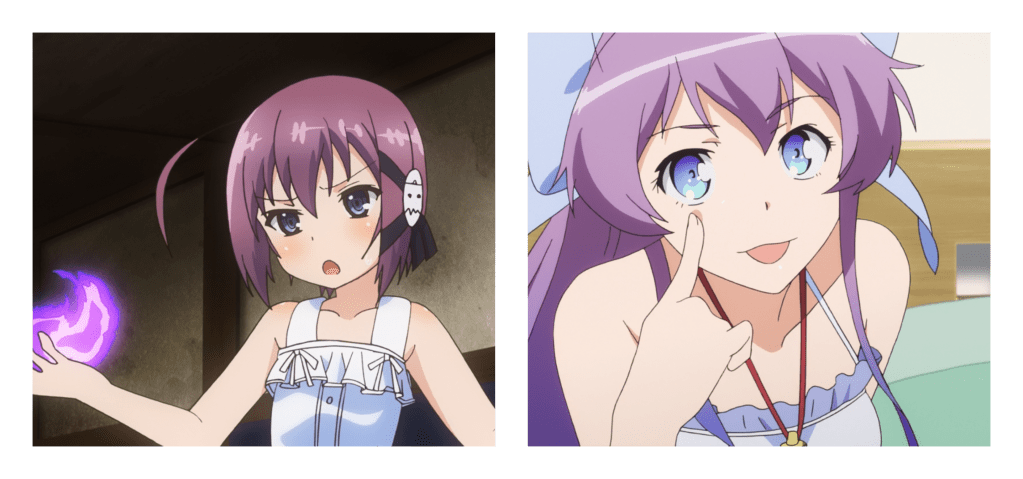
Before Yuuna-san there are earlier ghost cohabitation stories like Rokujouma no Shinryakusha (2009) and Ryuugajou Nanana’s Buried Treasure (2012). But although these would surely fall under the line somewhere due to being stories about a superhuman romantic invader, the truth of the matter is that I just don’t remember them well enough to know if I quite need them in my chart.
Quick diversion here in order to highlight something with ties, but that needs another prerequisite established first. That being Spice and Wolf (2006), a romance story set in medieval times with a particular focus on the socioeconomic situation. Holo is a wolf, though the execution of which doesn’t feel like it demands any connection to Fruits Basket, and she is quite a selfish character, though again with no immediately apparent need for Urusei Yatsura. To tell the truth this is one of those titles which was originally just an honourable mention at the end of this script. But I need it placed here in order to leap to Maoyuu Maou Yuusha (2011), which is often spoken of as a successor to it.


Homage: Spice and Wolf
Maoyuu begins at the culmination of a war between man and demonkind. The chosen hero storms the castle gates and stares down the demon queen. But no sparks fly between them. Well – none of the magic kind at least – since Maou immediately proposes to Yuusha, telling him that this unity is the best thing they could do for both of their people. Though on the inside she is, of course, fangirling over him just like any Lum or Lala would. Maou had liked him a long time before he ever knew about her, so at the start Yuusha struggles to get used to how clingy she is, often using the “don’t cling to me” phrase that is genre staple. It’s faintly a harem series and leans more into the fanservice which, out of the key cornerstones in this subgenre, aligns it with To Love-Ru a little. The medieval setting brings with it a particular focus on socioeconomics and trade that makes watching this feel distinctly similar to Spice and Wolf.
Homage: Maoyuu + Urusei Yatsura + To Love-Ru
Love Comedy Hero and the Princess of Darkness (2018) is in a lot of ways just a gender-swapped version of Maoyuu. Humans and demons have been at war for a long time due the dwindling environment of the demon realm. The story opens with the hero breaking into the demon lord’s castle for the final battle, but instead of attacking her at all he immediately declares his love and negotiates to get her to date him. She ends up agreeing. At the start it’s moreso that she’s intimidated by his power level and wants to find some other method to undermine him, so although it’s a fairly questionable setup the reluctance of one side lines up to usual romantic invader standards. The premise is clearly reminiscent of Maoyuu, and the fact that of neither of them have actual names is in reference to this. Both works only refer to their lead characters as “hero” and “demon king”. The design of the princess mixes Lala’s tail together with Lum’s green hair and golden horns, and her battle outfit is a bikini. This is further referenced in one of the bonus pages where they have her wear the iconic tiger bikini.

And now like before, I finally arrive at the biggest To Love-Ru successor which will bring us to the next layer – Nisekoi (2011). This is another that I’ve written about before, so I’ll try and boil it down to a pitch that is not 4000 words long.

Homage: To Love-Ru + Seto no Hanayome + Toradora
The most immediate thing to mention for Nisekoi in this discussion is how it borrows the central love triangle of To Love-Ru. Rito and Raku have both been in love with their classmate Haruna and Kosaki since middle school, but each party is too shy to discover that the feeling has always been mutual. However right when they’re finally about to confess they’re pulled into a relationship with the interloper and cannot escape for threat of her violent family. In this particular instance it’s utilising a mob aesthetic like Seto no Hanayome, but all the ruffian groups are pretty interchangeable. It is true that Chitoge is not an alien or the like, but she’s a foreigner and displays cartoony physical feats much like Lala did so that’s enough to consider her as inhabiting the fantastical. The invader is always a superwoman of some kind. Likewise instead of setting marriage at the start line like most other entries, the series begins on the two being forced to date. However marriage quickly enters the equation anyway once the mystery of the locks begins to surface, and Raku begins trying to find the girl he made a childhood promise to.
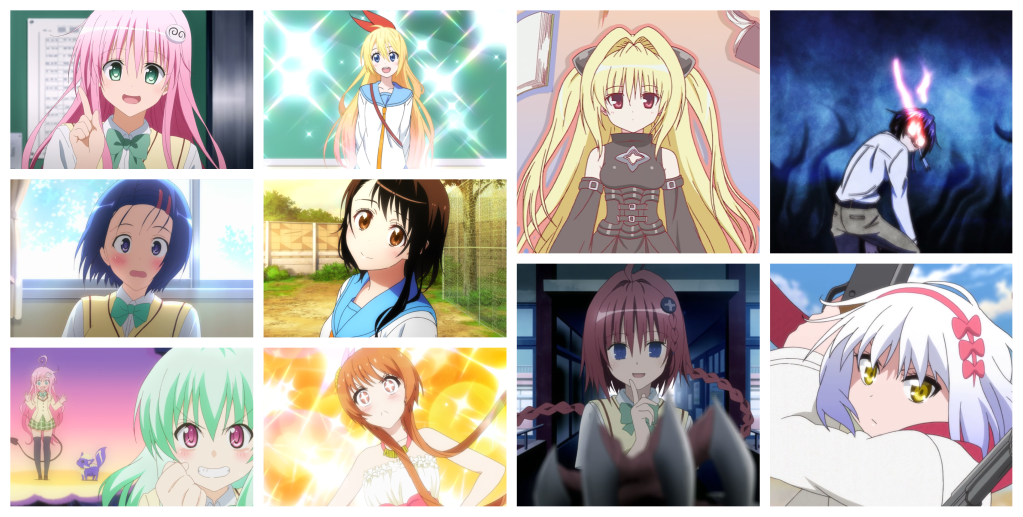
In the link between Urusei Yatsura and To Love-Ru I had noted how Ran and Run are basically the exact same character. The same thing can be said of characters here. Haruna is perhaps a tiny bit more aggressive in pursuing her crush than Kosaki is, but it’s to the point that in the time before I noticed how much I actually adore To Love-Ru I had mentally mistaken them to be the same character. Their performance and personalities are near-identical, while their history of orbiting the protagonist is. Legendary assassin “Black Tiger” Tsugumi is like “Golden Darkness” Yami-chan, while also embodying the gender conflict that was present in Ryuunosuke and Ren. For some reason her caretaker Claude just cannot seem to notice that she’s a girl, making their home life reminiscent of Ryuunosuke’s battle against her dad. Haru is equal to Nana in how they try to defend their older sister from a misguided perception of the protagonist as a sexual beast. Likewise she soon befriends Paula, the younger sister of the famous assassin. The same as Nana had done with Mea. Her other best friend mimics Mea’s design with the red hair, blue eyes and braid. Zastin and Claude are the invader’s bodyguard and have the same voice actor. Saruyama and Shu are both the protagonist’s sleazy best friend. The offbeat Magical Patissier Kosaki segments are similar in style to Magical Kyouko. Etc.

Chitoge is Lum, Onodera is Shinobu and Marika is Ran. Alongside that, Nisekoi is also something that could surely only have come about in the ripples of Toradora, and like with To Love-Ru it makes these connections very apparent.
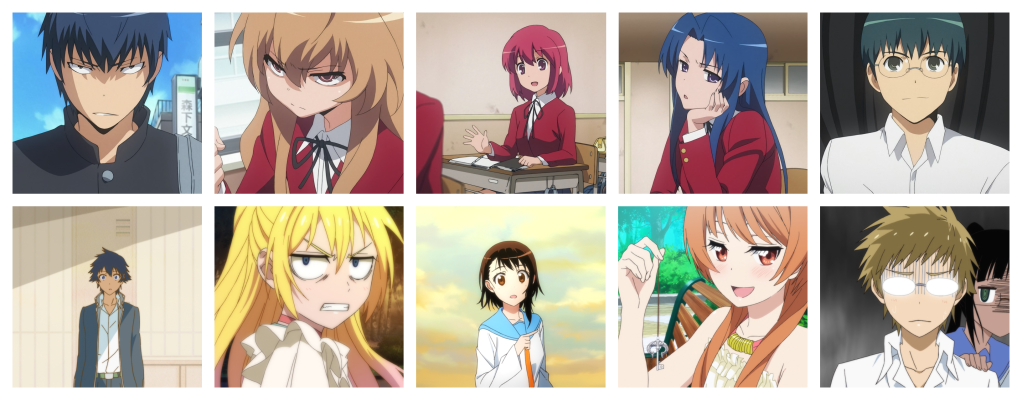
Raku is a guy widely known as the heir to his father’s yakuza group, but he laments that such a thing has come to define him. It’s something he wants to get away from. Rather his interests lie in cooking and other housework, and his ultimate goal is to become a government worker. This is a trait likely inherited from Ryuji, who is widely feared as a delinquent due to the intimidating gaze he inherited from his gangster father. Shuu’s spastic, skeevy personality and glasses originate all the way back from Megane in Urusei Yatsura’s anime, but he has a much more immediate connection to Kitamura. These two have been friends for a long time, so he’s not fazed by the protagonist’s apparent gruffness and they’re close enough that he’s well aware of his crush. The crush in question being a girl they’ve orbited for a long time but don’t have much personal contact with. Or at least they don’t interact much until the invader hits the scene. Through a series of circumstance Raku is placed into a close relationship with Chitoge. A tsundere with little patience and much violence to offer, yet also being so sheltered that they’re unable to take care of themselves in most situations. So the motherly Raku and Ryuji can’t help but look after them. These connect her character definition back to Taiga.

Homage: Nisekoi + To Love-Ru
Character influences from Nisekoi and To Love-Ru then amalgamate to form the manga Her or the World (2017). Kouki is about to confess to his childhood friend Ayumi when the interloper Jindou suddenly appears and tries to interfere by forcing him to date her, warning that should he confess to Ayumi it will have catastrophic consequences. It turns out she’s actually become the vessel of god’s power and any time her emotions fluctuate it causes devastating natural disasters to ripple through the world. This adds an element of danger to his romance with her, making her a time bomb similar to the Bee Hive Gang.
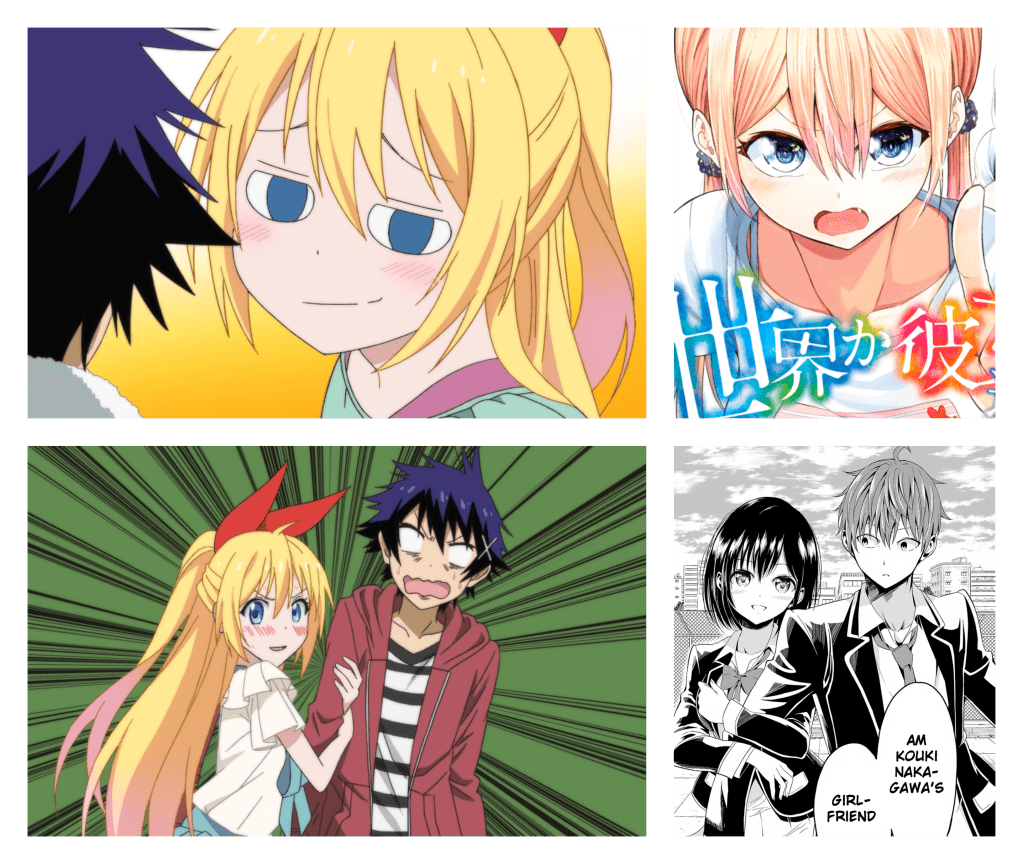
There are a bunch of little nods like blonde Ayumi’s smug personality calling to mind the dynamic of Chitoge and Raku, a scene where she stumbles upon the other two on a date and Jindou introduces herself as the girlfriend (like Chitoge and Raku’s first date where Kosaki sees them), or them all being childhood friends who had forgotten each other, etc. At one point Ayumi even jokes about Kou’s ideal woman being a gorilla. There are other character parallels such as the later character Tenshi being akin to Marika and therefore complementing Ayumi’s Chitoge roots. To Love-Ru is brought into the mix not only by the heavy ecchi presence of this series, but also through some more specific homages. In particular Anzu, whose personality has heavy ties to Nemesis. She promptly dubs the others her servants and seeks candy from them. It also has elements of Haruhi, but that’s not especially relevant to this discussion.
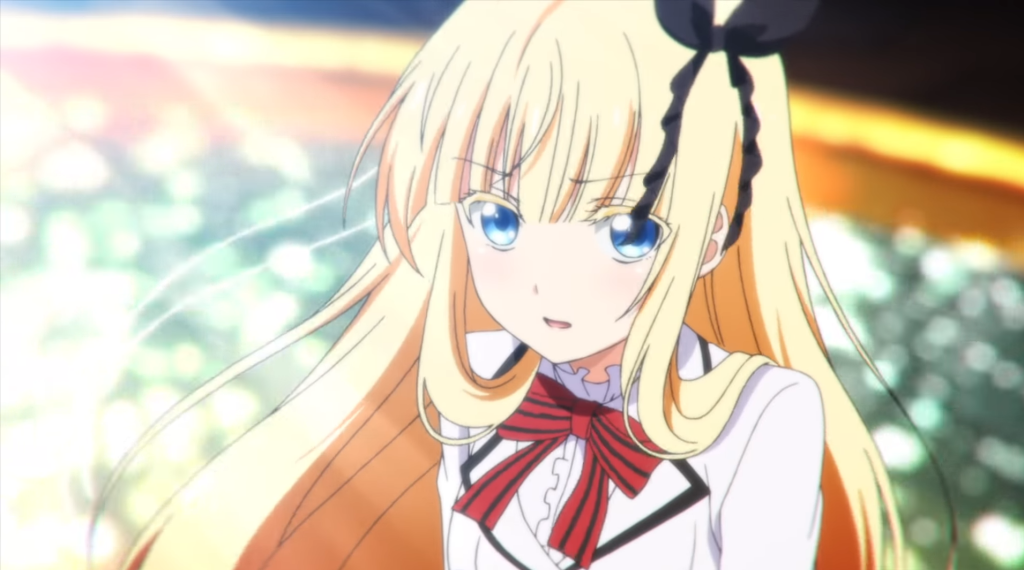
Homage: Nisekoi
Boarding School Juliet (2015) is inspired first and foremost by its namesake Romeo & Juliet yes, but within the manga scene its harem-centric ‘lovers with a secret’ routine is implemented in a way distinctly evocative of Nisekoi. Inuzuka and Persia’s character designs also parrot Raku and Chitoge.
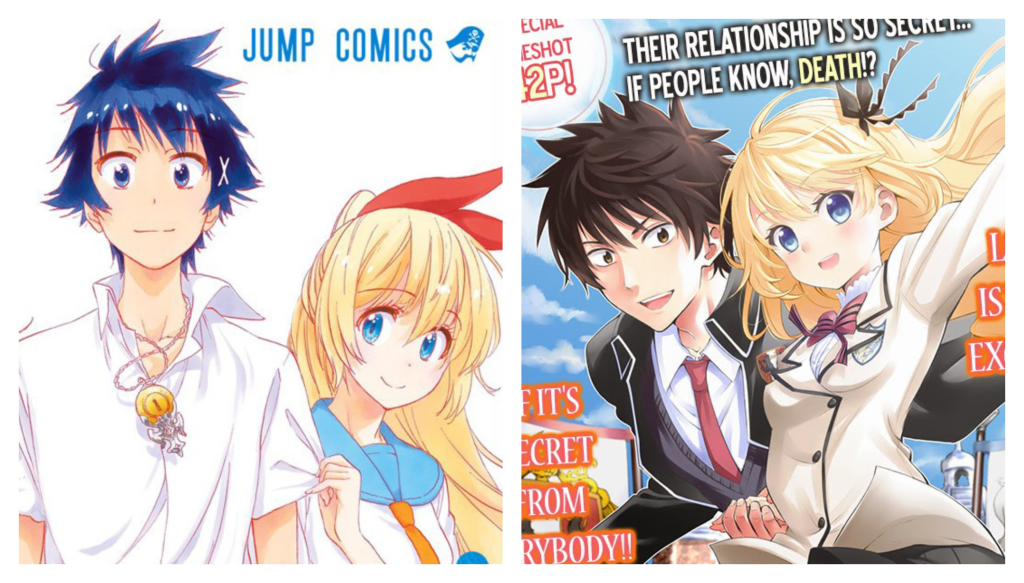
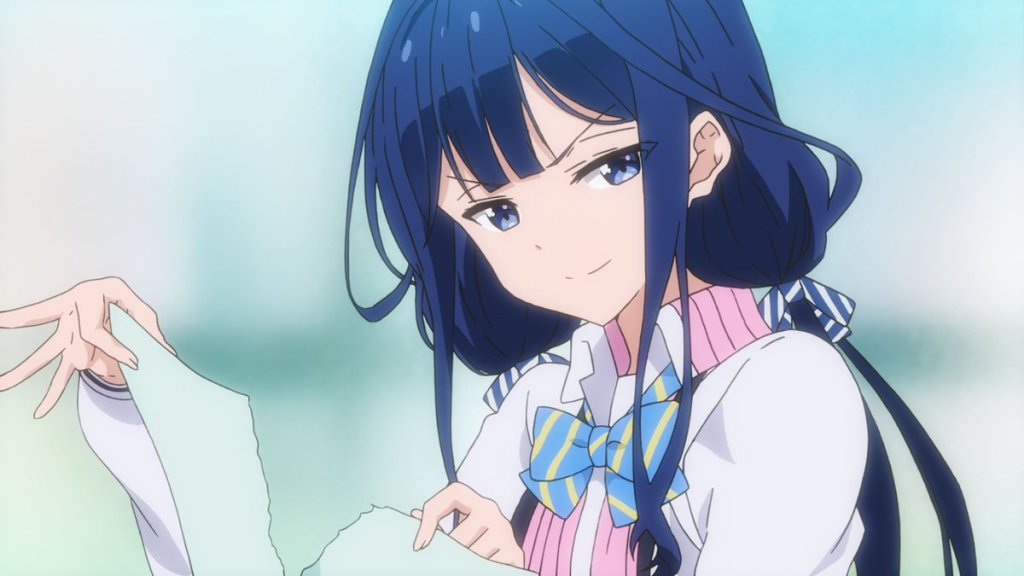
Homage: Nisekoi
Masamune’s Revenge (2012) can be taken as a Nisekoi derivative. There’s a familiar enmity between Masamune and Aki as that of Raku and Chitoge, and at a certain point a sickly rich girl named Neko enters the romantic arena to seek his hand in marriage, placing her as a Marika equivalent. This is the kind of modern harem series that very clearly feels like it occupies a space Nisekoi carved out.
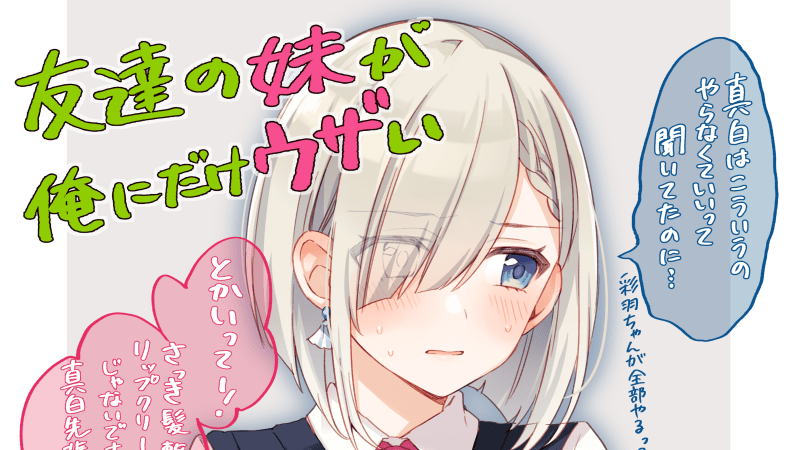
Homage: Nisekoi
Tomodachi no Imouto ga Ore ni Dake Uzai (2019) has Akiteru asked to be the fake boyfriend of his younger cousin Mashiro for the duration of their schooling years, since they’re quite a high-profile family and he’s concerned about who might try and approach here. There are the same terms under which Raku and Chitoge are put together. Neither of them are particularly fond of the idea at first, but she does eventually fall for him. Akiteru is pulled between the new fake relationship with Mashiro and long-time affections from his childhood friend Iroha, which leads the manga to resemble the love triangles of Nisekoi and To Love-Ru.
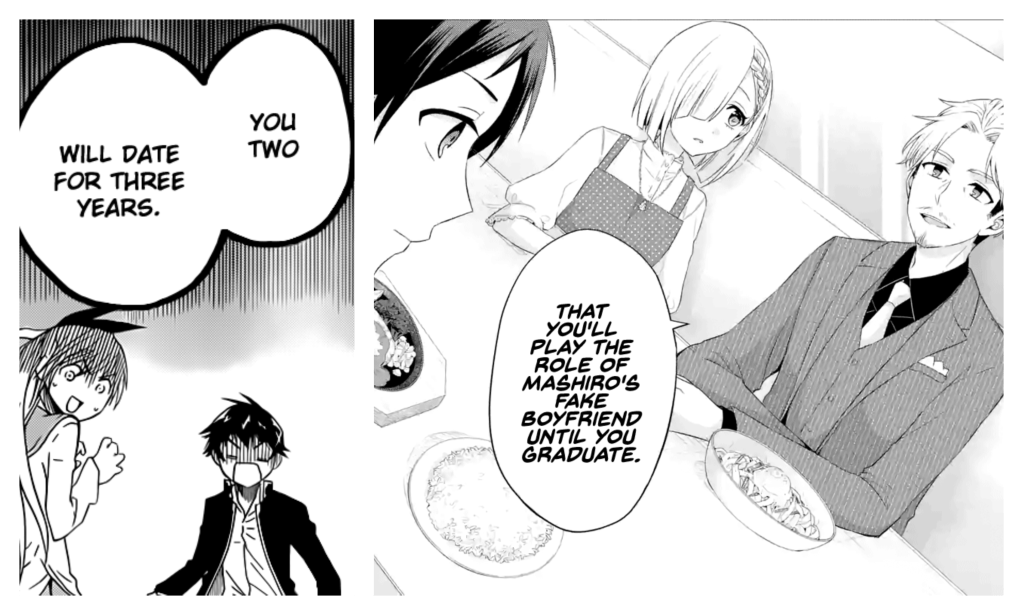
Its sassy, self-aware protagonist protagonist and the hidden alliance of students and teachers that comprise its harem dynamics are similar in function to OreSuki (2016), HenSuki (2017) and Boku no Kanojo-sensei (2018). All of them have the same cast arrangement and overall a very similar vibe. I don’t really know where this particular setting has originated from or why it’s propagated so much, but I feel that concept has been a bit of a trend in recent years. It’s a satire of sorts where the protagonist is some dude pretending to be an unremarkable background character, yet we then find out that he is actually a super mr cool guy who shares a friendship with a bunch of girls for secret reasons. Then when one of them tries to make a move on him it ends up revealing that all the harem candidates in the series had created an organised alliance to keep each other in stalemate. Maybe it was SaeKano (2012) that pioneered it. This one in particular does feel very SaeKano since it’s game-centric. Akiteru is the producer like Aki was, and the main love interest Iroha is the group’s voice actor same as Megumi.
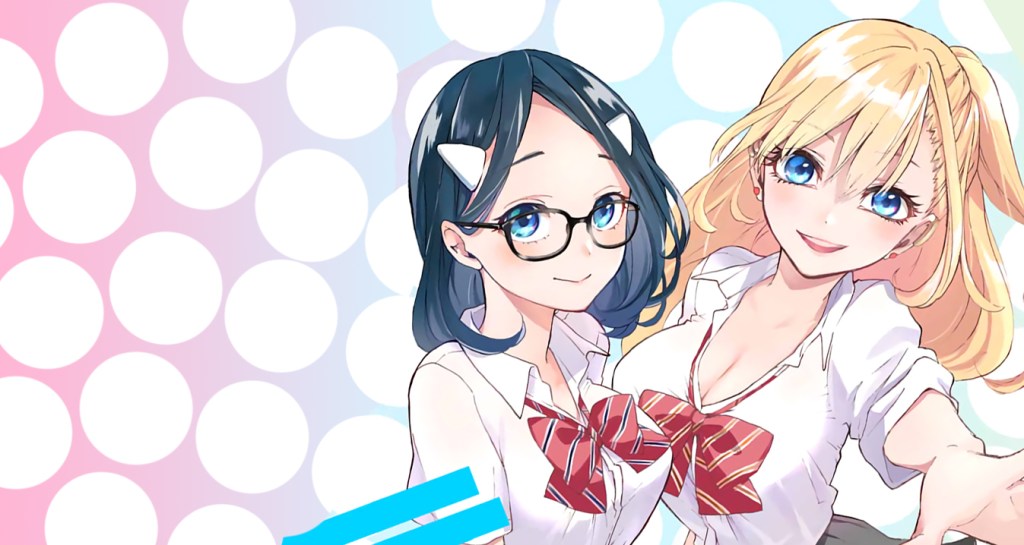
Homage: Nisekoi
Continuing on, Hanazono Twins (2020) is another modern harem clearly invented in a post-Nisekoi genre space. Tatara is the childhood friend of two twins. He likes the well-behaved Yuriko, but believes she’s probably out of his league since she’s an idol. When a scandal of them being seen together breaks out and begins to attract negative career, the only option is to act out a fake relationship with her rambunctious blonde sister Ranko for a cover story. Having to date her to avoid a scandal resembles the premise of the couples in Nisekoi and Seto no Hanayome.

Homage: Nisekoi + Urusei Yatsura
Sousei no Onmyouji (2013) has two exorcist prodigies forced together into an arranged marriage by the organization they belong to, despite initially hating each other. That’s the Nisekoi present in its story design. As the fantastical fiancee, Urusei Yatsura later enters the mix through Benio’s oni form which applies a horn and wedding veil to a character who was already inheriting Lum’s character framework.

The hair styles of the Ataru, Lum and Shinobu show up in the main trio as per the norm., with the mask Benio constantly dons creating the image of horns. She’s is accompanied by a nuisance familiar that intrudes upon their relationship in the same manner as Ten, and at the beginning of the show Rokuro is noted to be confessing to every girl around. He settles down rather quickly, given that he is immediately chained to Benio in marriage, but at the start they place that Ataru-esque trait at the forefront of his character.
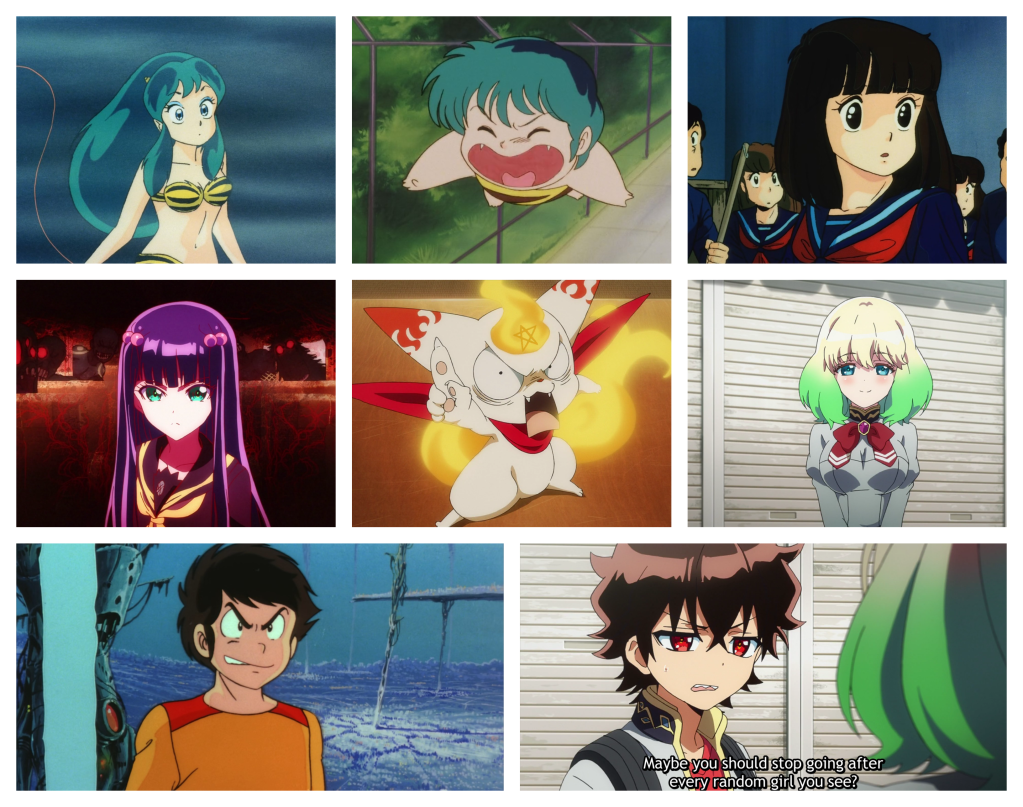
Kinako, Benio’s familiar, is an anime-original character created to fill the character role of Ten. Likewise, there is a later character that imitates the daughter archetype of Ryo-Ohki and Celine. While wandering Magano the characters stumble upon a little girl lost in the abyss, yet showing no signs of distress. She’s rescued and taken under the wing of the Twin Stars, particularly imprinting on Rokuro. Later in the series it is revealed that she’s not actually human, much like the others in this spot.
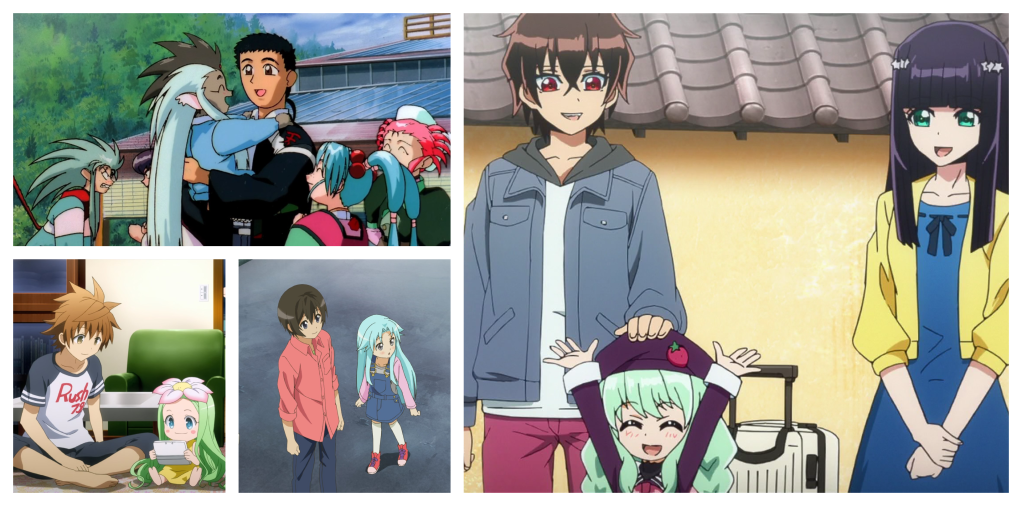
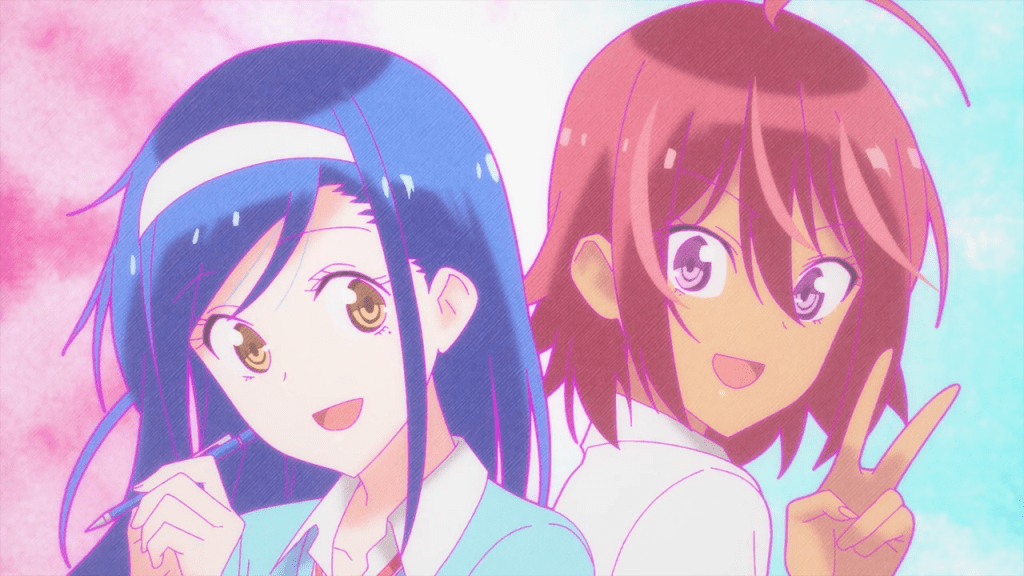
Homage: Nisekoi
All trace of Urusei Yatsura has long since disappeared by this point, but the pedigree chart continues on. Nisekoi directly informs We Never Learn (2017). Much like Yuragisou Yuuna was quickly dubbed the next To Love-Ru, this was immediately called the new Nisekoi. However this time that claim has a more concrete basis. Its mangaka Tsutsui was one of Komi’s assistant’s while working on Nisekoi, and he was trusted enough to be tasked with the Magical Patissier Kosaki-chan spinoff. That ended merely a few months before We Never Learn began, so it should be no surprise that his flagship series has such strong stylistic ties to Nisekoi. Komi even drew an official crossover image to celebrate this.
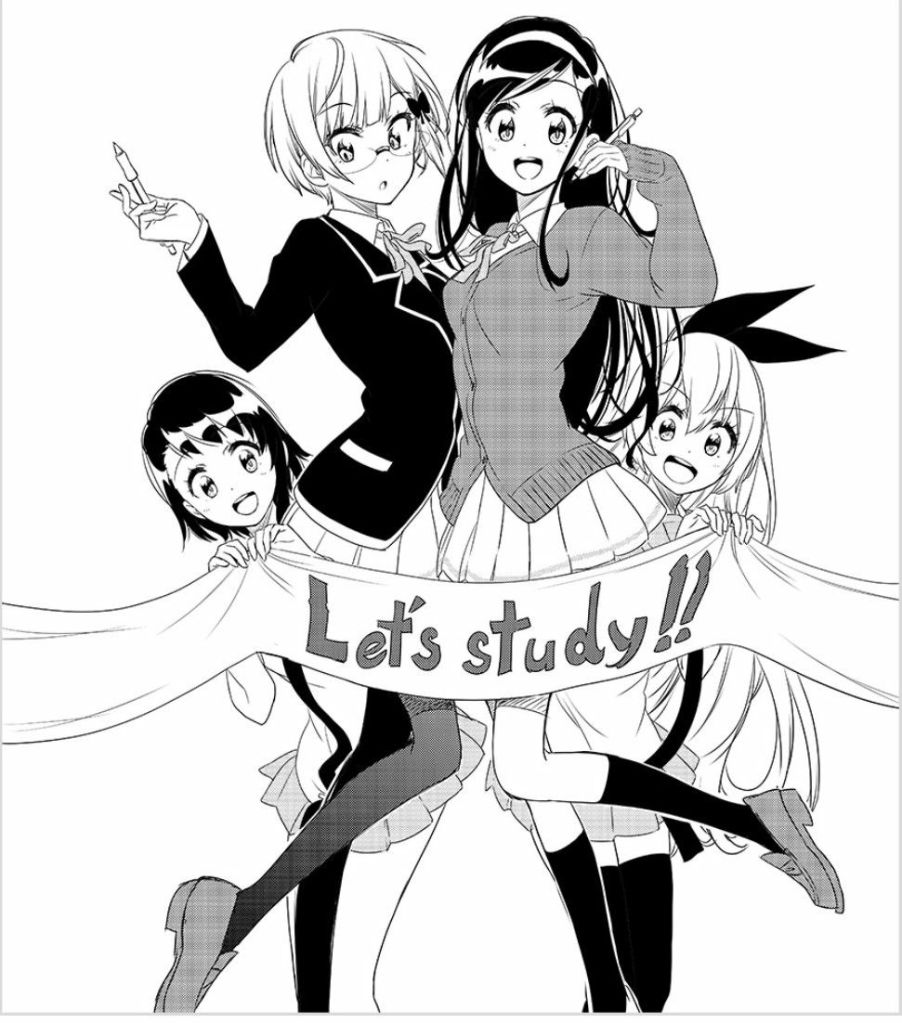
Depending on how much lenience we want to give the timeline this could have also inspired Quintessential Quintuplets (2017) as another harem romcom with a focus on tutoring that came out in too close of a proximity to ignore. Both of them focus on a protagonist coming from a poor household who takes care of rich girls, which evokes the premise of Toradora.

Homage: Nisekoi
I want to say that I Fell In Love So I Tried Livestreaming (2019) is inspired by Nisekoi. It’s a sharehouse story where every person residing there is secretly a livestreamer, and only the protagonist knows about it. He ends up sharing that secret with the main love interest and there’s the threat of disaster, expulsion in this case, if the secret ever gets out. It’s a flimsy resemblance to Nisekoi’s fake lover setup but the overall style and pacing of the manga just heavily calls it it to mind. The protagonist Inuzuka resembles Raku and the blonde Hakua sits in for Chitoge, leading to a familiar frame any time they stand together.
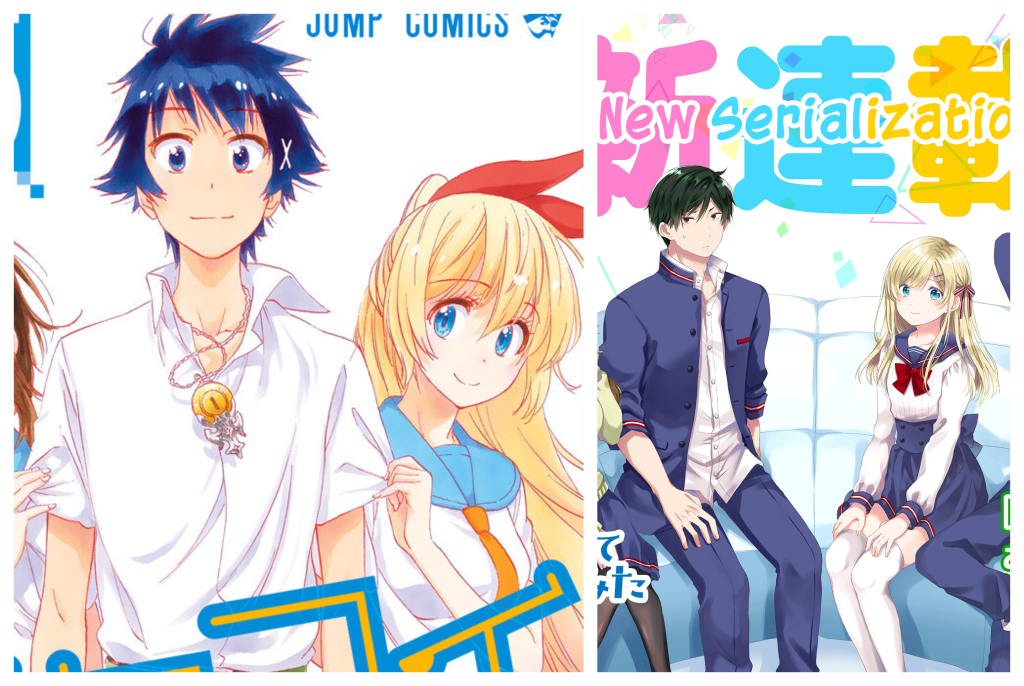
Homage: Nisekoi + We Never Learn/Quintessetnial Quintuplets
My last point to mention is Cuckoo’s Fiancee (2020), which readapts that same love triangle seen in To Love-Ru and Nisekoi. Nagi likes the short-haired Segawa but is abruptly forced into cohabiting with his blonde fiancee Erika under the backing of a business tycoon. The financial friction between the two of them and focus on academics also calls to mind We Never Learn and Quintessential Quintuplets.
That’s the end of the homage segment for now, but before I make my exit there are still some stray references along the line which I may as well highlight while I’m here. It’s not uncommon to simply find cameos of Lum or her iconic tiger print bikini, but there are some interesting examples. Akane in Flying Witch copies Urd’s appearance, personality and magic. Tokki and Bukki from Grand Blue appear to be based on Tamiya and Otaki in Megami-sama.

The fiancee from Maga-Tsuki whose name I forget has her personality and appearance inspired by Marika, and Kaidou Wataru from the beach episode of Go Princess Precure is referencing Mendou and his own beach. Amaguri Senko features the tiger bikini on a chapter’s cover art. Excel Saga’s beach episode features a cameo from Lum, and Renkin San-kyuu at one point has an oni swimsuit competition also with a girl that looks like Lum.

Sweet Dreams in the Demon Castle’s ending theme is city pop and thus opts to channel Urusei Yatsura since it’s an icon for that. It reveals this as an intentional throwback by beginning with a sound evocative of the one heard in Urusei Yatsura’s first opening, and using Cosmic Cycler’s iconic pink and blue backdrop. The same happens in Aqours’ KU-RU-KU-RU Cruller music video, yet another anime city pop track with a visual reference to it. Zokuowarimonogatari also uses that when it copies its art style.

That’s it for where I am currently in regards to this discussion of the Urusei Yatsura lineage. There are still plenty of romantic invader stories that aren’t necessarily preceded by anything else in this chart. Looking at some more of my old collages I had these series noted down: The Ancient Magus Bride, Code Geass, Date A Live, Devilchi, Eureka Seven, Hatsukoi Zombie, Jingai no Yome, Kanokon, Kanojo wa Rokurokubi, Kimi wo Mawashitai, Kyousougiga, Love Tyrant, Maou-sama to Kekkonshitai, Mino-san, My Succubus Girlfriend, Necromance, NeNeNe, Nobunaga-sensei no Osanazuma, Onee-chan wa Koiyoukai, Prospective Marriage, Rosario Vampire, Spice and Wolf, Testament of New Sister, Vampire Knight, Xam’d, Yuri Seijin Naoko and Yuushibu. Unsurprisingly the legacy of Lum Invader stretches far and wide. Over 40 years later and we’re still visibly seeing its effects in how iconic the cohabitation setting and the beloved romantic invader have become for anime and manga.
ok not-video-because-i-am-too-lazy-but-maybe-one-day-i-will-make-it-and-then-come-back-to-edit-this-sentence over bye
 skapbadoa
Hi, skapbadoa, I’m an avid reader of your blog. I’m also a fan of anime culture, and I stumbled upon your blog by accident, and it’s absolutely AMAZING. I’ve never seen such extensive and detailed research. As a huge fan of Urusei Yatsura, I especially love your post ‘The Lineage of Urusei Yatsura – The Romantic Invader’. You’ve taught me how immensely influential Urusei Yatsura is to anime culture as a whole. So, by the way, I’d like to ask if this is possible : Do you mind if I translate this article of yours into Korean and post it on my blog? I’d love to share your work with fans of Urusei Yatsura in Korea, and of course I will make sure that your hard work and contribution are clealry stated. I hope my question doesn’t come across as rude, as my English is not very good. I am touched by your passion and hope that I too can be a contributor to this culture. I look forward to your future posts. I hope you have a great day.
LikeLike
Thanks for the kind words! So long as you cite my original post then you have my permission to translate it and post on your blog.
LikeLike
Thank you so much for your quick reply and generous permission. I think it will be a good opportunity to understand the genre. I will continue to support your studies. Best wishes with your research!
LikeLike