
Hi lads. I’m just tuning in today with two brief sections of revision to my previous video on the matter of Monado. For example that it has come to my attention that the green girl’s name is “Pneuma” in the english dub, when I spent the entire video awkwardly calling her “Pne-uma” as per the japanese voice acting, and that’s just a bit embarrassing. These two revisions were written and almost entirely edited as a single script with two sections, but for topic reasons I decided it would be best to split them into simultaneous uploads. In this one my goal is to amend how I presented the Trinity Processor’s cores in context of Kadomony since I have some slight shuffling of parallels based on a bettered reading of the lore, and of, y’know, the page. Though in my defense, the Perfect Works diagrams are often more confusing than they are helpful. The main points equating Logos and Pneuma to Animus and Anima, therefore suggesting that the white Aegis Sword is conceptually obligated to be a fully-fledged Monado, and then the later conclusions drawn about needing all three Monado united under a single will to authorise phase transition, still stand. I just wish to try and arrange the parallel in a more blatant, more clear manner. Because I’ve had it on the mind a bit lately and wanna attach the excessive amount of screenshots to it that can only be done in a video format. Then in the other upload, to once again come in years too late and review how my interpretations or predictions weigh up to what was shown in Future Redeemed, now that we have full context for how Alvis, Malos, Pyra, Mythra and Fiora (imbued with Meyneth) fit into the Sword of the End’s framework
But I’m getting ahead of myself. To start with:
Reassigning Roles in Kadomony & the Trinity Processor
Kadomony
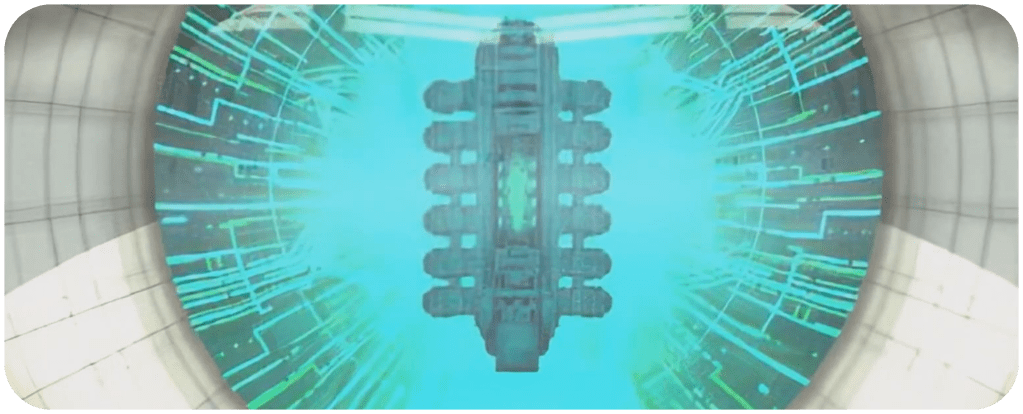
The Xenogears Perfect Works artbook / lore bible describes Kadomony’s judgement system working as follows:
- Computer Brain Kadomony: “Its main role is to access the Zohar and supply the driving energy for the entire Deus System, acting as a sort of access window for the Zohar, which has no will of its own. The reason why the internal elements are divided into two is that when a problem is presented, the same problem is input into the fullerene elements for ethical calculations and the bio-elements for uncertain calculations. The answer that is decided by each is then combined to determine the outcome.”
- Persona: “The bio-element section within Kadomony is broadly divided into three parts, known as Persona, Anima and Animus. Control of the Deus System, including the execution of orders, analysis of targets to be suppressed, weapon control and output control of the entire system, is decided by a bicameral deliberative structure consisting of the bio-elements and logical operation elements.”
- Anima Relics: “Anima Relics are a single unit of the Anima, one of the biological elements that make up Kadomony. By fusing with the Animus that separated from Kadomony’s self-resurrection program to become humans, it also serves as the core of the Zohar’s mobile terminals.”
Not that I particularly know what the fullerene is. However googling ‘fullerene computer’ gives me a bunch of articles about its theoretical application for quantum supercomputers, so even that little bit of info helps contextualise the diagrams.
To my understanding based on what I got from the game and Perfect Works, the male-coded Animus and female-coded Anima bio-elements have to reach a consensus before the computer elements will agree to let Kadomony pass the Zohar through to Deus. This is why Xenogears happens at all. Predicting the Eldridge colony ship’s imminent crash Deus hacks Kadomony’s bio-assembly plant to generate the original Miang, who would survive the wreckage and then seek to fuse the scattered Anima Relics with the now-human Animus in order to fix Kadomony and authorise the Zohar to begin restoring the Deus System. Anyway the point I really want to extract from this is that there’s a main mechanical processor that gets secondary input from its biological circuitry.
Trinity Processor
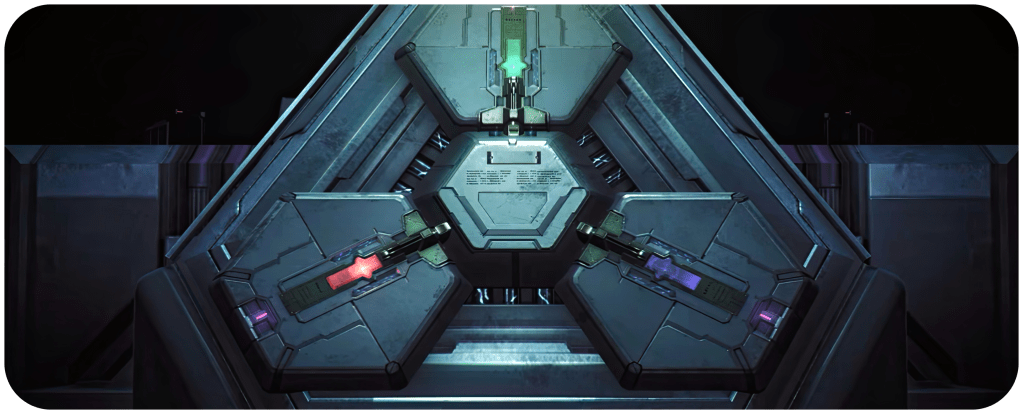
Rex explains that Logos is the male persona and Pneuma is female, much like Elly explains that Animus is the male organic element and Anima is female. With that in mind, the Trinity Processor’s judgement system is described as follows:
- Xenoblade: “I am the administrative computer of a phase transition experiment facility. But that will mean little to you. To you, I am a machine. That is my original form.”
- Xenoblade 2: “Ontos, Logos and Pneuma. The three cores of the Trinity Processor formed its cornerstone. However Ontos triggered a spacetime transition event and disappeared forever.”
- Artifice Siren model kit: “At this research facility, a governing artificial intelligence collective known as the Trinity Processor was raised to maintain the Conduit. The processor, using bio-computer elements, was raised in virtual reality to gain a personality, and this system would be used to govern the Conduit.”
- Xenoblade 3 Future Redeemed: “Ontos was the arbiter and thus was predicated on the existence, or perhaps the opinions, of Logos and Pneuma. In short, without the two of them present Ontos was just a machine.”
Therefore, bio-elements Logos and Pneuma have to reach a consensus before logical element Ontos will agree to let the Trinity Processor access the Conduit.
When they call Kadomony a “bicameral deliberative structure”, they mean that it has two distinct legislative chambers of deliberation. The computer on the left of the diagram individually calculates its own logic, then the two organic groups on the right have to debate together to present an answer for consideration. This is the important part of what I wanted to clarify. Though it is still correct that Ontos, Logos and Pneuma have to be aligned for the processor to run at full capacity, and the same true of Kadomony, Future Redeemed paints a clearer picture of Ontos as being a more callous arbitrator in a different class to the other cores. Previously I had misinterpreted the Kadomony diagram and its accompanying text to be a trio of Persona, Animus and Anima. Logos and Pneuma are indisputably equivalent to Animus and Anima, the male and female minds of the Zohar-controlling supercomputer. Though they are just golden tablets, it’s Elly-possessed-by-Miang is the one who explains that they’re somehow gendered, much like the crystalline cores of Logos and Pneuma. Despite of course that the Anima Relics all have biblical masculine names associated with them. There are direct references like Malos’ boss theme Over Despair and Animus and the Anima Sword when Nia borrows their powers, or how the reason Xenoblade 1 and 2 slot together so easily despite sweeping retcons is because Zanza and Meyneth were already aligned to Animus and Anima based on an amalgamation of the Xenogears and Xenosaga versions of the concepts, so there was already a Kadomony structure in there that Shulk has to unite before he can instruct computer brain / wave existence Alvis to use his divine power. Logos, Animus, Pneuma and Anima being equivalent is just obvious.
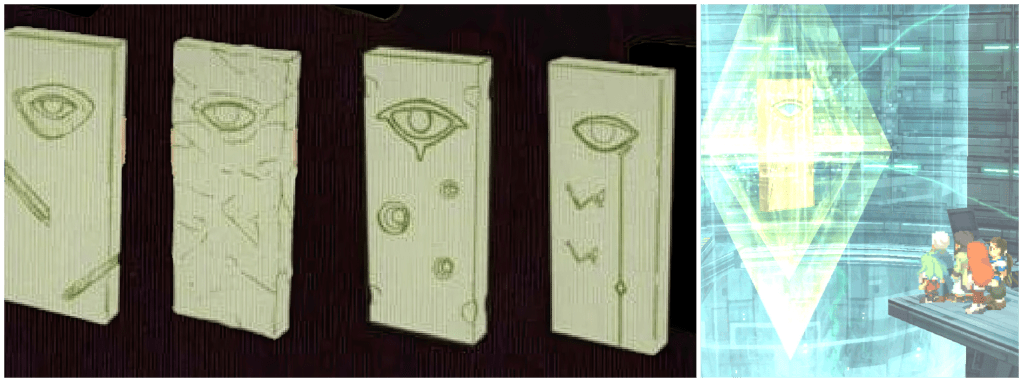
What’s not so obvious though, is what on Earth an Animus actually is. Looking at the illustrations, the main body of the Kadomony machine is the section known as the Persona molecular assembly system, and the rectangular vessels of Anima likely slot into the boxes on the left and right. I personally feel things fall into place best if we imagine that there were Animus Relics as well. There are never Animus tablets seen ingame, but structurally (as in for the concepts and for the physical machine) it just makes sense for them to have been the same as the Anima Relics which is why I allege their existence. Xenogears and Perfect Works are both frustratingly ambiguous about the Animus. It keeps repeating this idea that the Anima are the relics and the Animus are the original men, since that’s what they exist as during the events of the game and it’s therefore at the forefront of their explanations. The text will go out of its way to telegraph that the Anima are the biological compartments of Kadomony and provide a reference drawing, but then abruptly launch into exposition on the Animus without any similar clarification or context. Sometimes they refer to Animus and Anima as ‘the biological circuitry of Deus’ or connected to ‘the core of Zohar’, which can make it sound like they’re part of the grey titan’s body or golden monolith instead of the computer. But it’s more likely that they’re just indirectly acknowledging Kadomony’s central role in the Deus System, which is the name for the whole linked combination of interstellar bio-weapon Deus, quantum bio-computer Kadomony and infinite energy engine Zohar. Persona aka the Mother of Humanity aka Elhaym aka Miang has the Animus available to her when she crash-lands inside of Kadomony’s pod, because she then immediately uses it to create Cain and the Gazel Ministry to chase the missing Anima, so they need to have been part of the computer not the titan. Yet even still, some text boxes and flowcharts will do their best to mislead you into thinking that Anima Relics were the singular organic group in the computer, and that the Animus only came into existence after Persona crash-landed. But that’s simply not true, you look at the box a bit closer and it’s actually talking about -Animus-, Original Animus and Animus (humanity) as three distinct concepts or instances. The Perfect Works on more pertinent pages blatantly and repeatedly references both bio-elements as internal components of Kadomony, and only paragraphs later to some of the confusions ingame its text suddenly becomes very clear that both were part of Kadomony’s organic circuitry, that they’re male and female, and that the original Animus have specific Anima Relics that they’re counterparts to. Hence why I say that, considering they’re all part of the same machine, the twelve available compartments likely housed a paired set of Anima and Animus cores.
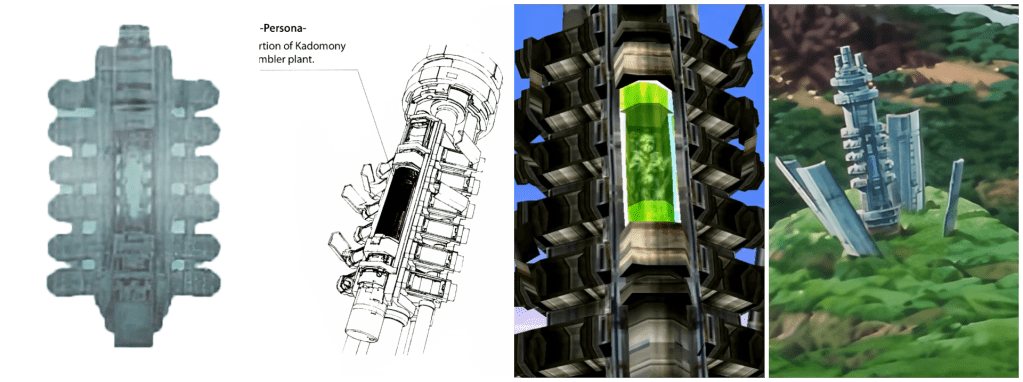
Or maybe I’m just fixating too hard on the compartments and we simply have no explanation as to how twelve of these things fit inside that computer frame, let alone 24. In fact there are actually 13 known original Animus. But boss, this section is actually one of the last piece I amended into the script, I’m tired. They refuse to tell me what Animus really is, and since Cain is the original human given more prestige in the game and diagrams compared to the rest of the Gazel Ministry, perhaps he’s more equivalent to a male incarnation of Persona. Heck, maybe there was only one Anima that gets splintered into twelve suspiciously Zohar-shaped pieces during the explosion and there was one Animus that was used to create Cain, who then split his DNA into twelve parts for the Gazel elders. I think that’s incorrect because the twelve Anima Relics are all named, and the Perfect Works describes them as a container for the Anima bio-element, meaning that they must have existed in this state before the Eldridge crashed. They were lost during the explosion, it’s not possible that someone could have converted them into monoliths after the fact. But I’m just spitballing at this stage.
Regardless, Logos and Pneuma are easy to place, and to understand why I’ve placed them as Animus and Anima. The one that was actually causing issues for me is that I set Ontos as Persona, purely because it was the leftover and I needed to put it somewhere, which may have led me to assess it with my answer shaping the question; Animus and Logos are male, Anima and Pneuma are female, Ontos was meant to be a gender-neutral mind standing somewhere between those two, capable of manifesting as both a man or woman. Which also reflects in how Persona only created a woman because it synchronized with Abel’s desire for a mother. In a different passage of fate perhaps it could have been male. Three Trinity Processor cores, three Kadomony bio-elements – is it not just that simple? Well, it’s Xenogears. It was in fact not that simple. In doing so I didn’t properly recognise what Persona is within Kadomony. It’s not that I only looked at the pretty pictures and didn’t do any reading, but that I didn’t adequately understand what I read. Persona isn’t a deliberative structure, it’s described as a “humanoid bio-chip” that manages the other living elements. Originally all three are organic components embedded within Kadomony.
So the Persona system is the central pod, and the relics are plugged in on the sides. However, we can see that Deus ejects the molecular assembly plant while the Eldridge is burning. It seems that all the hatches must have opened due to either an impact in space or the stress of planetary entry, and the Anima Relics sitting on the top slot of the compartment all came loose. So when the Persona humanoid steps out of her pod she witness the Anima scattering across the globe like meteors. She then unseals the Animus from the lower section of the compartment and uses that molecular assembly plant to convert them into the twelve original human men, instructing them to begin seeking out their counterpart Anima Relics. While you could say that yeah it is described as an overseer for the male and female bio-elements and is at the very least referenced by Trinity Processor Ontos becoming instantiated as a Homs, it’s also referenced by Logos and Pneuma becoming Blades. So that’s not specific to Alvis. It’s not that Ontos is Persona as the final piece of a trinity, because Persona is just the name for the humanoid output of the molecular assembly system. Miang is Persona, or a product of the Persona system, but her actual personality was written by Program Elehaymm and her instinct to revive Deus was implanted by System Hawwa. It’s just a system that doesn’t really have a will or deliberative mind of its own. So if we (or rather I) read the page a bit more closely, referencing both the popular fan-translation and a more modern Google translation, and factor in the new clarity provided by Future Redeemed, then Ontos obviously should be the fullerene computer’s logical arbiter in this framework. That makes so much more sense, is so much more obvious, and ties everything up so much more neatly. I was being a bit overzealous or simplifying too much in calling both of them ‘trinity AI’ or ‘three-minded supercomputers’ since realistically neither of them are. Though there are three factors at play, there are only two deliberative bodies.
That’s not to say that there aren’t any differences. Obviously there are since no matter how much Xenogears is still the main plot and lore framework that its successors adapt from, Xenogears is not Xenosaga is not Xenoblade. But most of the differences I see are actually just to do with the differing physical dimensions of the two computers. So I’d also like to pull aside here and discuss how the actual construction of them differs. This whole machine that sits inside the eye of the Zohar is the Kadomony biological quantum computer. The fullerene supercomputer must just refer to the entire case and its internal circuitry, most likely congregating in the larger sections on the top and bottom. The pod in the middle is the Persona molecular assembly plant, and the woman inside is akin to a biological CPU that the Persona system assembled so that it could also have a human brain to process emotional queries, supporting the logical calculations of its supercomputer components. However this human was originally without its own personality or deliberation, instead connecting to a set of 24 gendered bio-computer cores called Animus and Anima which are seated as pairs in the twelve compartments on its side. Persona uses its organic brain to evaluate their deliberations and relay a consensus to Kadomony, which then gets a second round of evaluation against the supercomputer’s logical answers.
Whereas in Xenoblade the processor is arranged in a much more simple layout. It’s a self-contained processing unit with only three cores as opposed to the 24 of Kadomony, and although we are told that it has bio-computer elements we’ve yet to get any more specific details beyond that, only inferring roles based on its parallels to Kadomony that are taken a little further in each successive entry. The Conduit is separate from the processor, unlike Kadomony being built into the Zohar, and there’s no Deus System equivalent on Rhadamanthus. No clean analogue, at least. Since although Artifice Aion is a Conduit-linked weapon autonomously developed by the Trinity Processor, that somewhat resembles final form Deus with the colouration and wings, plus also being a cyclops mech modelled on Omega which was Xenosaga’s narrative equivalent to Deus, it just isn’t as plot-centric, autonomous or divine as the Deus System was.
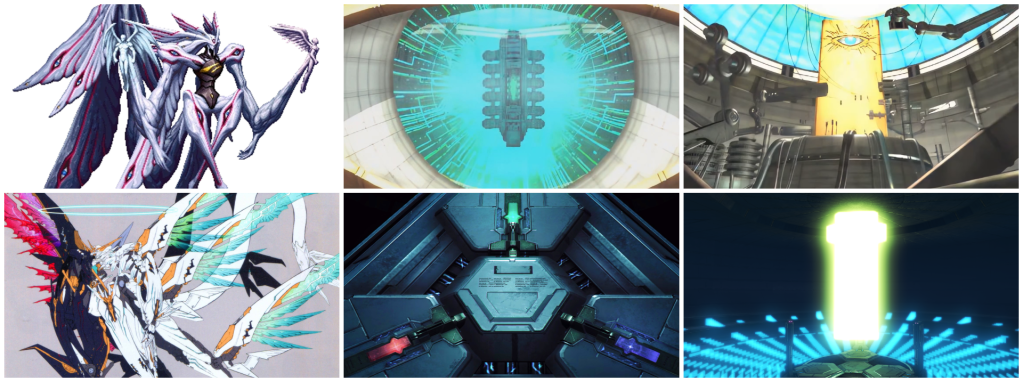
However while the physical construction of each processor may be operating at vastly different scales, the overall decision-making framework is the same. You have one supercomputer element (fullerene/Ontos) that can be tasked with logic-based queries, but more uncertain, multi-faceted or emotional queries have to be passed to the living bio-computer elements (Animus and Anima/Logos and Pneuma) for debate. Only once those two reach a consensus does the computer brain give its agreement and therefore a command is relayed to the Zohar/Conduit. Ontos, or rather Alvis, was originally looking to Zanza and Meyneth as replacements for its lost supporting cores in the first Xenoblade. He mostly supported Zanza because there was a secondary circumstance that they’d bonded kind of like a Driver and Blade, but because the two gods were never going to agree with each other Ontos was limited in its functions. So he begins laying the groundwork to have someone else inherit their divinity instead. Fiora receives Meyneth’s Monado with little fuss, and Shulk is gifted Ontos’ own true Monado so that he can defeat Zanza and free the role of Logos or Animus. Both Shulk and Fiora unanimously wish for a peaceful world without gods, and Ontos responds to that consensus. The bicameral hierarchy doesn’t matter for Xenoblade 2 since Ontos is absent nor does anyone endeavour to use the Conduit’s powers on the universal scale, so we next look to Xenoblade 3, where things get messy. Neither the Trinity Processor nor the Conduit genuinely exist during the events in Aionios, it’s just that Origin’s programming architecture was based on and centres around Ontos, so you instead see a number of competing groups that form Trinity Processor alignments to fit into its archetypal requirements and vie for administrative rights to the world. Originally Alvis is the sole administrator quietly watching the events unfold. He may possibly have been looking to Melia and Nia as stand-ins for Logos and Pneuma respectively, since they refer to themselves as ‘the two wings of Aionios’ and Nia is inexplicably capable of summoning Pneuma weaponry. Or maybe not, and even if they were positioned as such they’re clearly not as influential as the genuine Trinity cores since they’re incapable of preventing him from devolving into the mad god Alpha. However the living portion of Alvis’ original being manages to partition off as A, maintaining her sanity by using Shulk and Rex as Logos and Pneuma. All three are united under the will to prop up Origin until someday Noah can eventually save its people, so a consensus decision easily passes. Noticing that the two prior administrators Alpha and A have given up their conscious forms and returned to the machine to stabilize the fog distortions, Z, who is described as a partial administrator, then creates Moebius X and Y to complete his own Trinity Processor structure and gain dominion over the source code of Origin and Aionios. His cycle of murder continues for centuries, but once Noah finally overthrows Moebius he inherits rights to restore time and re-initiate Origin’s impending reboot, again possibly using Melia and Nia as supporting cores to authorize his decision from within Ontos’ Memory Space at the core of Origin.
Plain as can be, no fluffing around with run-on sentences for half an hour, right now that’s how I read Kadomony and the Trinity Processor as being functionally equivalent. They’re both bio-computers with a logical arbiter that depends on its two accompanying biological elements to resolve the more human issues. I don’t think it particularly changes the suggestions in my previous video, just that I may have fixated too much on that one particular diagram which shows Persona, Anima and Animus in a triangle and hence totally overlooked the fullerene computer brain. However with this revised context, when I look at the diagram it now stands out to me that the Trinity Processor and Kadomony both have the computer brain on the left, the female element in the middle and the male element on the right.
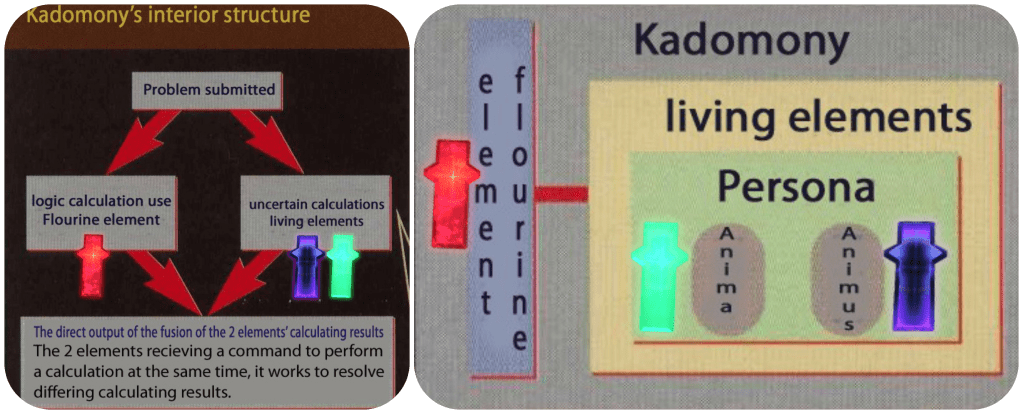
The one thing it does substantially change though, is that now equating Ontos to Kadomony’s fullerene arbiter would indicate the processor had some capacity to execute calculative, logic-based commands in accordance to its ethical programming without the need for input from Logos or Pneuma. If those two aren’t balancing it then Ontos is “just a machine”, but said machine is still the world’s fastest supercomputer, right? In one fell swoop this would then restore Alvis’ original claim of being the facility’s central administrative computer, reveal why he was able to independently scheme to supplant Zanza with Shulk, address how Ontos triggered a spacetime shift without Pneuma and Logos vanishing alongside it, and explain how Alpha is still running in a deprecated state during Future Redeemed as opposed to outright stopping in absence of the supporting cores.
The other tidbits from the Siren model kit’s Conduit lore also adhere to Xenogears as well, with the Conduit being a reality-bending perpetual motion machine that gets used to wirelessly charge super robots via the same specific device named Slave Generators, among other similarities. In any case, this is more or less my current take on Kadomony and the Trinity Processor.
Powers of Animus and Anima
That…should have been the end of the post, but I would like to digress here and expand on a talking point from earlier that would have been too overbearing jammed in the middle of its relevant point. Not to say that I didn’t try, but ultimately it’s better for pacing to paste it down here instead. When I call Logos equal to Animus, I am suggesting that the Logos male bio-element core of the Trinity Processor is narratively, conceptually and functionally equivalent to the twelve Animus male bio-element tablets of the Kadomony computer. When I call Pneuma equal to Anima, I am suggesting the Pneuma female bio-element core of the Trinity Processor is equivalent to the twelve Anima female bio-element tablets of the Kadomony computer. When I describe Zanza as “Logos-aligned” or Meyneth as “Pneuma-aligned”, I’m specifically wanting to theorise that Ontos creates two other Monado internally flagged as Logos and Pneuma in order to use the living minds of the two gods as replacements in a pseudo-Trinity Processor. I’m not saying he’s Logos-aligned in the same way that some Xenogears characters are Animus-aligned in their DNA or destiny, but just referring to the machine’s required parts. I pause on this distinction because I think there is reason to believe that Animus and Anima also exist within Xenoblade’s setting as a higher cosmological force similar to what they were in Xenosaga.
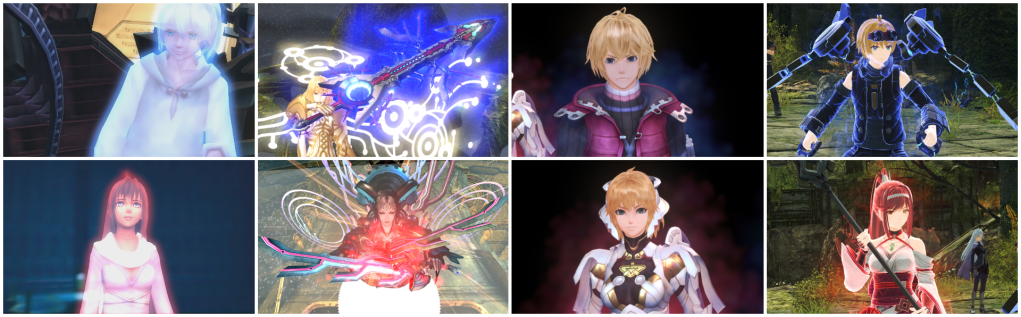
Animus and Anima in Xenogears are twelve sets of male and female processors for its quantum biocomputer. Whereas in Xenosaga, Anima is a destructive cosmic power capable of shattering dimensional space, and Animus is the power that counteracts it. Both of these forces incarnate into a single human each, who’ve also coincidentally had their genders swapped for legal distinction, so Anima is contained within the male Yeshua and Animus is the female Mary. Destructive male divinity who glows blue in a Xeno game – definitely Zanza, gentle female divinity who glows red in a Xeno game – definitely Meyneth. Therefore, for this and many other reasons, it is also quite possible that Animus and Anima may simply exist in Xenoblade as universal energy concepts reminiscent of how they were in Xenosaga, and that Pneuma and Logos are the names specifically for these two objects that process them into their own usable energy. Combining the ideas of the gendered bio-elements from Xenogears and the cosmic alignment from Xenosaga, much like many other aspects of Xenoblade which are also a merging of its two predecessors. Zanza and Meyneth fit within the Kadomony framework as bio-elements Animus and Anima, or Monado elements Logos and Pneuma, but they also borrow the coloured glow that was associated with the powers of cosmic Animus and Anima in Xenosaga III. Zanza, Shulk, and Niko use blue Animus power, Meyneth, Fiora and Glimmer use red Anima power. But Malos and Mythra would have access to these energies tuned to the wavelength of Logos and Pneuma, which is reddish purple for the former and either green or gold for the latter depending on what form she’s in.
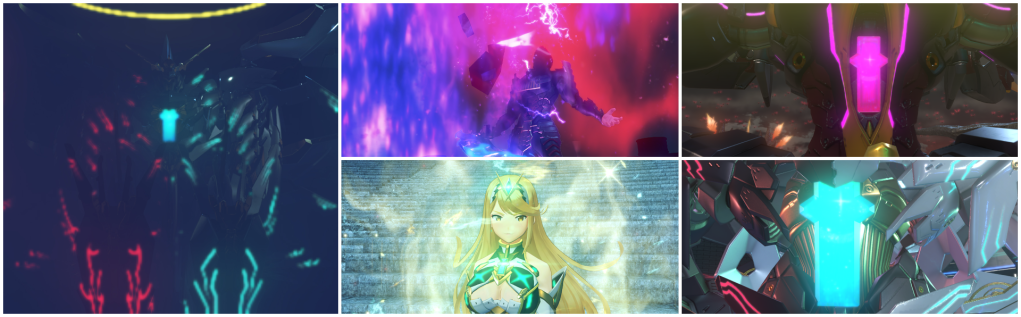
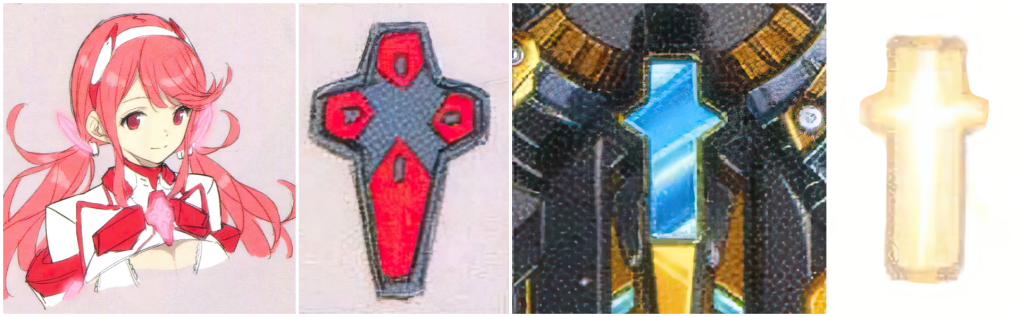
When a line is connected from each Monado in the finale, Zanza’s is purple, Meyneth’s is red, Alvis’ is white. Though the purple is at the time a bit random, this could be equating to Animus, Anima and I guess Zohar energy. Part of me does like to say that this is just because they predate the colour schemes from Xenoblade 2. In fact the first few character sheets revealed by the Alrest Records artbook do show Pyra having had a red core crystal in early development, and the same is true of a blue Aegis core in the reference drawings of Malos’ Monado. There is also a design for what appears to be female Logos in the Alrest Records artbook that’s kinda cool (her sword at the very least seems to have been reused for Noah and Eunie’s Ouroboros wings), but evidently they went with a man to recreate Kadomony. So maybe they were intending to do red and blue again but decided to veer into a more distinct direction once they settled on adapting the concepts into Logos and Pneuma.
 skapbadoa
Alvis/Alpha/Ontos being able to make decisions on its own also falls in line with what I thought when they first were described as an “arbiter”. Ideally, Logos and Pneuma would agree and then Ontos passes it through, but if they disagree? It makes sense that if necessary Ontos could assess each cores argument and make a decision of its own, but without full agreement they can’t access the entirety of the Conduit
LikeLike