
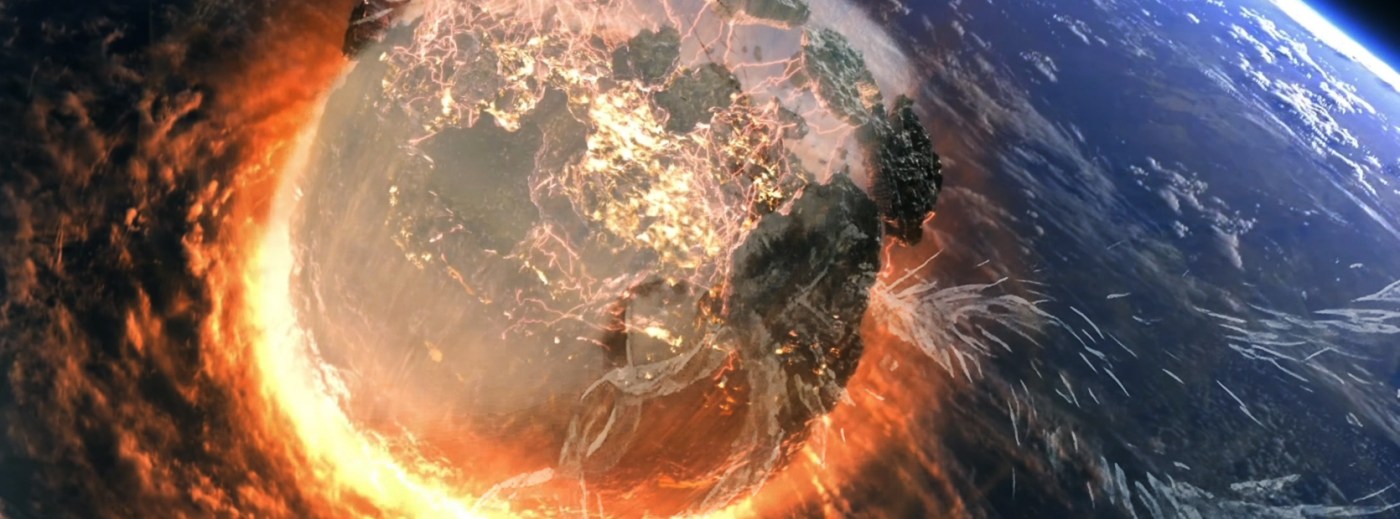
On the 17th of March 2022, I rocked up to work about half an hour late. The reason being that I, like anyone with the right idea, had decided that the Final Fantasy VII 25th anniversary stream was simply more important. Merely from the fact that FFVII has been my favourite thing for so, so long, but the content ended up matching all expectations too. As I looked over the teaser for Final Fantasy VII Rebirth, there was one element that particularly caught my eye. A small piece of imagery that stuck out to me as being wildly important. The feather that floats down at the start of the trailer is white. A simple explanation could just be that it’s because Zack is the most important element of the changed timeline, and his final scene in Crisis Core associates him with it as such. But I, as always, would like to read more into it.
The big question that the trailer, and Remake, both pose is “What is Sephiroth’s endgame?”. As far as the actual plot details are concerned there simply is not enough information to draw a conclusion on that. But, on a more symbolic level, I believe the answer to that is LOVELESS. Remake is a new version of Final Fantasy VII which we’ve seen is built from the ground up to now be fluent with the extended universe, displayed through all the Crisis Core and Dirge of Cerberus iconography. And as such, I would suggest its direction also finds itself rooted in the Compilation. Final Fantasy VII originally presented Sephiroth’s goal as deification. To validate his own existence after his footing was pulled from beneath him, or more specifically to denounce those who were still carelessly living as humans while he suffered. It does properly connect to his character’s inner nuance, however the sci-fi script suddenly leaping to god is nonetheless still a steep story curve. On the surface it can appear to just be holdover from an earlier draft of the script that would eventually go on to become Xenogears. Remake is modernising all the characters and story beats, so in this new version it has to be altered. The writers are faced with two options. Sephiroth’s goal can be entirely swapped out with his Advent Children plan to travel the cosmos like Jenova, or they can modify it using the god they now have available. Minerva. I believe the second option is the route they’ve taken. This is a Compilation title so Sephiroth must surely be looking to Minerva and to LOVELESS when he decides that he wants to absorb the Lifestream and be reborn as a deity. He wants to usurp her role as overseer and steer fate toward his own destination. In the Material Ultimania there is a clear shot of the Cetra designs used during Stewards of the Planet, where it’s visible that their clothing and hair resembles the goddess. Perhaps Minerva is going to have her existence tied into the Cetra to grant her a stronger place in the story, and explain her personal opposition of Sephiroth.
If we accept Minerva to currently have a position in the background of the story, then looking over LOVELESS offers an understanding of Sephiroth’s mysterious actions. Its relevance to the Remake story is revealed through symbolic feathers. Sephiroth scatters them all over the place as they molt from his usual black wing, and the fancy CGI cutscene at the end of the game even has Cloud clasping one. Because of this, it piqued my interest that the Rebirth trailer opens on a white feather. I feel as though this solidifies a parallel I had made previously, pertaining to the prologue of LOVELESS. The prologue is as follows:
“When the war of the beasts brings about the world’s end, the goddess descends from the sky. Wings of light and dark spread afar. She guides us to bliss, her gift everlasting.”
LOVELESS, Prologue
From a theorycrafting perspective the part of Intergrade that’s really caught my attention are the galaxies in the Edge of Creation. The Material Ultimania reveals that the white one is modelled on the motif of Sephiroth’s wing. Since he also uses his normal black wing in the final boss battle, this fulfills the requirement of “wings of light and dark spread after”, and then gets reiterated with the white feather that marks Rebirth’s first media presence. The Edge of Creation similarly fits the description of “world’s end”. Or for a less literal reading, it is of note that in Crisis Core, Sephiroth’s battle theme is called Controlling the Iron Beast. So the “beasts” in LOVELESS are the “monsters” produced by the Jenova experiments, and the way they “bring about the world’s end” would be Genesis setting Sephiroth down the path of madness. The music in that scene is called Prelude to Ruin, after all. Following on from this, Sephiroth stares down that galaxy and then tells Cloud that he refuses to let the two of them end. It’s the battle here that Sephiroth uses to change destiny and keep Zack alive. As such, this enacts the line of being ‘guided to everlasting bliss.’
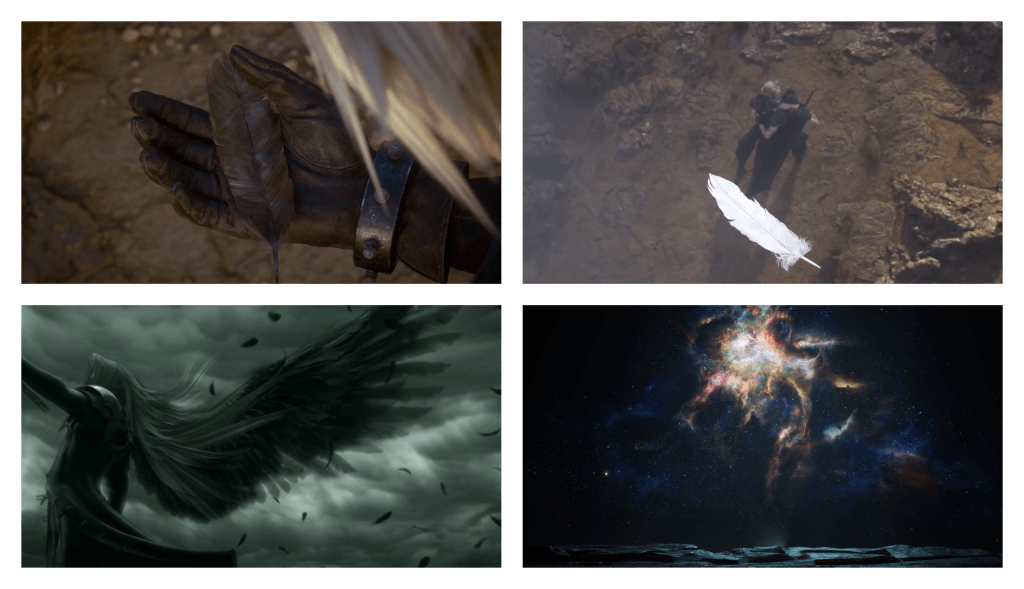
My friend, the fates are cruel. There are no dreams, no honor remains. The arrow has left the bow of the goddess.
LOVELESS, Act IV
But Sephiroth doesn’t just want to save himself, Cloud and Zack from an unspecified end. He clearly relays that what he asks of Cloud is to go and stop Meteor. This is what “seven seconds til the end” refers to. The Chapter 18 guide states “In the world beyond, Sephiroth shows Cloud a vision of the planet seven seconds before its demise”. Interpreting Act IV of LOVELESS, Meteor can be considered ‘the arrow that has left the bow of the goddess’. That same act also begins with the line “my friend, the fates are cruel”, explaining why he asks Cloud’s aid in pushing back at destiny. These are the modern depictions of the characters so Sephiroth has already extracted secretive knowledge about the future from the whispers of the Lifestream, and he is seemingly unsatisfied with conforming to Minerva’s set sequence of events. In this brief moment Sephiroth speaks free of Jenova’s influence, a rare instance of sanity from the madman. It could be said that during this moment Sephiroth regains the “SOLDIER honour” that underpins all of Crisis Core, which would make him follow LOVELESS’ lamentation that “no honour remains”.
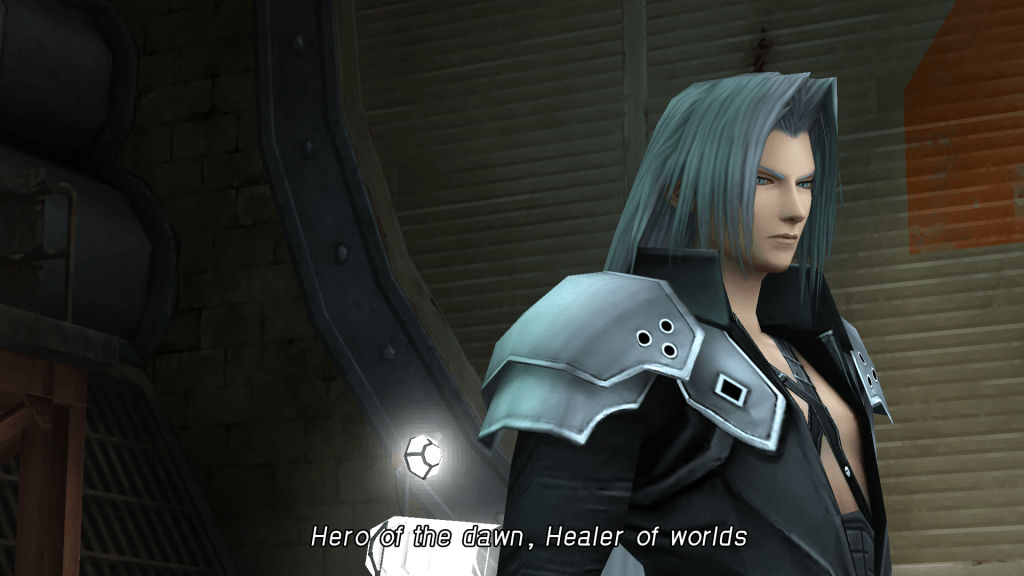
There is no hate, only joy, for you are beloved by the goddess. Hero of the dawn, Healer of worlds
LOVELESS, Act II
Sephiroth knows where the path they’re on will lead, and seemingly wants to avert the crash course. It’s hard to believe that such a thing would come from the genuine goodness of his heart, especially since Remake has played up his insanity and the cultish aspects of the Reunion, but either way the primary takeaway from Intergrade seems to be that Sephiroth wants to protect the planet by preventing Meteor. LOVELESS Act 2 makes mention of “hero of the dawn, healer of worlds.” This catches my eye. On the soundtrack, the theme for the vision of Meteor in the Shinra VR centre is called The Great Destroyer. However Sephiroth, to my knowledge, has never had that title bestowed upon him before, and so it makes me believe that “destroyer”, applied to Meteor and to Sephiroth at the height of his madness, is specifically chosen to run parallel to the “healer of worlds” phrase in the poem. It was Sephiroth’s actions that paved way for destiny to change and Zack to survive, after all, and Aerith acknowledges that he is trying to preserve the world in his own way.
As it was and as it will be for quite some time, it’s still way too early to truly commit to any one interpretation of Sephiroth’s endgame, and I do acknowledge that such a sympathetic reading seemingly defangs Sephiroth. He’s always been tragic, yet well past the point of sympathy. However, maybe that’s the point. If FFVII is Cloud’s character piece, Crisis Core is Zack’s and Dirge Vincent’s, then the remake projects might be Sephiroth’s spotlight. One where he occupies the true core of the narrative and which may ultimately culminate in massive character revelations for a man traditionally left unexplored. Either way, it is what it is. I can only go off what I see before me, and what I do see is that in Remake Sephiroth’s displayed motivations up to now, one can easily read LOVELESS between the lines.
 skapbadoa
Leave a comment