
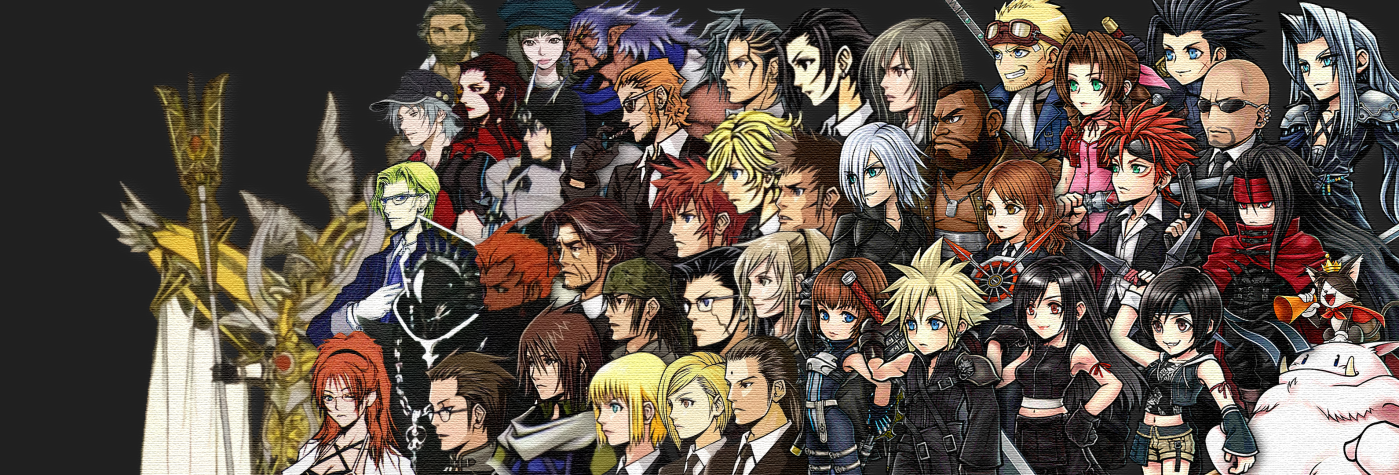
Final Fantasy VII is my favourite series. As a whole franchise Sonic captivates me like no other, but for a specific multimedia line then the crown falls to those who fight. My favourite characters and my favourite world. Let it never be a memory, indeed. In the aftermath of the Remake series I had been desiring to do another run of the Compilation of Final Fantasy VII. To see how I feel about the original content in a post-Remake environment, as well as to get around to bits of the universe that I hadn’t done before. Yet for length reasons, I kept putting this off. It’s such a large undertaking when you lay it all out. Four games, two novels, two OVAs, two recap videos, one film, one short story. Anything produced for Remake can apply to the original timeline unless explicitly in contradiction to established events, so Intergrade, Intermission, Picturing the Past, Traces of Two Pasts and First Soldier’s opening cutscene can get added into their respective placements too. Even at that point it isn’t the true end, since if you want to be pedantic then there are actually two more relevant games. Final Fantasy X and X-2 are on the timeline as a distant prequel, with the Farplane and its Pyreflies canonized as Spira’s own Lifestream. When I was younger I would replay Final Fantasy VII at least once a year, but as I recall, the last time I played it I felt the playthrough was a bit forced. So I thought it’d be interesting to let it rest for long enough to fade from memory in order to see how the experience would change. There wasn’t really any particular point at which I intended to act on that promise. However if Ever Crisis is actually going to come out in 2022 as suggested, then I suppose that it means the year is now. This, more than any time before or after, becomes the best spot to go through the full story again. In the time before Ever Crisis releases. And so at long last, I embark on that beautiful journey once more.
Whether your words are lies created to deceive me…or the truth that I have sought all my life. It makes no difference. You will rot.
Sephiroth
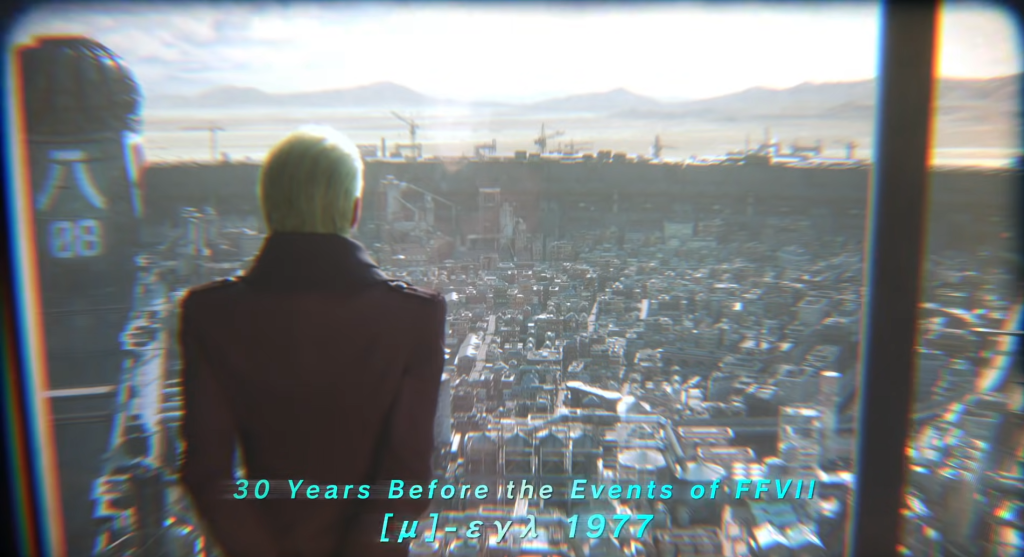
In the full timeline of Final Fantasy VII, the earliest parts of its history are the Final Fantasy X games and the recently-released First Soldier. However as expected the Spira stories are almost entirely irrelevant to Gaia so I would never classify them as part of the Compilation experience. The latter then becomes the start point. It’s a very brief backstory before launching into the modern FFVII era though, since to my knowledge the only story content in First Soldier is the opening cutscene. I actually don’t dislike the idea of a FFVII battle royale at all since if it’s solid enough then these brand spinoffs often make for interesting Youtube content to watch, and it seems like a good place for them to redeem Dirge of Cerberus’ action gameplay. But online games like that aren’t really in my area of interests, so I quickly watched the intro without ever downloading it. Being that it’s only a 3 minute video clip there isn’t much to engage with, but it is neat seeing visual of Jenova’s excavation, and subsequently Hollander and Gillian’s presence in the early Jenova Project under Hojo and Lucrecia. I think my favourite part of this clip is the glimpse of President Shinra in his younger years where even from the back it’s visible how much his son resembles him. I’ve always loved how Final Fantasy VII details the characters’ families instead of just letting them sprout as character concepts in a void. It’s interesting to think about the implication of, like, Aerith Faremis or Sephiroth Crescent.
Everything must be returned to the Lifestream for the sake of the planet. I will brook no interference.
Fuhito

When one attempts to tackle this saga chronologically the beginning is actually the largest roadblock, thanks to the 2004 Japan-exclusive flip-phone game Before Crisis. A fan remake in RPG Maker came out in the past few years, but for the sake of experiencing it in its intended form I instead went with the one english-subbed playthrough that somehow exists on Youtube. I cannot begin to imagine how that footage came to light, but it’s great that it did since Before Crisis is secretly really cool. Presentationally lacking, but the game further fleshes out the history of many major players like Rufus, Cid and Nanaki in significant ways while not being as offensive in design as many of the later works. Before Crisis covers the largest span of time out of any entry in the Final Fantasy VII series. As a fan it’s fascinating to be taken along to see events such as the rocket launch, razing of Corel or how Nanaki ended up in Hojo’s lab. However, I’m split on the decision to transform AVALANCHE into such a huge organisation. It has storytelling issues with overfixating on its own narrative to make them have a hand in the backstory of every single character. But it’s probably still a net positive, since the three leaders make for really cool antagonists that further populate Gaia. Elfe is cool, even if she doesn’t actually do all that much, and Fuhito serves as an absolutely stellar villain for this series. The moment in the finale where he’s finally so far gone in his glorification of the Lifestream that he echoes Sephiroth in calling the protagonist “traitor” was chilling.

Fuhito, in some regards, may actually be the most sinister person in all FFVII. It’s evident that he is the single character in the series to not reject Hojo’s moral perversion. In fact, Fuhito greatly respects his science in spite of its obvious corruption. Something not even the other Shinra admins manage to do. His evils run deep. Sephiroth believes his mind has been made clear, yet this ‘clarity’ is steeped in misinterpretation. A hero has sadly gone awry. But unlike Sephiroth, Fuhito is not any particular tragedy. He is neither personally wronged by Shinra, nor in the grip of madness. Fuhito is fully cognizant of his radical claim that simply to be alive is to abuse the Lifestream.
Final Fantasy VII is written as an ambiguous story on most levels in order to reflect the real-world discussion surrounding man and his inevitable effect on nature, but as they shift away from that into their own plots the other FFVII sequels sometimes have a problem with making the conflict too black-and-white. But since Before Crisis follows the Turks it largely avoids this trapping. The events of the game are underpinned with the sense that, no matter how charismatic they may be, the protagonists here certainly aren’t heroes – they’re the Turks. Those who handle Shinra’s dirtiest deeds. This falls more in line with the original FFVII’s conflict of eco-terrorists against the megacorporation. There is a battle that needs to be fought to save the populace, yet no side is actually in the right here. Shotgun rescues Aerith on her days off, and joins with the others as they rush an otherworldly realm to protect mankind from Zirconiade. But neither of those are her status quo. Her job is to be callous and cruel. She shows absolutely no hesitance to the idea of kidnapping civilians for the SOLDIER program. Though she does develop a moral conflict over the course of the game like Zack, she ultimately never rejects the company.
Throughout the years Before Crisis is something I’ve started watching and then forgotten about many times. I think I really needed something on the scale of this series replay in order to gather the motivation to sit through the low-quality playthrough. To my surprise, Before Crisis is really good. This is one of the best additions in the Compilation, yet also the one that most people will never see due to the unfortunate state of its availability. I think it a considerable shame that Square Enix never rereleased the game digitally, since there are higher-quality snippets of it shown in the Reminiscence of Final Fantasy VII Compilation video, and adding a more traditional top-down JRPG to the FFVII gameplay repertoire would have been fun.
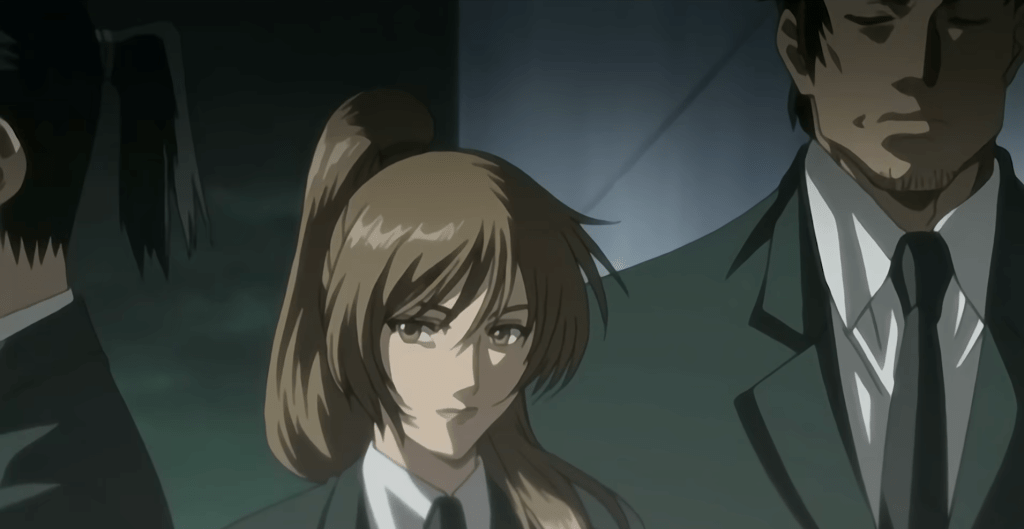
Because Before Crisis, Last Order and Crisis Core all overlap on the Nibelheim Incident it can be difficult to make a decision where this OVA should go, but the Turk presence in this version of events aligns more closely with Before Crisis. The plot obviously follows Zack, Cloud and Sephiroth so the Turks are only cameos in the cleanup, but after spending so long sitting through such meagre visuals in Before Crisis even this short feature is an incredible sight. Only a low-quality release exists unfortunately but nonetheless Last Order was animated by Madhouse after all. The visuals are very expressive. The animation of Zack’s super speed while repelling Shinra grunts is one of the most potent illustrations of the power a SOLDIER First Class, made all the more visceral when he and Sephiroth go head to head. It’s a short battle, but the iconography leaves a large impact.
Why is everyone always pushing things on me…?
Zack Fair
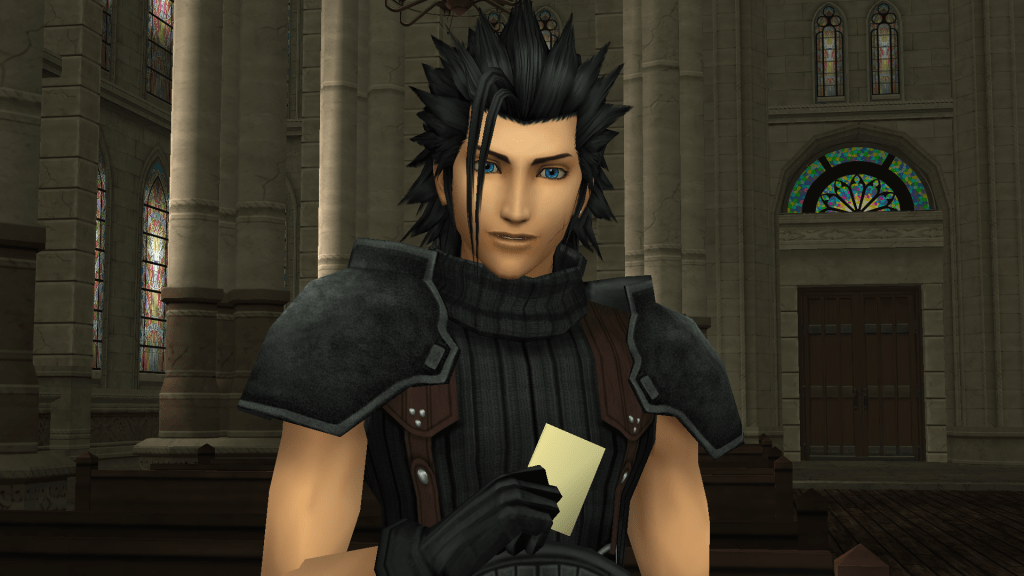
The leap from Before Crisis’ scratchy 240p recording and tiny soundtrack to Crisis Core emulated in 1080p with an upscaled texture pack is so dramatic. Final Fantasy VII’s first roadblock was cleared. Moving on to Crisis Core, I was again pleasantly surprised by how much I enjoyed my time with the game. The first time I played it I was totally enraptured. It was well before Final Fantasy VII Remake, making my initial playthrough of Crisis Core the first time I’d ever seen anything that recreated locations from the original game at a higher graphical level. Naturally, on my own rankings I gave it a 10/10. But that affection for the game evaporated when I decided to replay it. No longer excitedly looking over the fresh take on FFVII’s world I was left disgusted by how Genesis and Angeal attack the original narrative. I didn’t have the patience to weather the obvious limitations in the gameplay either and skipped most battles until I eventually just cheated to disable them. I’d have dropped its score all the way down to a 3/10. Felt scorned, I did. However here on my third playthrough, I’ve unexpectedly looped back around to liking Crisis Core. It may not be life-changing like I considered it the first time, but it certainly is not a bad game and does a lot of great things for the Final Fantasy VII setting. I love the way it interweaves with Before Crisis and Advent Children. Its visuals and gameplay are completely slaughtered by Remake at this point, yet in narrative I found myself far less critical of Crisis Core’s shortcomings due to the bite-sized nature of the game. The One-Winged Hollander arc is still potentially the most moronic part of the whole saga but it’s also a lot shorter than I remembered. Genesis and Angeal, they are still characters that I think would have been so simple to improve by giving them actual personalities beyond their one-liners, but I must say that they simply didn’t bother all that much this time. And with that somehow reconciled Crisis Core is then able to fulfil its intended function as a small-scale character piece for Zack and Sephiroth. The DMW slot mechanic is less easy to forgive, but beyond that I was surprised to find that I liked the combat a lot this time. Having the capacity to skip the DMW reel with the emulator’s fast forward makes the active experience a lot easier to stomach too.
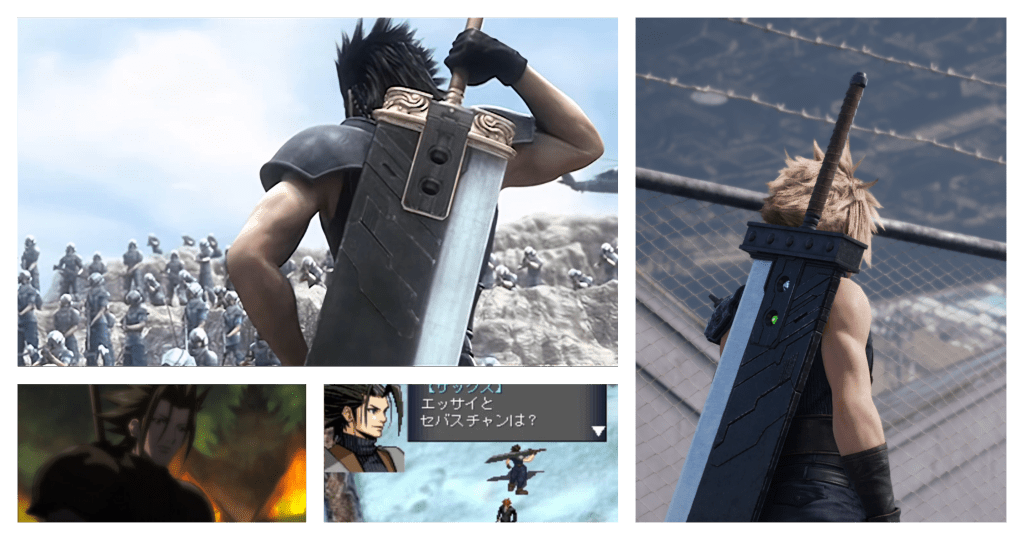
Next up is Picturing the Past from the Final Fantasy VII Remake World Preview artbook, after which I will have reached Final Fantasy VII again. Crisis Core marks the end of the ‘Shinra era’ where the story is told from the perspective of the Turks and SOLDIER. Ordinarily that isn’t such a big deal since one doesn’t really approach Final Fantasy VII in a chronological order, so all these new protagonists come after Cloud is already established as the core character. Traversing the saga this way is unique in experience because my mind is accordingly set on Zack and the Turks instead. Zack isn’t just the flashback character, but the constant presence throughout the opening entries. I’m obviously no stranger to Cloud since he’s the face of the series, but when starting the plot from the beginning it feels weird seeing this random blonde kid pop up wielding the Buster Sword. Using it incorrectly, no less, since Angeal and Zack are both shown to mount it with the blade facing right. And while that is technically just their own personal preference since doing so apparently helps protect the blade (Zack claims to hit with the blunt side, though the gameplay never actually makes this visible), it does heighten the sense that Cloud doesn’t really know what he’s doing with it. I think that unnatural feeling is really valuable, because it takes you to the ground level of the story. I can empathize with how the characters themselves must have felt unsettled seeing Cloud, whom many of them were familiar with, suddenly show up with a fractured personality and a sword on his back that they distinctly knew was not his. What confusion, what agony and anger must have plagued them. I think if nothing else this new sensation would have been the most meaningful take away from this chronological replay of the Compilation. But it isn’t “nothing else”, since every entry left me impressed.
We are all connected to the Lifestream. The planet and you. The planet and Aerith. The planet and me. That’s why I believe we shouldn’t fight with each other, but instead treat one another as friends. So, time to make up, okay?
Ifalna Faremis

A neat little side story that perfectly encapsulates why the extended universe is a good thing. So many more moving parts are added into the world. In this case, it’s a closer look at the section of the Shinra company that had been responsible for Aerith’s caretaking in her early life, which by nature also encompasses the first proper glimpse of Ifalna that we ever get. From the perspective of a Final Fantasy VII Remake project I also appreciate that this and the next entry offer up sneak peeks into later locations like Mideel, Junon, the Grasslands and Nibelheim. The main game takes so long to develop and nobody could predict how many years will pass before it reaches some of those places, so these shorter stories are an avenue to let us into them early.
Jessie crinkled her brows. “Tifa, did you run into some problems?” Tifa felt that maybe it would be alright to open up to this person. Not because she wanted someone to rescue her. Just someone who could listen and show her a bit of sympathy and tell her, “I know it’s not easy.” That alone would make the days worth living, she thought.
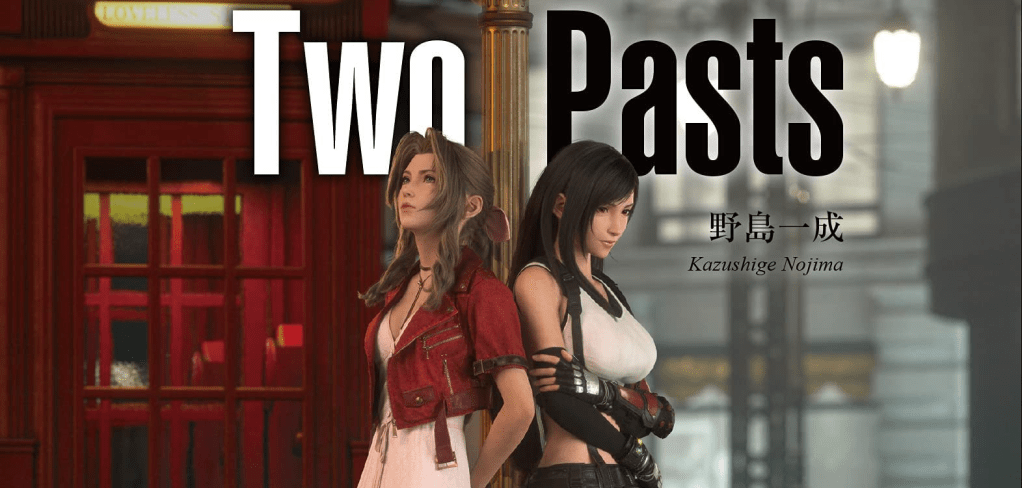
With that short story as an entrée Remake then dives into an accompanying novel, electing to detail a never-before-seen part of each heroine’s history. Aerith’s half offers up fascinating insights into the character of her enigmatic mother, describing their early life as they bide their time for an eventual escape from Shinra headquarters. It doesn’t have any huge revelations like Tifa’s portion does (unless you count the Costa del Sol shopkeep elevated into a significant side character), but it didn’t really need them either. Previous depictions of Aerith’s life prior to meeting Zack and Cloud didn’t have the same kind of massive gaps that are present for Tifa, so when wanting to dedicate half a book to her it only requires furnishing the existing bits. Finally let the reader meet Ifalna, give a more in-depth account of Aerith’s self-loathing at her inability to be a normal child and then, just for added measure, give Elmyra her own storyline. It doesn’t have to be crazy, because when explored in such detail even the parts we’d already seen before, such as Aerith breaking the news about the passing of Elmyra’s husband, pack a new punch.
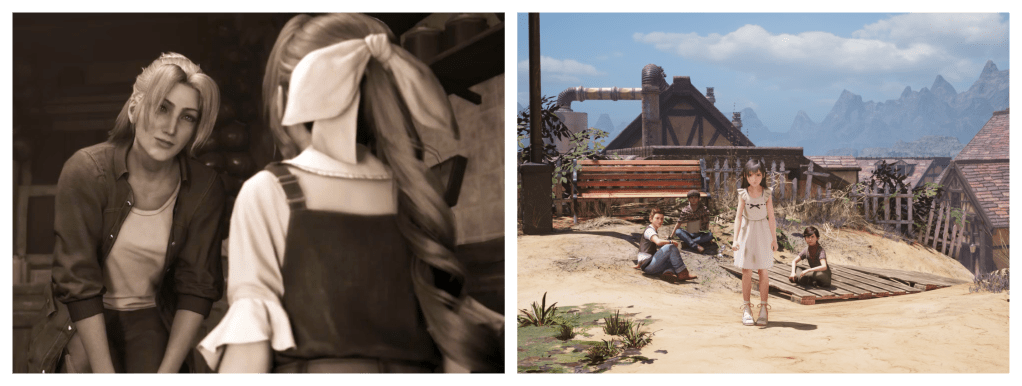
Right: Tifa with Emilio, Lester and Taylor as detailed in the book, staring down Cloud.
But since I, evidently, am just a Tifa fanboy through and through, her section is where Traces of Two Pasts carries the most meaning. This book presents one of the most extensive looks the character has ever been given. What a life restricted to her backwater village actually looked like for Tifa, her childhood up through the incident falling off of Mt Nibel and subsequent estrangement from with Cloud, how she became a student of Zangan’s martial arts school, and then eventually witnessing that accursed incident at the reactor through yet another set of eyes. The descriptions of how she felt conscious of Cloud a couple of times and then one day woke up realising that she was in love with him are especially sweet. It strings together the snippets of her meeting Shotgun in Before Crisis and getting to know Zack more closely in Crisis Core, providing a new sense of unity in her timeline.
The second half of her story follows on from the Nibelheim Incident. After all this time with the character having such an obvious void in her personal history, it has finally been documented how Tifa makes her way to Midgar after the catastrophe. The juxtaposition between her airy home life and the immense poverty she was thrust into after Sephiroth burnt down her town and killed everyone she knew and loved is heartbreaking, but an incredible part of her journey. How the cast actually congregate there has always been an enigma. Even for the centre-most character Cloud there’s still an unexplained few weeks between Crisis Core and FFVII where Zack’s persona creeps in and he makes the conscious decision to alter his SOLDIER outfit. That one remains a mystery for now, but Traces of Two Pasts does make an effort to introduce whichever relevant characters it can. It tells us that Zangan had ferried her to a clinic in the slum, and in the ensuing years of poverty a series of coincidences with Marle at the clinic would lead her to Jessie, Barret and eventually AVALANCHE.
As Tifa is chatting with Aerith and Nanaki about the winding path that had led her all the way from her distant homeland over to Midgar and beyond, she recounts the time she once met a female Turk while searching for her cat in the mountains. This being her meeting with the player Turk from Before Crisis. The book later reveals that Barret had asked to be inducted into Sector 7’s AVALANCHE cell by bringing up his previous encounter with Elfe. Though Jessie is a bit hesitant to accept him since at that point in time the organisation had begun to falter, which we can discern is from Fuhito’s interference. They even take care to highlight the carpenter who talks to Zack about constructing a Sector 7 bar in Crisis Core. The book displays an affection for the world of Final Fantasy VII by referencing this and that, while subtly slipping in new details such as the now-defunct Republic of Junon. It defines a slew of things previously left in ambiguity. These are exactly the kind of long-running story interactions that make the Final Fantasy VII’s extended content such an awesome experience.
Aerith’s feelings. Our feelings. We came here to make you understand. Come, planet, give us your answer. And Sephiroth! To the settling of everything!
Cloud Strife
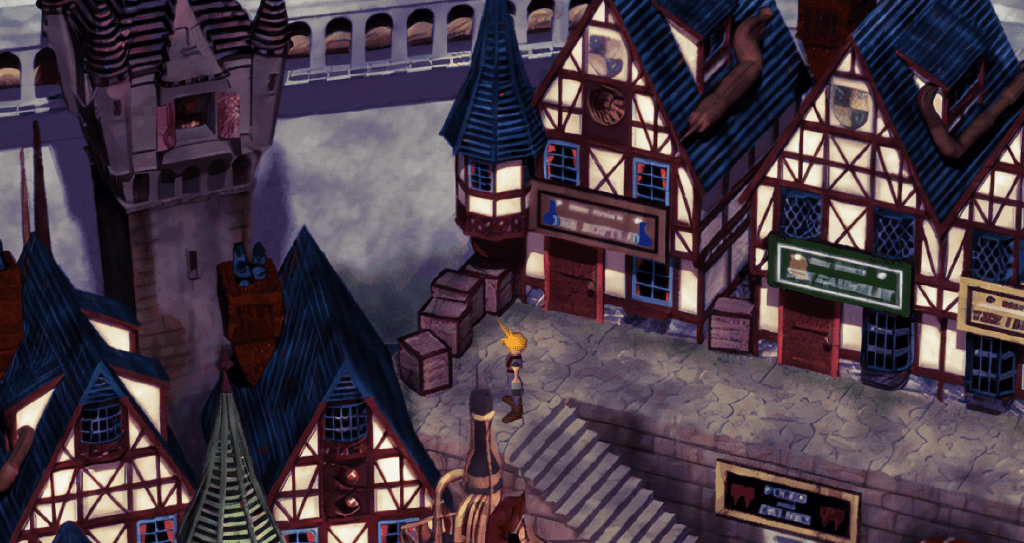
Zack dies a hero and the Turks scatter to the four corners of Gaia. The prequel era meets its heart-wrenching end and the camera, at long last, pans over to the image of a blonde, young man sluggishly trailing a ceremonious hunk of steel behind him as he hobbles all the way to the other side of the wasteland. Cloud inherits the will of those who fight and sets out to end all that which torments him. Final Fantasy VII – a masterpiece as ever. Aesthetically? Unmatched. Artistically? Rivalled only by its contemporaries Final Fantasy VIII and IX. A product of its time, that’s still just as potent in this time. Final Fantasy VII is something that I believe withstands it all. With a helping hand, that is. Run the Satsuki Yatoshi upscale mod, apply a liberal use of the speedup and no encounters cheats, and the game is wholly rejuvenated. It launches, loads and saves quickly in the same way that makes modern JRPGs so easy to hop in and play. Final Fantasy VII becomes a 1080p experience that no longer feels like it’s being choked by the rudimentary engine. This provides a unique opportunity to reevaluate it from the review perspective of a modern JRPG targeting a retro aesthetic, and when viewed from that angle I’d suggest it comes up superior against all contenders. The artistry worked into the beautifully-crafted diorama backgrounds and creative camera angles is to a level that I believe has only ever been challenged by the other two PS1 FF titles. With the exception of simple resolution upscales, usually I find that any and all graphic mods for Final Fantasy VII are atrocities because they’re mostly just forcing in models that wholly clash with the intended aesthetic. As a blanket statement I would say that any mod which tries to get smart with FFVII’s art style inevitably damages. Near the end of the game I did try out the dynamic lighting shader, however, and since that’s just layered on top of the existing art I found it actually did great things for the visual synergy by creating more depth on the character colours.
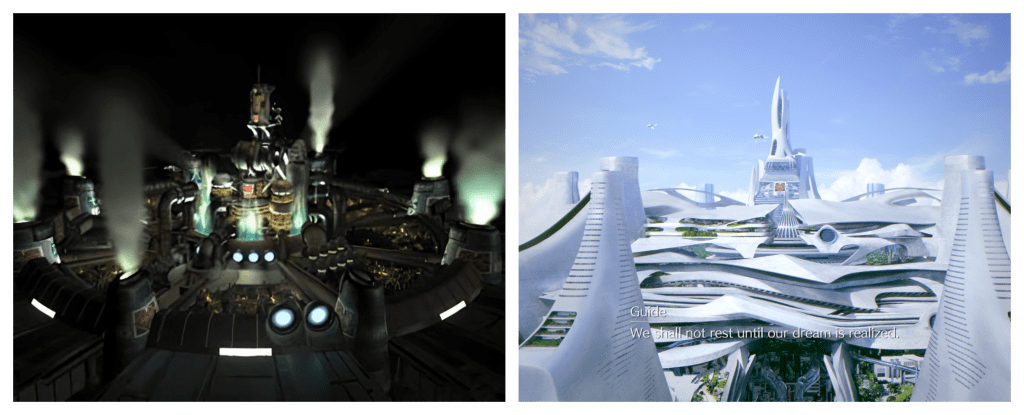
Final Fantasy VII is geared toward many of my own aesthetic biases. I referred to it as ‘retrofuturism’ in my Intergrade review, though that might not actually be the correct way to class it. What I’m referring to is the specific style of its urban sci-fi. The 90s science-fiction aesthetic was unique to that era. The technological ideal wasn’t yet standardized as a sleek, white vehicle like Remake’s Neo Midgar, so there are clunky supermachines and hi-tech CRTs. Man vs the machine where the environmentalist message is steeped in moral ambiguity, and every element of the weary world cloaked by melancholy. Sweet, sweet melancholy. I’m not sure why I love it so much, but I certainly do. They even chuck kaiju in there for good measure! It has this mix of everything I love. Of old-world mercenary heroes in a modern, industrial setting. I definitely spent my high school years fantasizing about what it would be like if it were possible in this world to make a living as a wandering hero. I was young, y’know. But Gaia is that world. It sits somewhere between the modern and the medieval. Still full of small villages and monsters roaming the vast wastelands, yet all of that encased within a steampunk interpretation of technology. The job of a SOLDIER first class is much like the vagrant hero roaming between town solving any and all problems, and the king still dominates the world through economic and political power. Midgar, encased within circular walls and divided into districts, is a kind of castle town. Except that this time, the king’s castle is an industrial skyscraper.
I used to run through this annually, but when last I played it 5 or so years ago I decided that I would like to let it sit until after Remake – until the original felt a distant memory – and then come back to experience it without my established bias toward it or the lingering familiarity of “Final Fantasy VII, my favourite game”. Having approached it with such distance, I found that Final Fantasy VII is still likely my favourite video game aesthetic experience, but as a game perhaps not my all time number one anymore? Who knows. What a shocker to the mainstream discourse, that actually it’s the visuals and primitive synths that truly connect me to this title. It’s the narrative and the characters and the world, and not necessarily the active gameplay experience. I’d prefer it if benched party members got equal EXP to incentivise actually using them all but otherwise the combat is still beautiful in its straightforwardness. The materia system’s praises are plentiful. It’s simple and effective to get different effects based on what materia you combine and whether they’re slotted into weapons or armour. However…at this point, older, busier and with an oversaturated backlog, I increasingly find that I just don’t have the patience left for random encounters and menu-based combat. Around this era, at least, since the ‘favourite gameplay’ title next falls to FFXII. Honestly speaking I had the most fun with Xenogears and Xenosaga when cheating my way through them, and that remains true here. I did keep battles active at the start of each session so that my levels kept pace without being cumbersome, but I enjoyed the replay most when pumping the in-game battle speed and disabling overworld encounters.
When skipping a lot of the encounters, it does amplify the awareness of the story being relatively lean:
Title crawl. Okay glad you’re oriented because we’re bombing a reactor now. Oh, whoops, Cloud fell off the plate. But he’s okay. Even though they tried dropping a city on him. So hop on back up the plate and get into that big bad castle. Except there’s actually more game than Midgar, so, uh, walk quicker. Just a quick jaunt across a continent and a half. Don’t even bother trying to take a detour for the Zolom, he’s just pretending to be strong. What kind of idiot snake is weak to poison? Maybe there is a setback or two when your carnival date ends with a sentence for life in prison, but they were just bluffing about that part and now with all your new friends you’re ready to tackle the mystery of the Ancients. It doesn’t go so well, and Sephiroth’s cult realizes its ambitions. Cloud is lost, Tifa collapses, Cid is annoyed at being handed responsibility, Vincent is just annoyed. He’s like that sometimes. Bam, it’s a week later and things are ruined. Meteor sits in the sky, mocking you for your inability. But too bad, no time to lament – there are kaiju now. Only for a little bit though, because Shinra shot them with a big cannon, hitting Sephiroth’s cocoon in the process and wrenching open the road to victory. There, at the heart of the planet where Holy and hate collide, Cloud moseys on.
The plot moves briskly along its course and each individual narrative beat is decisive, but I would say that I’d like it if there were more fluff to each event. To let the world breathe more instead of just being actors on a strict script. It’s a product of its time in that sense, where you can somewhat feel that Square’s developers were wrestling with the notion of even just putting something together in 3D for the first time. I wouldn’t ask for 20 hours in each village like was offered in Remake, but it does stick out how little time the characters spend in each town. The tight pacing is one of the game’s major strengths, which contrasts with Intergrade where many were critical of some obvious runtime padding. But in spite of this, I adore the Compilation because it draws out specific elements from FFVII’s script and fixates upon them. If any of the Final Fantasy titles were to have been singled out for an extensive subseries, it make sense that VII was the one chosen. There are so many characters and subplots touched upon in the main game that are seemingly left open for later exploration. Final Fantasy VII accommodates Before Crisis by hinting at the Turks organisational structure and AVALANCHE’s origins in Cosmo Canyon. Crisis Core and Dirge of Cerberus expand upon the existing flashbacks for their respective protagonists. Any new entry that arises in the extended universe slows the tempo and dramatically draws in the scale. Final Fantasy VII’s plot is somewhat designed for that. It sets its pacing right from the intro sequence and expertly follows through. As the characters weave through the world they know when to preach and when to remain silent, what things require prose and what is better left as a passing line. Yet on this replay I would feel confident in stating that it also requires the Compilation to be considered complete. Any one entry taken on its own is left lacking, but by working together the player begins to feel that the world is truly lived in. Final Fantasy VII is a beginning framework brilliant in its brevity, yet it also demands holistic elaboration in order to be fully realised. Whether by merit of its story design, or merely by fault of the problematic translation. These works squeeze into the crevices of the main storyline, but, well, that’s because it leaves those gaps in the first place. I’d still say this is the single best entry in the Final Fantasy VII series, but on this playthrough I did also come to acknowledge that a not-insignificant amount of my affection for it is built on the backs of the extended universe. I know that by this point criticizing the divergence of Final Fantasy VII Remake’s ending has become a running point in my discussions of the property, but truly it pains me because playing Final Fantasy VII again with a comparatively fresh set of eyes has led me to the conclusion that Remake, with its Compilation style of action, hugely expanded locations and more natural dialogue, really should have become my new favourite game of all time. Taken as an isolated experience, and especially with the massive saga it will slowly become. That is the world and the people that I so adore here given the proper amount of time that I want from them. It can’t be helped that in a post-Remake environment I so often see two scenes reflected in my eyes: The game actually before me, and the imagining of what these moments will look and sound like in Remake.
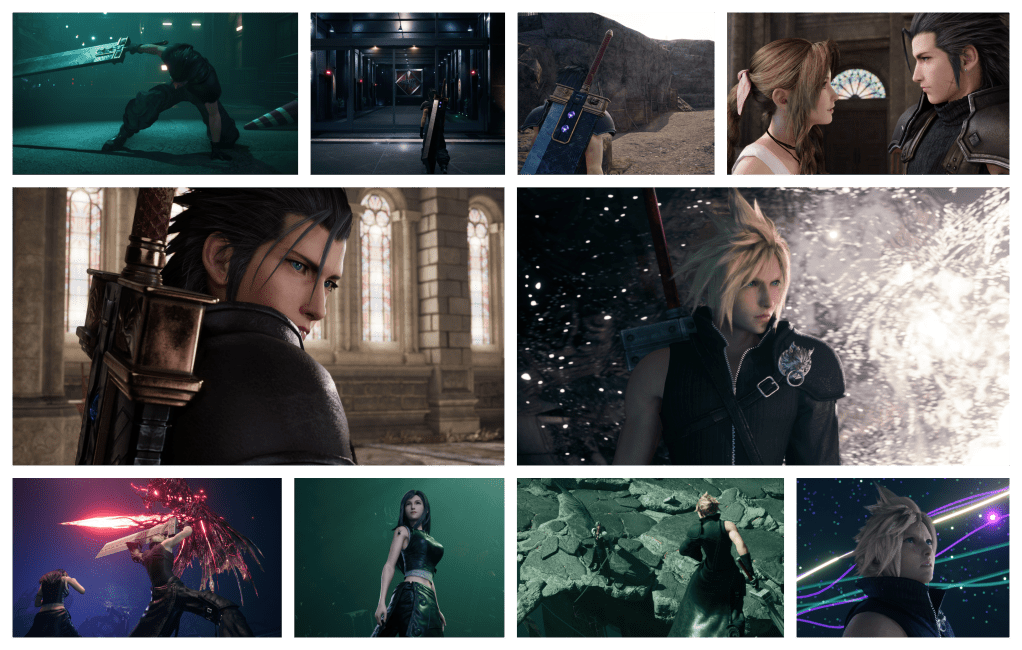
What a fascinating experience this replay has been. In some sense it may be argued that I have pulled away from it, since this is the first in a long time that I have suggested I do not wholly love and worship this title. But in doing so, I also walk away revering it more than ever. Final Fantasy VII’s personal status was something which I could never discuss with any specificity. In the past few years I feel like, perhaps catalysed by my descent into madness alongside Love Live Sunshine, my ability to reflect on, review and engage with media has grown explosively. My adoration of Final Fantasy VII has not been damaged, but rather I’ve taken it out of its protective cage and the murky ‘favourite media of all time’ label has become galvanised with a more concrete set of praises. I come away loving this more, approaching it now-equipped to truly verbalise why and how I love Final Fantasy VII for its directing decisions and the way its story design, surprisingly, accommodates all the later deep-dives. Its place in the history of Gaia. It is the directing, it is the gorgeous graphics, it is the sound design and the characters and the setting. The combat is something that I, tragically, seem to have grown out of. Or maybe it’s that by the tenth playthrough, I just – I get it. I got it eight years ago, and even as someone capable of enjoying things many times over I’ve clearly eked as much runtime out of that as I possibly could. It’s unavoidable. But that’s a shift in personal preference and not any kind of mark on its quality, because I still recognise the merits of this particular ATB formula and hold it in high esteem. I’ve just had too much of it. Final Fantasy VII, right from the moment you boot it up, excels in every element of its production (aside from the much-criticized english translation). There was a lull last decade where it seemed it may be left behind by the genre, but through the preservation efforts of modders in the fandom that technological inadequacy is rendered moot, and Final Fantasy VII, contrary to its common pitch, is better now in 2022 than it had ever been before. If it was a masterpiece then, it’s a marvel now.
Aerith felt the pulse again. She knew what it was clearly this time. It was the same wave of the one who had ended her life in the Forgotten City. That man was lurking somewhere in the Lifestream.
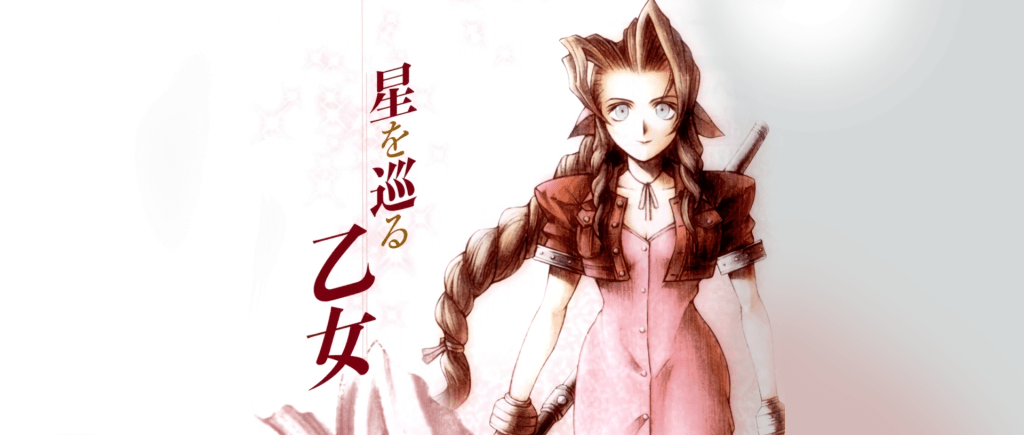
Despite the murky reception that seemed to plague each new release, the only two pieces that were ever thrown out of the canon are Last Order and Maiden Who Travels the Planet. The Last Order version of events were simply overwritten by Crisis Core whenever they overlapped, but with this short story about Aerith it’s easy to see a reason as to why it was made non-canon. To its credit, yes it is an interesting read. This is a much more in-depth interpretation of what Aerith’s time in the Lifestream may have looked like compared to that later seen in Case of Lifestream. The Sea of Mako is portrayed as a space where time has no meaning, so by restoring distant memories to her this chapter also becomes a rare instance of her acknowledging her father Gast, defending him against the mockery from Hojo’s spirit. Later, she gets the chance to sit down and chat with some lesser-explored characters like Dyne and President Shinra.
“Zack! Does that mean you’re dead too?”
“Too…? So you died as well Aerith? Well, I was actually going to ask that anyway and then…how should I put it…give my condolences?”
“You haven’t changed one bit.”
Flowing through the stream she eventually meets and then reconciles with Zack upon learning the reason he never came back was his own death, which is an interaction that meant a lot as a fan. This serves as a very good lead in to the resurfacing of their souls in Advent Children. It shows that the two are both awake and capable of finding each other. Interestingly, it also seems to be the largest contributor to Aerith’s characterisation in Intergrade where she stands as a sage in opposition to Sephiroth, and also mentions concepts such as “the whispers of the planet” or the nonlinearity of time. But it also undermines her original characterisation a bit by making her super head over heels for Cloud, almost as if it were her sole character trait. Which ain’t it. What’s always made Tifa and Aerith’s dynamic so engaging is how their appearances bely their personalities. Tifa is rather reclusive and often retreats into her shell, while Aerith is actually the energetic one constantly flirting despite being the game’s church girl. This story goes too far however and frames Aerith’s interest in Cloud as her be-all end-all motivation, coming across as a doe-eyed subversion of her original depiction. For a fan it’s not a bad thing to read through and keep in the back of your mind for the dreamlike image of Aerith’s afterlife, but the actual plot probably isn’t relevant anymore.
That is Avalanche! The filthy sewer rats who brought down a goliath! You tell ’em that.
Barret Wallace
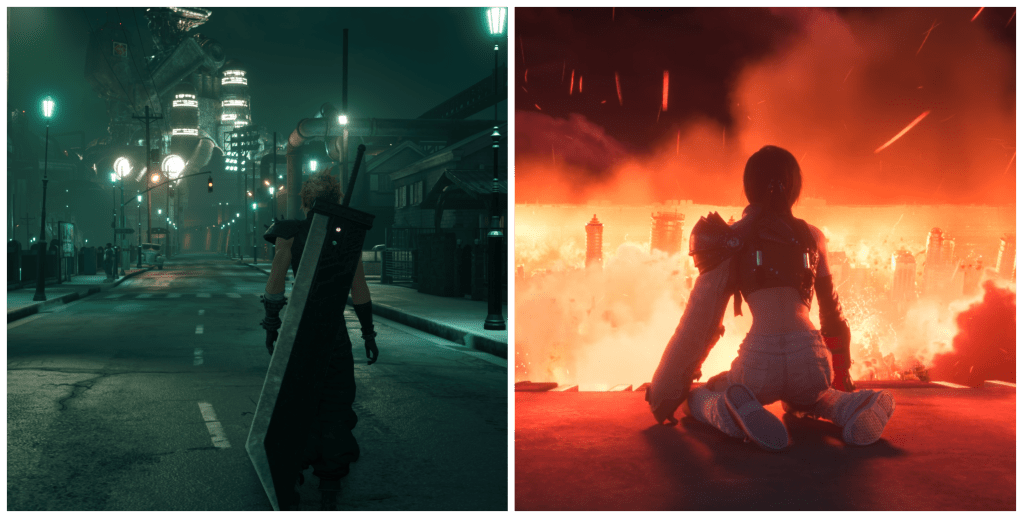
Adjacent to Final Fantasy VII one would now find the Remake games. Being already versed in Final Fantasy VII’s extended universe I felt that I’d spotted most the references that manifested in Intergrade, but revisiting the Compilation let me take more comprehensive note of what things have been carried forward. Characters, concepts and shot compositions, all of which integrated with such love that it leaves me baffled afresh why the game chooses to diverge so dramatically in the ‘unknown journey’ ending. Going through every line of dialogue in the original game again, there were a number of points which further heightened my conflicted feelings about Remake’s supposed time-loop. Sephiroth has always been this person. Wanting to shape the future in his own image is not a new trait for the character. I think there is still a heavy chance that Remake is just drastically expanding certain plot elements of the original script and parts onward will still play out according to Final Fantasy VII’s ordinary sequence of events. But I also cannot fully tell if that’s just a coping mechanism.
During the production of this script I had a look over the Final Fantasy VII Remake Material Ultimania, noting that in the storyboard segment it refers to the final shot in the Edge of Creation scene as “Cloud standing before the universe of death”. I didn’t exactly doubt myself given the way the scene so centrally frames them, but it confirms that the galaxies do indeed stand in for some kind of symbolic force, which Cloud will eventually have to choose between. Interestingly though, the snapshots of the storyboard selected for the Ultimania doesn’t address the other galaxy at all. The white one is dubbed the death place, rather than the sinister red. I’m crossing wires here, but speaking of that scene, with Dirge of Cerberus fresh on the mind I’d be willing to use that to alter my prior interpretation of the Edge of Creation imagery too. Its red nebula was something I said my current guess was likely to be either the Omega Weapon or Genesis, and dismissed the possibility of it being Chaos. Just for reference, the Material Ultimania’s “Timeline of Midgar” does mention Genesis’ coup de tat by name, unlike the World Preview art book. Genesis is still undeniably in the mind of the producers. But something I did notice long ago, even if I decided it probably wasn’t that important, is that when Sephiroth absorbs Meteor during the pre-battle cutscene he takes in the negative Lifestream that forms the basis of all the sequel content. Sephiroth, Jenova and Kadaj are all linked into the negative Lifestream so it might be nothing Dirge-specific, but I also would not be surprised to see Remake expand the cryptic Chaos Files into a core plot thread. Between my three present guesses for the identity of the red nebula I do think the presence of the corrupt Lifestream makes it subtly lean in Chaos’ favour. Looking at Remake with realistic expectations I think those galaxies will just turn out to be the two warring incarnations within Sephiroth’s mind (the normal one from the main part of the story and the Unknown that asks for Cloud’s help in the end), since it was noted that the white galaxy is based on the imagery of Sephiroth’s wing. Standing at world’s end these are, I suppose, Sephiroth’s wings of light and dark spread afar as foretold in LOVELESS. But I will still hold out hope for Minerva and Chaos, because frankly I just want the Compilation-coherent plot to be more ambitious than that.
Going through every line of dialogue in the original game again, there were a number of points which reinforced my hesitance toward accepting Remake’s supposed time-loop. Namely that I still do not believe it happened. Sephiroth has always been this person. He wanders the Lifestream and soaks in its grandiose knowledge. Wanting to shape the future in his own image is not a new trait for the character. I think Remake is just expanding certain elements of the original script and parts onward will still play out according to Final Fantasy VII’s ordinary sequence of events. Perhaps it’s just that Sephiroth’s “and now I will create the future” line is blown out into this big, messy arc which I anticipate will still resolve at the same final destination.

I’ll talk about this in more detail later, but retreading Final Fantasy VII’s full history, the big winner was Sephiroth. I feel like I’ve paid much more attention to the character this time. Until recently I probably would have noted him as my favourite villain character when asked, simply because, eh, he’s the villain from my favourite game. Like my feelings on the game itself, it was something I found difficult to give a concrete shape to. I was simultaneously too ingrained and too long removed from it to isolate such feelings. So a small thing I’d like to point out is that, although his implementation is certainly different in Remake, I like how the expanded soundtrack heightens the Jaws inspiration. In the original game that influence manifested in his comparatively light screentime. But in Intergrade, Sephiroth is too popular to attempt hiding him again. So instead they up the terror in his musical themes, more frequently using the opening bells as a tone-setter similar in function to the shark’s iconic strings. The bells that mark the beginning of JENOVA Quickening even use the same arrangement.
For further reading on my feelings toward Intergrade.
All the fighting, all the greed and sadness – everything was washed away. Sadness was the price to see it end.
Marlene Wallace
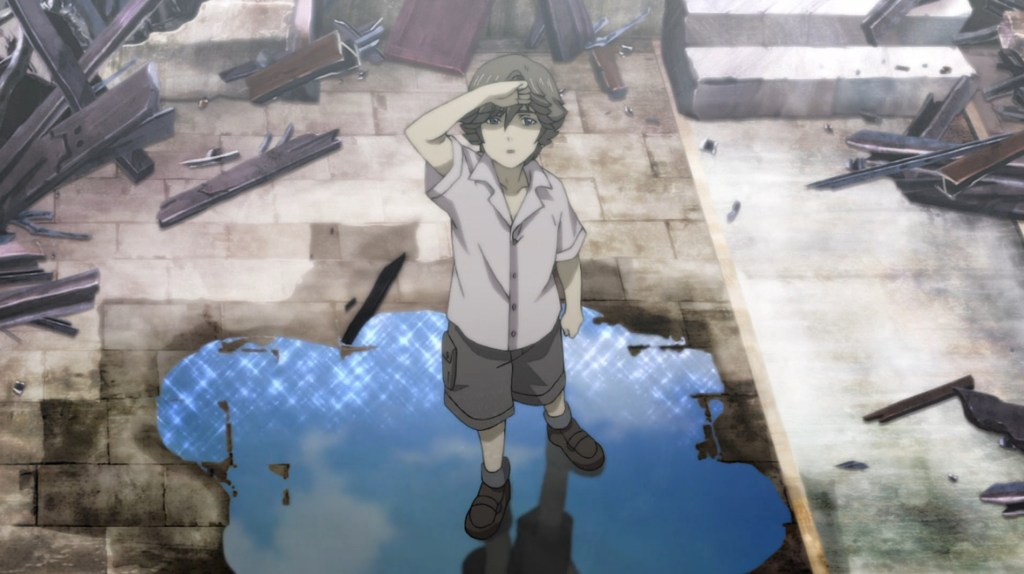
But put Remake back to sleep for now because it’ll be like 500 years before the last game is reached, yet we’ve already seen the Jenova War reach its conclusion long ago. Sephiroth was felled and the characters closed out that chapter in their lives. But Meteor still rained down, and when the Lifestream itself had angrily tore from the earth to intercept it that brought a curse of its own. Certainly without its intervention the human race would have perished, but that isn’t the same thing as it deliberately saving them. The planet had protected itself. Nothing more. Before dissipating it had massively shifted the terrain to impair trade and communication, and sowed the seeds for the geostigma pandemic. Considering the nuclear imagery of mako, perhaps to be understood as symbolic implementation of radiation poisoning. It was a hope laced with ruin, because maybe the planet didn’t care about them that much after all. Conceptually (and perhaps even literally if we consider Minerva’s presence) a god had been roused, and what it desired was only to shut up those who were pestering it. Midgar crumbles beneath its weight. Shinra’s kingdom collapses. With the conqueror suddenly now vanished, society is thrown into total disarray. Life around the world unequivocally changes in an instant. The heroes understood what happened and why, so they’re afforded some kind of advantage in the new world. But most of the populace is left scared and confused. It’s thus incredibly valuable to receive this kind of side-story, viewing the events of the main game from the perspective of an unrelated bystander. The anime depiction of Meteorfall is terrifying, reinforcing the ambiguity of Final Fantasy VII’s resolution. You feel more strongly than ever that the main conflict was, ultimately, just a drop of water in a much larger stream. That when the planet rouses the Lifestream to attack Meteor, it does so truly without care for humanity.

Were it up to me I would have selected any Case other than Denzel’s for this anime adaption since it doesn’t offer up a huge amount of fresh information. There are a handful of new characters like Rix and Gaskin, but even so, we already saw most of these events in Advent Children’s flashbacks. Tifa’s piece would have been more meaningful since it explains how she came to consider herself a family with Cloud and Marlene, as well as Cloud’s pain resurfacing when Elmyra requests the Strife Delivery Service to send flowers to Aerith’s resting place. Their relationship is strained as a result. Although she loves Cloud so desperately, Tifa’s feeling of hatred for herself leaves her unable to stop him from running away as the story leads into the film. The history of how Edge was established in Rufus’ entry has a lot of worthwhile information too.
The apocalypse is over, but the journey is just beginning.
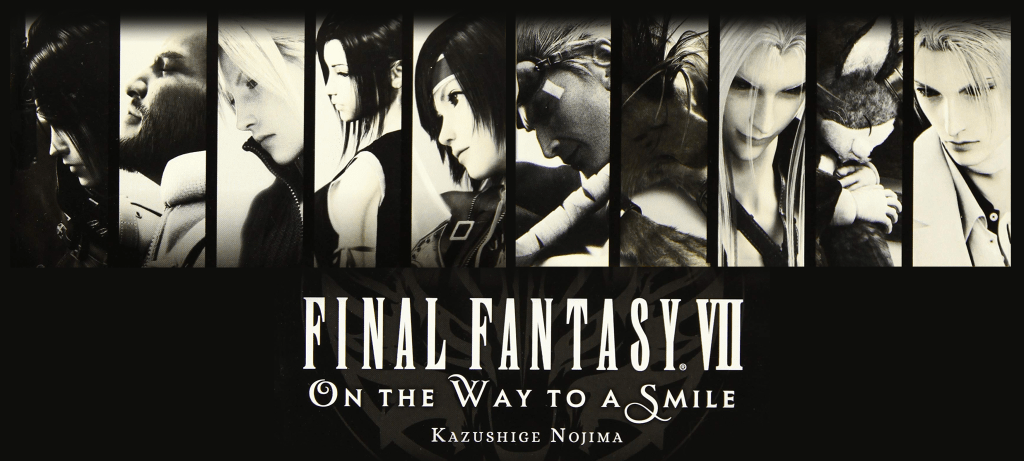
Episode Denzel isn’t the only part of that project however, since all major characters get a focus in the full book of On the Way to a Smile. I’ve read the fan-translations for this in the past, but I liked being able to get my hands on an official localisation for the sake of authenticity and merch. These are great character pieces which engage with each of their arcs in the original game, just briefly enough in order to illustrate how each person decided on a new direction for their life. With the title of ‘hero’ stripped away from them each member of the party is forced to search for a way to reintegrate with common society. When the adrenaline dies down and they’re no longer able to use the adventure to avoid focusing on their sins, what effect does it have on them? The mundane puts their personalities to the test. Unfortunately each entry is noticeably constrained by the anthology format, since they don’t have much room to fluff the wordcount. It doesn’t cripple their emotional potency, but I did feel that the stories were ending too quickly. With that in consideration it isn’t surprising that the longest one, Case of Shinra, was the best one. Although I’d seen most of the book before, the chapter following Rufus was new to me. That contains the most complete account of how the construction began on the new city to the east of Midgar. Through his actions here one discovers that the performance Rufus put on in Advent Children was just that – a performance. The apologetic mannerisms he displayed while talking to Cloud and Kadaj made it seem like he had turned over a new leaf, but that was all manufactured. Rufus still intended to work his way back up to the role of conqueror, even calling the Meteorfall monument “a sign of our ownership”. On the Way to a Smile doesn’t necessarily contain any new character revelations, but it’s an integral part of the Compilation that best sets the scene for the tonal shift waiting to happen in the film.
I was finding it really hard to keep lying under her level stare. I could practically hear her saying, ‘tell the truth’. Or maybe it was me telling myself to be honest for once. Probably the latter. The life of a habitual liar was so miserable. I’ll tell you what’s really going on, so please listen to me, I pleaded in my heart.
Evan Townshend
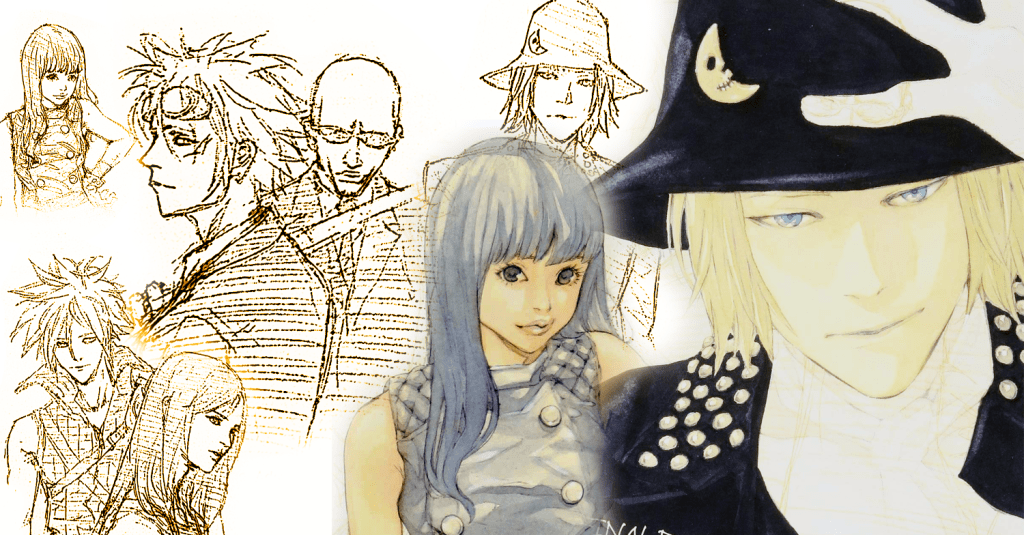
There’s one other book which occupies the space in between Final Fantasy VII and Advent Children. The Kids Are Alright was totally new to me. Part of me wants to say that this is the best addition to come out of the extended universe, but then, across this replay I’ve found myself feeling impressed with every entry. It seems I want to say that about all of them. Unlike On the Way to a Smile this is a standard book, so the narrative is given as much time as it needs. Evan Townshend was an interesting protagonist for all his personality flaws. For most the book he’s trying too hard to act tough in a way that’s awkward and unnatural to everyone around him, which adds a veil to their chemistry. The story is about him learning to kick that habit. Spending enough time around his companions that he eventually learns to love himself for who he is, since they had noticed he was guarding himself a long time ago. All this occurring within a vivid description of Edge. They travel the world over – and it is fascinating to hear Tifa’s accounts of how the Lifestream had changed the world map, such as a collapsed mountain range making for a direct route from Midgar to Junon – but it’s Edge that really sticks out to me. That’s always been one of my favourite settings, so I eat up every chance to explore it. A huge part of me laments that I didn’t read this back before the release of Final Fantasy VII Remake, since I can only imagine how incredible it would have felt to see their glowup if I had recognised Kyrie and Leslie from this side first. They’re granted much more screentime in The Kids Are Alright than in the game so I really came to appreciate their presence. Pretty good book methinks. Getting to view fantasy worlds from the perspective of a bystander is always a special experience and this time around it’s so much more extensive than Case of Denzel or Case of Shinra were.

The Turks are always great too. Reno and Rude command such charisma throughout their many appearances, and Tseng plays a major role in the prequels. So I found that these two books were offering a much-needed spotlight to Elena. Girl’s a lot more of a brute than I expected. Elena would keep trying to find any excuse to beat up small-time nuisances, expressing her frustration when Tseng held her back. A rocky relationship with her older sister Emma made her display such a resistance to the Turks back in Before Crisis, but she ends up holding immense pride for her role as Shinra’s elite. Like the habitual lying of Evan which works multiple layers into his relationships, Elena’s violent streak makes her friendlier moments feel all the more dynamic. This book thrives on such contradiction. The Turks are villains through and through, but they’re so charismatic you can’t help but be enamoured with them and their twisted sense of family within the organisation anyway. Like in Case of Shinra when Elena runs up and embraces Tseng after believing he died in the Temple of the Ancients, then cheekily says “Shut up. I know you want to hug him too.” to Reno and Rude. Sharply dressed and in abundance of dry wit, any time the Turks are present in this franchise they steal the show.
Yet the part that leaves the biggest impact on me was neither the protagonist nor the Turks, but rather someone I never would have expected to say positive things about. Kadaj. His razing of the Icicle Inn in the finale was a gripping acknowledgement of Jenova’s cinematic roots. The grotesque, shapeshifting alien Jenova was unapologetically borrowed from John Carpenter’s The Thing (1982). It’s afforded a bit more grandeur but is essentially just the same creature in origin, design and function. A transforming alien that crashed into the arctic in ancient times and when unsealed it attempts to destroy civilisation through weaponised paranoia.
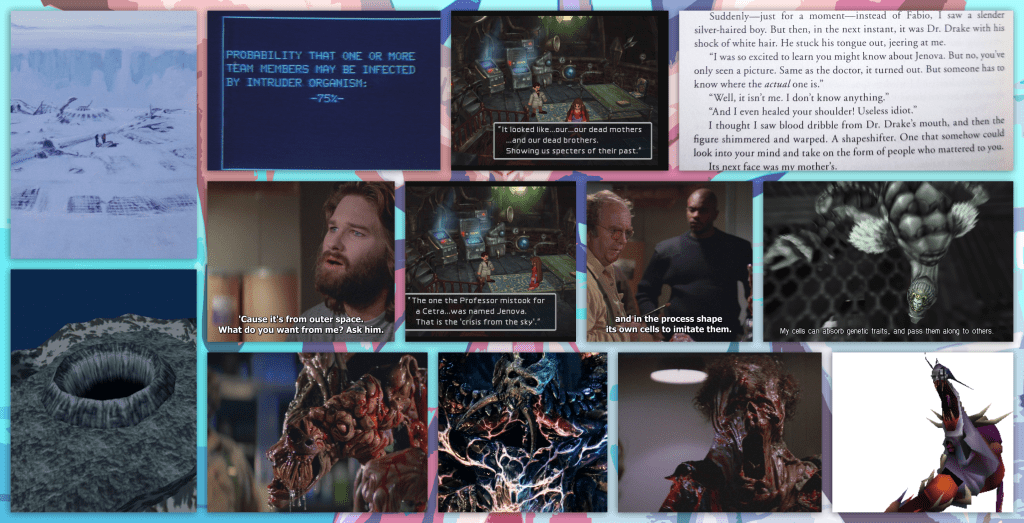
There are tales of her silently infiltrating ancient communities, mimicking their forms by altering her own cellular stucture. She would come to them as a friend, then work to inspire such distrust that the people drag themselves toward ruin, deriving a sick pleasure as it watches the society implode and then swooping in at the end to infect them with its mutagenic virus – much like the events of the film. However this element sparsely plays a part in the actual game due to Sephiroth being its main vassal. Once he learns of his origins he steps back into the role of overseer, manipulator and god. He commonly manifests his form by overlaying on the Reunion cult, but it only happens once or twice that he takes the face of someone else to trick the party. It’s a situation where he’s simply too iconic for Final Fantasy VII to realistically obscure his character design, so most of the time his Jenova-induced shapeshifting means making other people look like him. Sephiroth is omniscient in the story, existing just as much – if not more – as a concept. He hangs over the narrative and you spend more time hearing legend of him and his heroic ripples on the world than you do actually encountering him. Sephiroth is dubbed a “perfect monster” by his closest friend and ends up cocooning himself within that notion of perfection. He’s the chosen one – self-appointed, but nonetheless believing himself above the “worthless creatures” because he is beautiful and divine. He doesn’t just want to destroy the world, because the Compilation has illustrated a number of times that he is capable of slicing through buildings with a single swipe, and could thus carve up entire cities with minimal effort. Every known SOLDIER First Class is MIA or dead, and Remake shows us that even his Jenova projections are capable of outclassing Cloud until much later in the story. If he so desired then Sephiroth has ample opportunity to send multiple clones out at once and tear down society posthaste. But he doesn’t, because Sephiroth holds ambitions. Goals. A master plan which he gives everything of himself to enact. In power Sephiroth is pretty much unrivalled, even when existing in incomplete states. But his intent is not just to crush those before him. It’s to send a message. Sephiroth speaks to them in cipher and his presence in the story centres on delicate emotional manipulation. Sephiroth is a deceiver. He is looking far beyond the physical. Beyond the planet and beyond the human. His goal isn’t purely violence, but rather that there is some kind of self-affirmation that lay at the other end of all the slaughter, which he wishes to grasp. The contradictory height of solipsism, accepting pride and humiliation together by guiding himself toward the place of becoming truly alone. It is still very much a matter of personal pride for him.
But Kadaj has no such beauty. He doesn’t have any of the secretive knowledge that Sephiroth constructs his character around, only an overwhelming physical strength gifted to him by Jenova’s memetic legacy. So here Kadaj fights in a way that fits the description of the invader. A shapeshifter causing strife by visiting them in the visage of their loved ones. It’s written in a way that plays up the horror elements, and particularly selects to have this happen in a snowy region as homage to the film’s setting. It’s very cool.
I additionally appreciated how Black Water is turned into Kadaj’s individual character theme by discovering how this book introduces him as the negative Lifestream that had risen from a spring and stolen its first form from Kyrie’s mind. Kadaj himself is the black water. The book establishes that Kadaj, Loz and Yazoo are actually the names of Kyrie’s old gang of friends, whose reckless anti-Shinra actions somehow culminated in a fire that took the lives of themselves and many others trapped in the slums. So if she remains relevant throughout Remake I anticipate we will be hearing some very peculiar names from her before long. Kyrie is the first person that the Remnant of Sephiroth encounters and so her memory is picked for his initial identity to arise from. Tseng instantly recognises his aura and the terror of being cut down by the silver-haired SOLDIER grips him, but Kyrie perceives him as her old friend. It’s noted that the original Kadaj had orange hair, and considering there’s only one other orange-haired guy in the whole Compilation, part of me wonders if that’s a connection to be made as well. Such things do apparently have a tendency to centre on Kyrie.
I’ve long said that the Remnants of Sephiroth were the biggest embarrassment in the Compilation’s long laundry list of terrible decisions. Far more than any Genesis or Weiss ever was. For the other two still, get them out of my sight. But this book and his appearance during my brief stint of playing Opera Omnia have done a surprising amount of legwork toward making me appreciate him. Kadaj being more monster than man offers new possibilities in the story since he exists on a level so far below Sephiroth.
Voices don’t reach [Sephiroth]. All these moments and memories, precious and fleeting, they’re like rain rolling off his back. And when they’re gone he won’t cry, or shout or anything.
Aerith Gainsborough
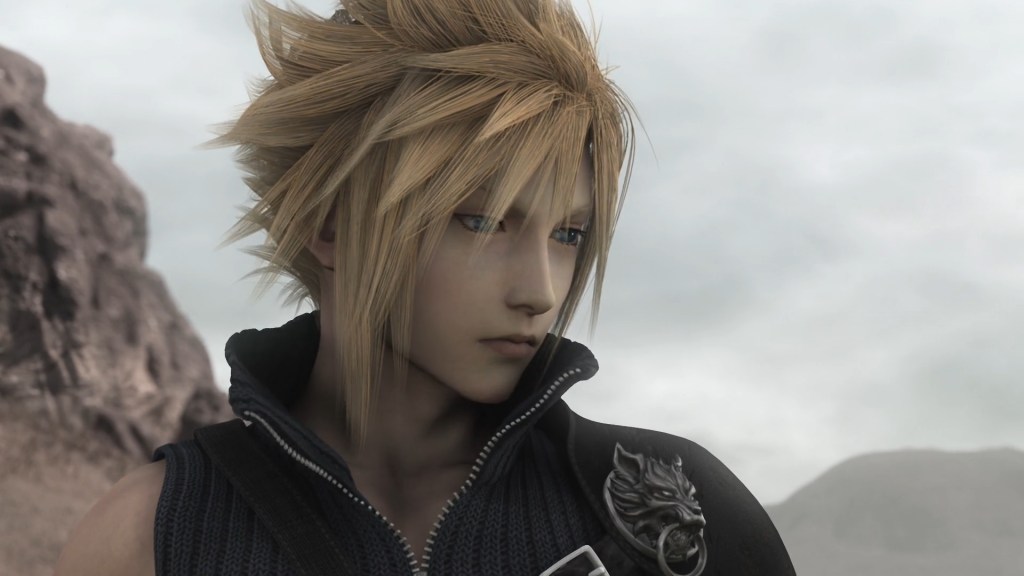
Looking at all I had to traverse to reach this point, it’s impressive how much content Final Fantasy VII has accumulated. I remember back when my mind still registered it as just FFVII and the sequel Advent Children. But now it veers out in all directions, and even moving from the game to its accompanying film requires two books as prep work. Despite its heated discourse, I found myself enjoying everything throughout this revisit to the series. Advent Children was not one to be overshadowed by those around it. I have always adored this film and felt a personal connection with it, which has not faded even after such an expanse of time. My love of this film is what hooked me on making these videos in the beginning. Revisiting it, especially in its proper context like this, I was able to reaffirm that I do indeed like it. The character performances have some shortcomings that are well-documented by now and having gone so long without rewatching it I think my growing frustration with Crisis Core had started to creep into my feelings on this matter. But no. Not only did I discover that Crisis Core is back on my good side now, I also still adore Advent Children.
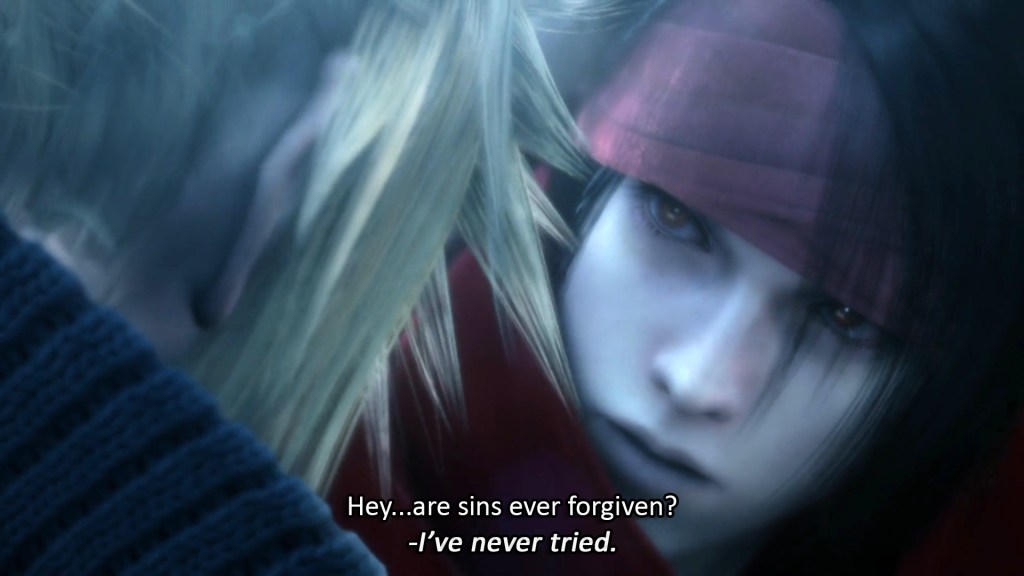
The artistic experience of the film is rock-solid. The lush music accentuates all the pretty shot composition, and the fight choreography is so creative. There are many memorable cinematic setpieces. An abundance of sweeping landscape shots and epic battles populate the viewing experience, yet it isn’t afraid to wind down for introspective exchanges such as Cloud and Vincent discussing whether they can actually qualify for forgiveness, or Marlene’s opening monologue where she recounts the events of FFVII from her perspective while the The Promised Land plays in the background. The way she describes Sephiroth has stuck with me.
“There was one SOLDIER who was better than the rest. But when he found out about the terrible experiments that made him, he began to hate Shinra. And then, over time, he began to hate everything.”
Sephiroth expressed his love for the world and was betrayed. He is the embodiment of a divine evil, born as the crystallisation of human greed. Man was no different from monster when they manufactured him to be a weapon. Sephiroth didn’t want to become the great destroyer, but Shinra’s machinations set him down a whorl of hatred in which no voice could reach him. Thinking about it that way, his fixation on Cloud becomes a lot more tragic. Sephiroth is a very intelligent man so you have to imagine that he’s probably realised long ago that Jenova does not truly qualify as a mother, nor was she a Cetra. He still talks about her as such in Advent Children, yet we also know that after a certain point in FFVII he stops being subservient to it. And Hojo is the biggest monster in all of the storyline, so Sephiroth wouldn’t dare accept him as a father. Yet he clung to Jenova because that rotting extraterrestrial corpse became the only thing he had resembling family. Maybe he felt jealousy toward Aerith for being the daughter of his beloved Dr Gast. Maybe he’s so driven to erase everything because somewhere in his subconscious his self-loathing and immense pride are amplifying each other to construct a veil over his own feelings of loneliness. Cloud, for better or worse, is the only person left alive who was once something of a friend to him, and so it does not go unnoticed that Sephiroth considers him special. If we apply this lens then when Sephiroth informs Cloud he wants to sail the cosmos like his mother that statement may be laced with self-mockery, and it better explains why his critical piece of dialogue is “I will never be a memory”. It is to carve himself upon the one person he still can. Cloud really only engaged with Sephiroth as a hero-turned-villain, so his recollection of the Nibelheim Incident – or whatever is left of it – lacks mention of Sephiroth’s plea to resist the call of the invader. But when this same scene is approached from the viewpoint of Zack, the scenes do highlight the turmoil Sephiroth was in while he tried to find any excuse to silence what Genesis had told him. Ordinarily characters like this are built to have a redemption at the end of their struggles. It’s the Darth Vader archetype. Sephiroth is tragic, but not entirely sympathetic. He dove off the deep end so very long ago. Aerith says “He’d tell you that he only cares about the planet. That he’d do everything in his power to protect it. But there’s no greater threat to the planet than him.”, which is a very adept summary of his narrative position. Sephiroth was not a monster of his own making. He was wronged by Shinra just as Cloud and Barret were. Yet all the same, Sephiroth is the man who burnt down that village, and tried to extend that death out to the whole world. Irrespective of where he came from, despite what overwhelming isolation may still be driving him, it’s too late. That one-winged angel is the world’s enemy. One of the things that’s interesting about him is that delicate melancholy, that string of morality pulled so tight it snaps. They could lament the path that lead him to where he is, but Sephiroth goes well past the point of forgiveness. The world had its chance, yet the hero was systematically betrayed by his friends, his people and his society until madness was the only path left for him. A grave sin was committed and now mankind has to bear the full brunt of its consequences, no matter how battered they are by the end. Sephiroth carries such gravitas. However at the same time…if we could see Sephiroth smile again at the end of whatever he’s doing in Remake – if Cloud, Zack and Aerith could fix him – then maybe that wouldn’t be such a bad feeling. None of these ideas are new to Advent Children, but that line Marlene delivers carries such implication despite being so short. I swear every shot and every piece of dialogue in this film is iconic. Utterly captivating. It isn’t often that I think a 2 hour film easy to sit through, but Advent Children is so well-directed that it’s hard to walk away from the screen.
I used to be nothing but a stone in the river of time. But three years ago, it was you and the others that taught me I had to move ahead.
Vincent Valentine

No longer “on the way”, Cloud has arrived at his smile in the place where his family live beside him. With that momentous film cleared, Cloud’s story is over. Protagonists have come and gone throughout the many years that comprise Gaia’s history, and now the spotlight falls to the immortal so that he may resolve the last sin left standing. Yep. I still hold much affection for Dirge of Cerberus. There’s just some quality particular to this game’s characters and art style that makes it the more memorable between it and Crisis Core. Zack is brilliant and he got so much more merit out of his game than Vince does, but receiving a FFVII story piece focusing on Vincent, Yuffie and Reeve as the main trio is so very fresh. I think it quite hilarious that when Cloud, Tifa and Barret appear during the Midgar cutscenes they basically just say “yeah” and “let’s go”, with one of Barret’s shouts not even getting dubbed. This is Vincent’s game – those three are just happy to be here. It occupies a spot away from the usual protagonists and the usual villains, which I think is why it resonated with me so much. It feels like it has confidence in the new style of Advent Children.
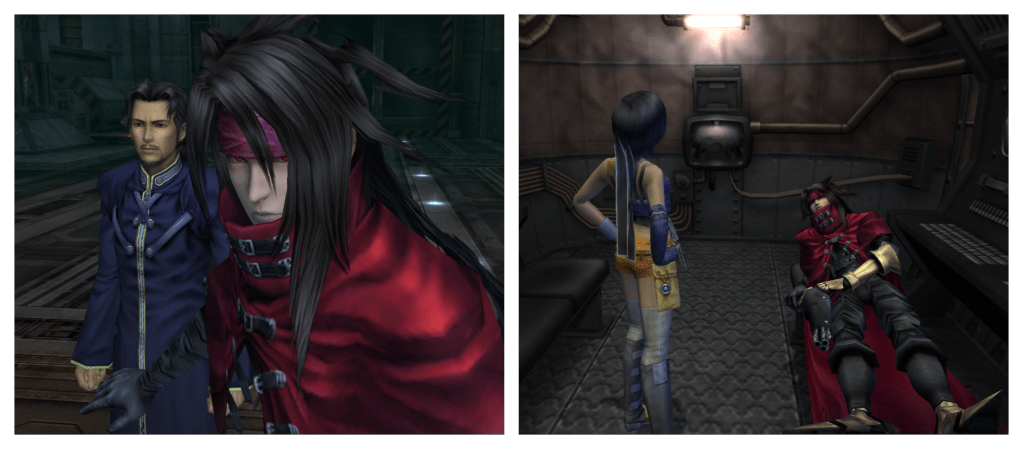
They doesn’t shy away from introducing cartoonier villains, hidden reactors and mysterious new figures like the Restrictors. Due to the overlapping release schedules Shelke, Shalua and Azul all have their place in the franchise solidified by their parts in Before Crisis. Weiss and Nero are later worked into Crisis Core to further weave the large-scale narrative together. While each new plot often presents certain characters or qualities that make it difficult to slot together with the original, I think the Compilation of Final Fantasy VII justifies its existence by simply creating an opportunity for Square Enix to revisit Final Fantasy VII. The original game moves so quickly, which isn’t necessarily a complaint, but it’s evident that there are storylines still left in there for later exploration. It’s Vincent’s history as a Turk and the personality of Lucrecia in this case. Furthermore it afforded Square Enix the opportunity to do up these locations long before they committed to the Remake project. This version of the Train Graveyard and a Mako Reactor are immensely outclassed by Intergrade, and one would expect that to happen for everywhere else too. But it hasn’t happened yet, so the unreached areas still maintain their charm. Kalm is such a sprawling place in the first level, far more fleshed out than the single screen it was afforded in Final Fantasy VII. The wastelands around Midgar are always a weirdly fascinating place as well. I guess it’s because when I see them I imagine that yet unexplained blind spot of Cloud making his way toward the city. The Compilation of Final Fantasy VII is inevitably going to be a remake of FFVII in its own way. However with Dirge being the last game in the canon, it’s provided an even more unique chance. Being the only project on the other side of the film, it’s in a unique spot to convert Advent Children setpieces into video game levels. It means so, so much to me getting given a level where you can actually wander the streets of Edge. Being allowed to explore the Shera airship and WRO headquarters are just icing on the cake. Additionally, speaking of fanservice, Dirge is just about the only place in the whole Compilation where the connection to Final Fantasy X carries even a smidgeon of relevance. Bahamut SIN evidently has some unspecified biological link to the Spiran terror, but the narrative never cares to acknowledge it. It’s only one throwaway line in Dirge about the Shera’s power source being some ancient technology where they do anything with that connection. The insinuation is that the airship is powered by a Machina engine. The Omega Weapon’s rigid stature and the unexplained mechanical appearance it presents when Weiss merges with it for the final battle make me curious if it’s intended to be a Vegnagun-class machina itself.

Vincent a cool. I especially like how his Chaos form has been redesigned to look like a tokusatsu villain. Soundtrack a great. Possibly the most underrated Final Fantasy soundtrack, in fact. The gameplay’s not outstanding obviously but it serves its purpose well enough, and does leave me very excited to see how they’ll adapt it for Vincent’s eventual moveset in VII Remake. Deepground’s personalities leave much to be desired and there’s just not really any way around that, but I do respect what the story does with them. Deepground are just about the only part of Final Fantasy VII to not be tied back to Jenova, and even more pressing is that I’d consider them a positive addition for placing Shelke into the lineup. It is a very tough competition against Fuhito, but I would say that Shelke scrapes out the win. She is, to me, the single best character introduced through the extended universe whom genuinely feels like she would serve an integral role in the main party dynamics, and I mourn that with the saga’s closure there will be no sequel that shows her in a more casual light. It’s nice to spot her relaxing with Nanaki on the steps of 7th Heaven, but I am desperate to learn what kind of chemistry she would have with Yuffie and Tifa. Cloud, as a fellow stoicist, would surely nudge her to be more open in his own way, and I can already see Marlene stepping up to take charge of her as some form of younger-older sister. I suppose at this point I can only pin my hopes on the Unknown Journey. If Zack’s fate can be altered and the future Remnants of Sephiroth permitted to explicitly channel their will into the Whisper trio at Destiny’s Crossroads, then please, Square Enix, find some way to get Shelke into the party early. I need it. I need it so bad. I would even forgive the blasphemy surrounding the surviving Zack Fair if it ended up being the avenue to get Shelke into the main group. It’s all too easy to laugh Deepground off stage, but they do quite a few good things for Final Fantasy VII. The organisation itself makes good on a long-standing homage. Now, I once made a video wherein I mentioned two of the most central influences on Xenogears being Final Fantasy VII and Megazone 23. But despite the intrinsically-interlinked story design of the two games, Megazone carries no particular relevance in the release version of Final Fantasy VII’s script. The only place you could really still point at and say “Megazone” is the fixation on motorbikes in Advent Children. However, here in this game is where they finally enact that planned homage in a major way. One would find the town of “Deepground” hidden below the Shinra skyscraper. It houses a vast city with architecture replicating that of Midgar, yet the town is wholly abandoned. No life to be seen anywhere other than the soldiers. Watching over the ruins from the centre of the city, stretching from floor to roof, is Mako Reactor 0. The location design is referencing the undercity from Megazone 23, a title which had also been massively influential on FFVII’s sister project Xenogears. All in all, Dirge of Cerberus – pretty good game. The combat’s not super engaging but that actually kind of works in its favour, since it won’t demand enough concentration to get tiring. This complements the game’s short runtime to make Dirge of Cerberus an experience that I find very relaxing to dive into for a few days. This is absolutely a comfort food game. The way that it’s designed definitely feels like it should be the single most offensive addendum in the Compilation, but it, surprisingly, has enough heart to offset that.
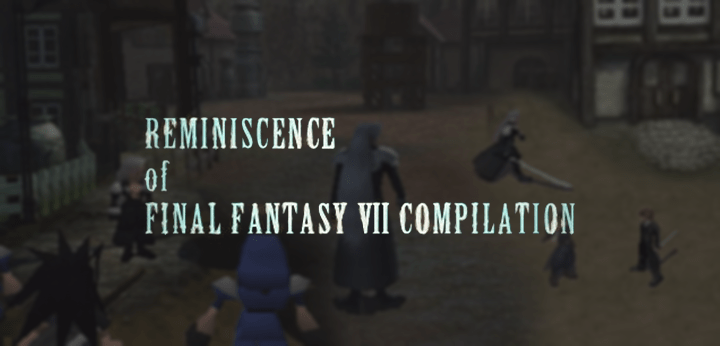
It isn’t necessary at this point since there’s nothing new contained within, but the Reminiscence of Final Fantasy VII Compilation recap video is how I chose to close things out. It’s a very neat concept, that one. An official bonus video which works together footage from numerous different Compilation titles to try and convey as much of a chronological experience as possible. Especially noteworthy for featuring the only clean, digital recording of Before Crisis that exists. I would love to see this video officially reattempted with higher quality footage and better pacing because it’s a real treat.
I feel lighter. Maybe I lost some weight – all that dilly-dallying.
Cloud Strife
And so ends my visit to Gaia once more. Sayonara, city of mako. It was fun. Not only because each story piece surprised me anew with its quality, but also because through the multi-month revisit and subsequent bunkering down for script-writing and video editing I was able to immerse myself in Final Fantasy VII with an intensity that might be the most I’ve ever gotten into it. In the process, I gained a more concrete appreciation for Final Fantasy VII’s structure and the potential contained within each strata of the story. Crisis Core and Dirge both won me over again after I’d gone pretty sour on them, and I was able to reaffirm that, yeah, I really like Advent Children. Genesis and Angeal were less intrusive than I remembered, and I am in disbelief at how much I managed to warm up to Kadaj from the book which recontextualised him as The Thing. There was not even a single neuron in my brain that would have ever predicted myself coming to like Kadaj. Deepground gave rise to Shelke, who I would consider the best new character created for the Compilation in that the party genuinely feels like they would be benefitted by her presence. The other contender was AVALANCHE’s Fuhito. He felt like an antagonist whom Final Fantasy VII was in want of. Unlike Weiss and Genesis who are, functionally-speaking, just lesser Sephiroths, Fuhito had unique motivations and was a scientist rather than a berserker. He does eventually end up resembling Sephiroth once he’s gone insane and come to consider the very notion of living as an abuse of the Lifestream, but unlike those other two he takes a wholly different path to reach that point of madness, making it feel like a fantastic storyline that complements the original conflict. Going along the emotional journey from start to finish I feel like I gained a deeper sense for how tragic of a villain Sephiroth is, which, to some extent, does actually offset some of my qualms with Remake’s Unknown Journey and the implication of the destroyer seemingly wanting to fix things. For the entries that I’d already played before the time away from the series gave me the chance to experience them feeling refreshed, and the things that were new to me like Before Crisis and the books led me to fall in love with the setting all over again. Final Fantasy VII is my favourite – and yes, that is built upon the back of the Compilation of Final Fantasy VII. Of a world made larger, of a history made richer.
 skapbadoa