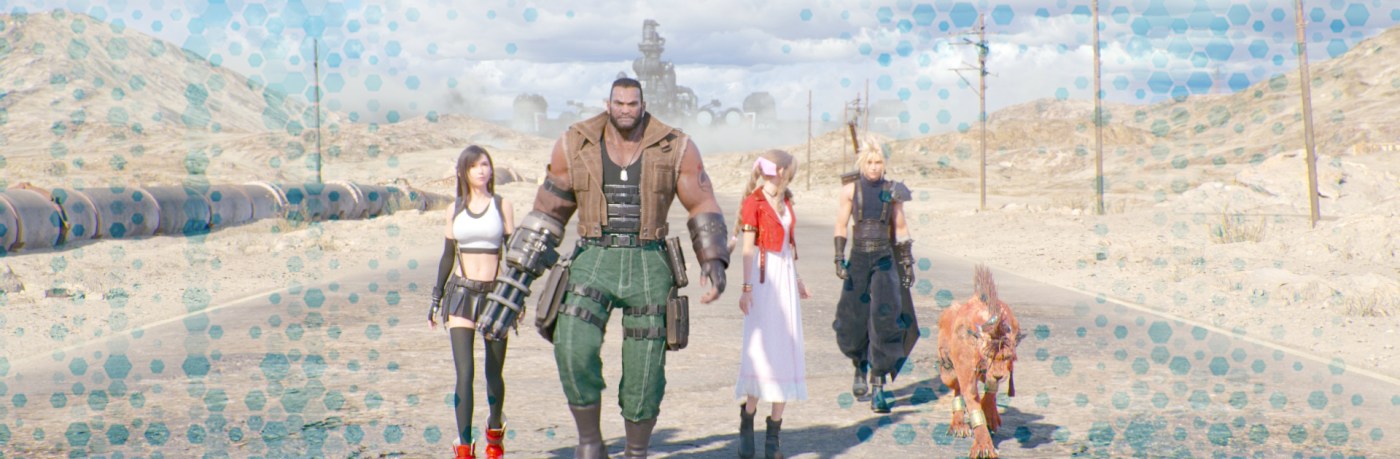
Not too long ago I finished replaying Final Fantasy VII Remake’s main campaign via the PC release of Intergrade. My thoughts are mostly unchanged from my original playthrough in 2020. It’s a phenomenal game. Everything that expands on the original is outstanding. Thirty hours worth of glorious Midgar architecture? Five different gameplay styles? Fifteen discs of soundtrack? Goodness man. This game is so ambitious, and the painfully long development cycle ensured that most things it attempts land. Though the new additions to the narrative weigh it down – that is to say, the Whispers and everything they embody are overwhelmingly stupid – and the way it drifts in the ending is something that I had genuinely been trying to find an alternate reading for in order to resist it. But on the whole those concerns are deafened by the positive audio-visual and gameplay experience. As long as I keep getting fed these glorious Squeenix HD versions of established narrative setpieces I’ll be satisfied. Because I mean, that’s all a remake of FFVII really needs, right? Final Fantasy VII Remake is like the one game where graphics are the most important part of the package. The presentation is damn unreal, and the combat is great. At any given moment it’s just mindboggling to look at the party and go “Holy moly that’s Cloud. That’s Barret. Look at me – I’m Yuffie! Being all HD remakey and stuff”. The whole thing is just like playing one of them badass Crisis Core cutscenes. When you look at Remake in view of all the complementary content, its directing and combat feel like the game that Final Fantasy VII had always wanted to be. And that’s awesome.
I was somehow left in more disbelief that this is a real thing that really exists after playing it than I was when it was still unreleased. After seven or eight playthroughs and a decade of considering this my favourite game, I think it’s fair to say that I already know Final Fantasy VII. Even more so to say that I already love Final Fantasy VII. So for me, this project never actually hinged on its own story or gameplay, but rather on what merit it would contain in context of the original. As in, the HD remake part. All that was needed for me to call this a success was for it to be a “Gaia HD Simulator”, and this is Square Enix we’re talking about – if there was one place it was never going to have problems it was going to be the graphics. Remake thus gave me what I wanted from it. Midgar painted with a beauty far greater than I could have imagined. I don’t even mind the linear level design since personally the way I had originally envisioned a “Final Fantasy VII Remake” project was as a series of films anyway. As far as remakes of Final Fantasy VII are concerned, Crisis Core was already a spectacle in its own right. My first time playing that was much the same awe as I felt in Remake, just on a significantly tinier screen. The snippets of Midgar in Dirge of Cerberus were nothing to scoff at either. Across the Compilation we’ve actually already seen quite a large amount of locations recreated, but Remake handily outclasses those. Personally I feel like it’s only very recently that Advent Children’s CGI has finally started to show its age, but Remake arrived in the nick of time to once more push the envelope. It seems like for every couple minutes following the plot I would then spend more wandering around and simply admiring the detail in the world design. The sight of the monolithic plates hanging above was enrapturing, so pretty much every time it came into view I’d just take a moment to soak it all in. To me playing Remake provides a consistent stream of awe at the grimy architecture, or getting to see Midgar as a functioning city. It, naturally, has a greater sense of place than ever before. Even just watching the highway to see actual cars driving along makes the world feel real. I wouldn’t like living there of course, but the shantytowns of the undercity slums are visually some of my all-time favourite environments. Midgar, its slums and its reactors are utterly fascinating in an urban exploration kind of way. Conventionally its disrepair would probably be considered ugly, but aesthetically I find there’s not much prettier than that. It’s the little things like the colour of rust on the corrugated iron rooves, or the dry grass growing through long-abandoned train tracks that really pull me into its setting. Topside Midgar doesn’t get overlooked either. Wandering through the small town during Jessie’s sidequest is one of my favourite moments in the game. The nostalgic homes, the park, the stillness of night and the eerily beautiful green glow of the overhanging Mako Reactor. It’s just the same feeling you get wandering the neighbourhood at night with friends in real life. Midgar’s 50s style retrofuture is a great aesthetic, whose sense of physicality is made all the better when everyone swarms the street. But the Shinra Building is definitely the most impressive part. The centrepiece of the city, given an according amount of care. I’ve long considered the Shinra Building my favourite JRPG dungeon, which makes encountering it all the more unreal in Remake. Once you finally climb the plate it looks less like a skyscraper and more of a mountain. In ordinary gameplay you can’t even see the top of the thing. It takes like a third of the game’s total runtime to traverse and once you reach the roof the view is incredible. It’s appropriately gargantuan.

But although the graphics are of course the main point of focus, I find its central discussion actually lies elsewhere. Most of what I have to say is in how this game relates to the prior content. Although it’s likely to be controversial since I’m sure most people have Compilation PTSD, I do appreciate the change in style. Not as something which attempts to invalidate the original but as a new imagining with its own unique aesthetic. It had always been apparent to me from reading their PR for the game that they were approaching this “remake” not with the mentality of “updating 1997’s Final Fantasy VII to modern standards”, but instead “what if we made FFVII in the late 2010s”. That’s why I had no reservations about the difference in pacing, and was in fact actually really excited at the prospect of them taking Midgar and turning it into an entire standalone game. Using the “remake” branding since that’s FFVII’s big buzzword that isn’t technically incorrect, but being a dramatic reimagining based on the same script. A new Final Fantasy VII, not just a shinier coat of paint.
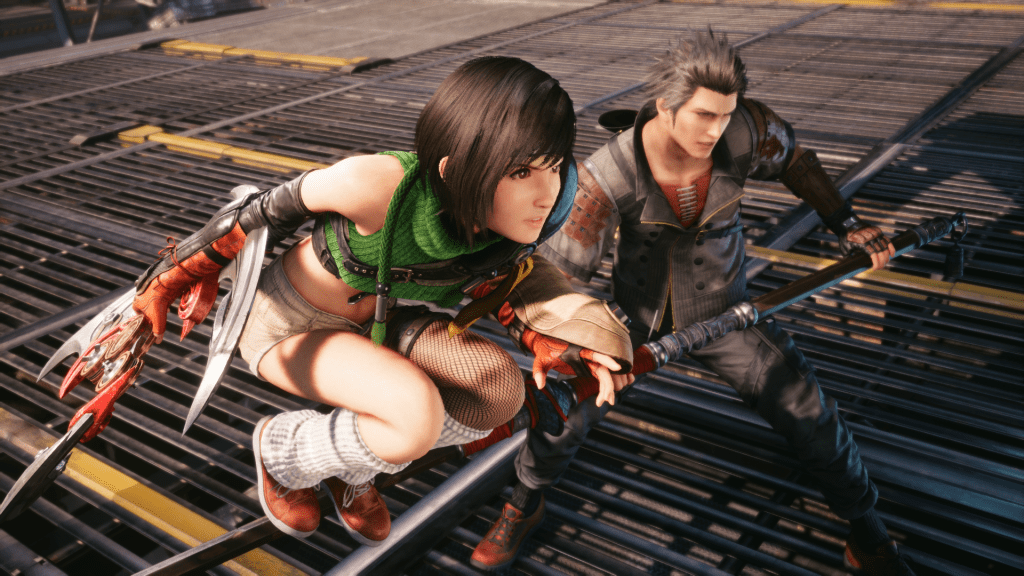
Remake is loaded with changes to the narrative. Some big, some small, all working together to transform the shape of the story. Not all of these alterations are good, but the decision to expand so much is inevitable when you think about their aim of taking Midgar and turning into its own individual game. What was originally just the introductory segment, lasting only 3-6 hours, had to become a standalone chapter with its own dramatic setpieces and high-strung climax. Theoretically, if you scrub the knowledge of the original of your mind, then this first chapter of Final Fantasy VII Remake is a standalone game with a strong sequel hook. It’s necessarily transformed into something far more than just the tutorial area. Which means that with the new pacing some elements of the original don’t work the same way anymore. The biggest one being that in the original Sephiroth is treated with a much greater sense of mystery. The first time he’s made especially relevant is when you climb the Shinra tower, follow the trail of blood and find the president impaled with Masamune, and it’s not until way later that you even see him for the first time. But that obviously doesn’t work when Midgar is dedicated its own game, since a new audience will be clamouring for the One-Winged Angel guy. Knowing that spoilers for the plot are all over the place at this point the writers didn’t really have much lenience to hide Aerith’s upcoming death, Cloud’s identity crisis or Meteorfall either. They know that we know, so these things get acknowledged a lot earlier than they ideally should be. Sephiroth being plastered over the story so much is perhaps the change that best explains the new direction. Generally speaking the changes can be attributed to excess. Some subtlety from the original is lost along the way. For example Tifa isn’t supposed to start having doubts until after the plate drop and this becomes her big character conflict going forward, since even by the time of On the Way to a Smile she’s still wrestling that guilt. The fact that her actions killed so many innocent people is what defines Tifa at large. But in Remake they launch into it from her very first appearance, so by the time the plate does actually fall Tifa’s response lacks the emotional punch. Doubly so when this time the game focuses on a bunch of people surviving it anyway. It was quite jarring, honestly. Or how Wedge was originally supposed to die after falling from the pillar, yet they kept him alive longer for…some reason, and Jessie never had that whole arc about returning home. The melancholy and some much slower-burning character arcs of the original are overtaken by a sense of theatrics. This version ends up feeling like what Final Fantasy VII would be like if it was envisioned more in line with the wider Compilation. Characters are dramatized in a similar manner. Fumbling the clouded balance of the original as it becomes less politically ambiguous, but supplementing it with a hammier and more action-packed aesthetic. Full of over-the-top anime fights as Cloud flash-steps around and Tifa leaps incredible heights with ease. Advent Children and the big CGI battles in Crisis Core and Dirge of Cerberus all display the cast as fighting like this. Even in wider stuff like Dissidia, Kingdom Hearts, Mobius Final Fantasy, or heck even the VR theme park ride they had a while ago, everything outside the original FFVII has always that style of breakneck aerial combat going on. So it’s really neat to see a reimagining of Final Fantasy VII that puts it in line with those. Cloud fighting like that in a version of the original storyline is vindicating as a longtime fan.
The original setting was a more grounded application of steampunk retrofuturism, where although there were super-reactors and cyber-soldiers you didn’t have all these smartphones, holograms and magical grappling guns. But the newer content has had a tendency to raise the technology to the level of science fiction, so Remake’s style ends up falling in line with what we saw of its older extended universe works like Crisis Core and Advent Children. All up, it’s a very Compilation-feeling version of Final Fantasy VII, and even though there is much to hate on in the 2000s content, likening Remake to them isn’t a criticism from my perspective. If anything, it’s one of my longest-held dreams. I’ve been really appreciating seeing a Final Fantasy VII that resembles them more, since there’s always been such a painful stylistic divide between the original and the Compilation. All the little nods and references ensured every scene had something to smirk at. Like seeing Cloud once again use Braver on a motorbike, in reference to his highway chase with Loz and Yazoo. Yuffie’s fighting the Gigantipede amongst the scaffolding really called to mind the Bahamut SIN battle too. Is it really Final Fantasy VII without a party member getting launched off a polearm? The Compilation nods were plentiful and heartfelt. In fact one of the parts I enjoyed most in the game was Reno and Rude’s banter feeling straight out of the film, and actually getting to battle human-form Sephiroth in an arena evocative of AC’s final battle was something I have always wanted.
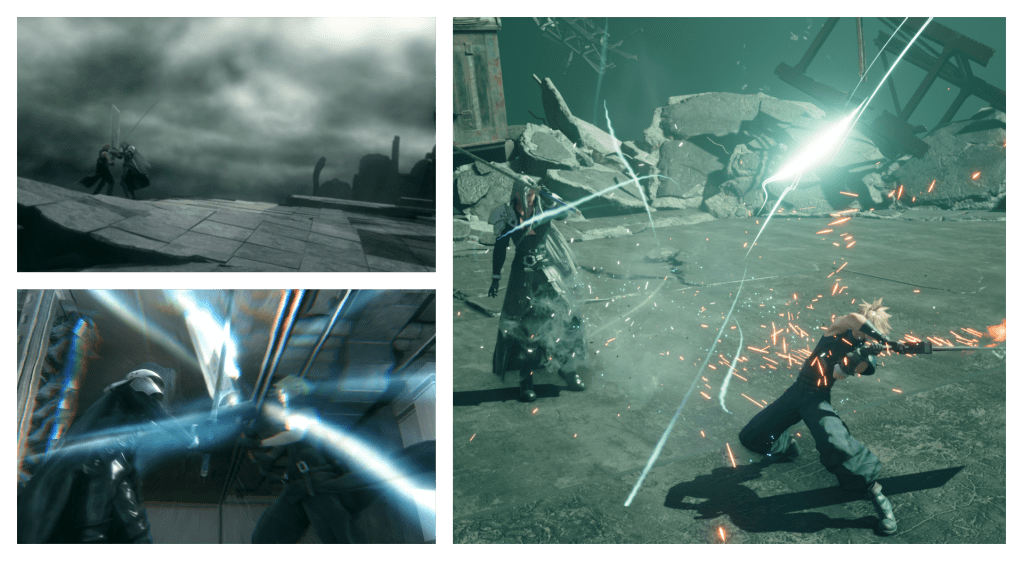
But even just how at the start of every battle they had the party and opponents line up the same way they did in the original never stopped being cool. This is quite handily the most transformative version of Final Fantasy VII yet, but unlike a lot of the prior stuff in the Compilation it still predominantly feels like it comes from a place of respect for the original. You can feel the love poured into it. Like how when Aerith asks “Shall we mosey?” Cloud responds “Let’s.”, there is a pervading sense that this is a love letter to Final Fantasy VII, from people who also love and understand its merits.
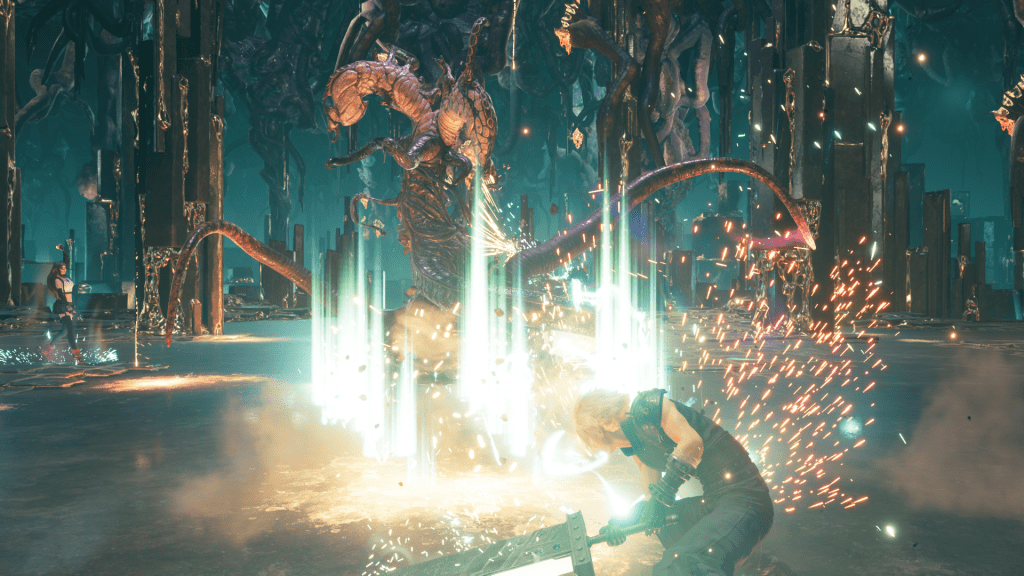
One particular moment that’s really stuck with me was the alleyway scene after the first Sephiroth encounter. The music used in that scene was a somber rendition of The Promised Land from the beginning of Advent Children, which stopped me in my tracks because I was not expecting the music to cross-reference like that. I’m very much a soundtrack buff and those from the Final Fantasy VII saga have always been among those most important to me. I suppose it was never really in question since the original teaser was set to Beyond the Wasteland from Advent Children’s soundtrack, but it’s still really cool to see them dipping into more than just the original game’s score. The music selection was more than I would have believed possible, even if I were making an exaggerated guess. Like seriously – 366 songs spread across fifteen discs of soundtrack to cover only about 35 hours of gameplay? That’s so excessive and I love every second of it. Final Fantasy XII and XIII were both longer than this game yet only had four discs of music. But in saying that, 4 discs is already something I’d consider a large soundtrack. The combined 15 from Intergrade and Intermission are a feat of composition, and there are some real treats in there. One-Winged Angel Rebirth feels like the first time I’ve ever truly understood the mania for that boss theme, and Hell House is pure musical genius that eclipses what I thought was even possible from a rearrangement of established tracks several times over. It’s tragic that Remake gets bogged down in the narrative at key points because they put so much effort into every other component, making sure this game is awarded its assortment of accolades. The visuals and the music and the gameplay – it’s pretty immediately one of the coolest things I’ve ever encountered, this experience further enhanced by how important the original story and cast are to me.
It’s an incredible game. I really do think so. I really, really think so. Yet because my biggest takeaways from this hinge on its link to the Compilation, in spite of its overflowing positives I also still consider it as much of a missed opportunity as I originally did too. The gameplay proves its own case, and in the written department anything they adapt from the original universe is fantastic. But I can’t say that claim is applied to the story in its entirety. A lot of the new stuff, particularly that relating to the Whispers, ranges from silly to downright laughable. Not making it a straightforward adaptation of the original is fair on their part, however it is still a decision that I feel ultimately damages the game. The reason why, aside from general storytelling incompetence, is that for 90% of its runtime Remake is geared to be a unified Final Fantasy VII. Remake brings the characters and the lore of Gaia up to their modern definitions. That’s how the directing pitches itself. It deliberately evokes the style of Advent Children and Crisis Core, and makes specific references to Compilation paraphernalia as well. One bit that stuck out to me is how they unite the visual design by having summoning materia look the same as it did in Advent Children, and whenever Cloud has his psychotic episodes under the influence of his Jenova cells the screen takes on the same static effect (though I do think it a shame he never displays the sharp eyes during them).

They mention the degradation, they mention Project G, and there are certain musical links such as the original trailer being set to Beyond the Wasteland or arrangements of The Promised Land and Elfe’s Theme. Rude maintains the theme briefly given to him in Advent Children when showcasing his firework bomb. Johnny reuses his established design from Episode Denzel, therein revealing that Dyne will likely look the same way he does in G Bike.

The three Arbiters in the penultimate boss sequence are channeling the spirits of the Remnants of Sephiroth from their future point. Kunsel gets mentioned so Crisis Core is definitely still the preceding canon, further cemented by the cameo appearance of Hollander alongside Lucrecia and Gast in the intro movie for First Soldier. Kunsel’s implementation also further fleshes out Cloud’s history at Shinra since it hints that him, Zack and Cloud had all hung out enough to be familiar with one another. Before Crisis is likewise just as canon as ever, since the Tales of Two Pasts novel has Tifa recounting her time meeting Shotgun, and Barret discussing Elfe when trying to get Jessie to induct him into AVALANCHE. The Intermission boss “Heretic Rayleigh” is a grim little revelation on the fate of Dr Rayleigh for those familiar with Before Crisis, but more than that it was the usage of Deepground and Nero in the Yuffie DLC that had me screaming, and they even threw the Weiss program in there! I am seriously so shocked that they made Nero cool, okay. I knew that Weiss would be in there based on the trailer, and going into the Intermission chapter my thought regarding that was that perhaps I can jive with Weiss so long as they keep that edgy Vincent ripoff (whose name I hadn’t cared to remember) the heck away from it. Nero was genuinely the one character I did not want to see, but then they made his boss battle and theme awe-inspiring, to the point he’s almost my favourite part of Intermission. I’ve called Deepground ‘Kingdom Hearts rejects’ so many times and never would I have fathomed that I’d walk away thinking that Nero was cool. But I did exactly that. In almost every facet Remake feels like it’s rewarding you for being familiar with the rest of the Compilation. And with that in place I am certain that we will eventually run into Cissnei, Shelke and Genesis out there wandering the world. With how important the AVALANCHE politics are in Remake I’m high-key anticipating that once the cast reach Gaea’s Cliff the guy in the cabin is going to get replaced by Elfe too. I will be shocked if she doesn’t appear, and knowing how she leaves the battlefield at the end of Before Crisis I think that’s the place that makes the most sense to slot her in. Evan, the protagonist from the Compilation side story The Kids Are Alright, will surely appear too, since a little known fact is that Kyrie and Leslie are not new character. Before getting such a major glowup in Remake, they originate from that book.
Let me visit the town of Banora. Let me fight Minerva in the North Cave while the dormant Omega Weapon is visible in the background. That’s the kind of stuff I want to see! For the majority of this game, that’s also the kind of stuff it seems they want to show me. The message conveyed by its stylistic choices is that this will be a new, unified version of the original setting that replaces it within the Compilation timeline. Deepground, Project G – all that extra nonsense written into an edit of the original script. Finally creating a version of the story that has some synergy with all the otherwise tone-deaf sequel content, and therein severing the first game’s controversial ties to everything that came after. That was the obvious and in my opinion best way to interpret the FFVII Remake concept, to the point of being self-explanatory, and indeed what the game itself seemed to want to be. So the fact that it turns away from that right at the last moment is just a bit dumb, and limits the story’s potential as such. Timeline-alteration is a level beyond anything Final Fantasy VII has ever displayed.
Remake moving forward actually makes me want to look backward. The extended universe gets a lot of flak – and rightly so. A large chunk of it is fanfiction garbage that actively harms the original definition, and as a fan of the original I also naturally carry an amount of venom toward One-Winged Hollander and Degrading Angeal Clone #3. A lot of the time I look at it and go “Square Enix you bastards this is not Final Fantasy VII.” But nevertheless, I still hold much affection for the way it expands the cast of the original game, and the wider world of the Compilation is one of the dominant reasons as to why Final Fantasy VII is my favourite series. For every single negative I feel that it has multitude positives. The Remnants of Sephiroth are embarrassments, but I love how Advent Children finishes off Cloud’s character arc and, in doing so, finally awards him a personal theme. The Main Theme’s motif had been used for some Cloud-centric tracks like Anxious Heart and On That Day 5 Years Ago, but he doesn’t get a specific theme denoted for him until his heart is finally repaired. It’s such a beautiful story thread, that somewhat justifies the revived content all on its own. I also believe that Sephiroth’s plan in the film is perhaps the absolute best addition to come out of the Compilation. Honestly his intention to become a god in the original game was always flat and out of touch with the story’s sci-fi setting, so the film providing him this goal of leading the planet as a spaceship with which to invade others is something I find far preferable. A character like Sephiroth aiming for divinity in a story like Final Fantasy VII, well, it kinda just reads like a part of the script that hadn’t yet realised it wasn’t Xenogears anymore. The alternative offered in Advent Children is a lot more interesting than mere deification and actually ties his plan back to the vaunted Jenova instincts that are supposed to define him. Sephiroth wants to do as his mother did. That makes a lot more sense, so I’m really hoping that change gets brought over to Remake too.
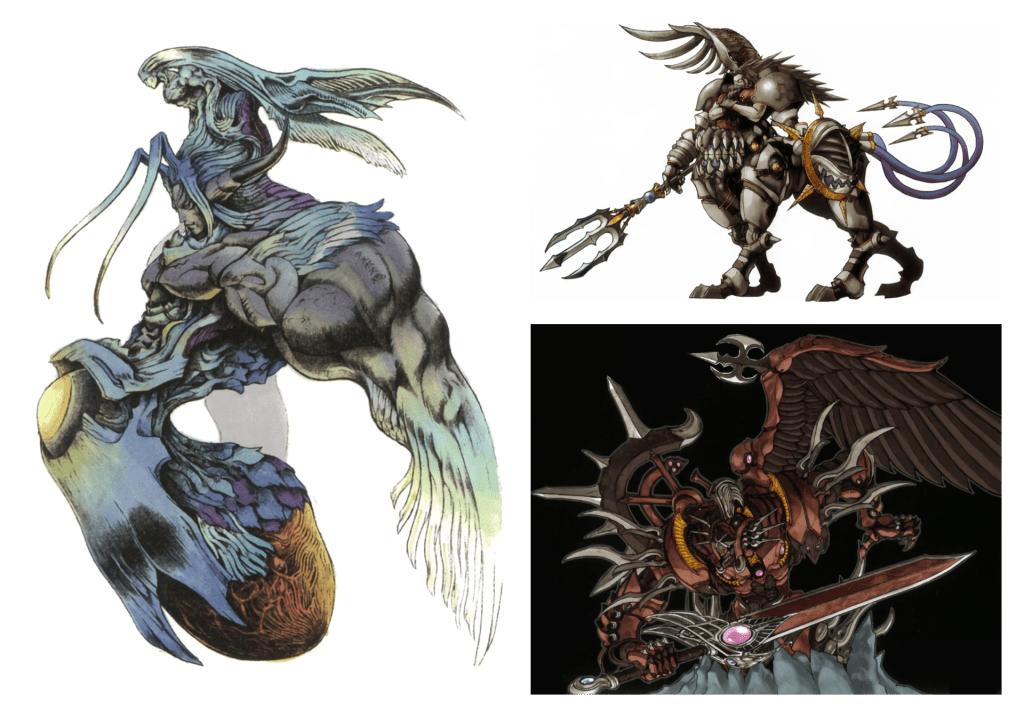
On a similar note of Compilation content reexamining elements of the original, Angeal and Genesis transforming for their boss fights is fascinating in how it recontextualises events from Final Fantasy VII. Those are functionally to be understood as their own Bizarro forms, which then establishes the idea that Bizarro Sephiroth is a form obtained when Sephiroth must have let the transformative properties of the Jenova cells overload his body like his friends and Hojo do, except he is then the only one to wrestle back control and ascend further. Those characters do have positives buried beneath. Genesis may be an obnoxious asshole who only speaks in emo poems and Angeal truthfully feels a bit braindead in how he just regurgitates “protect my honour and my sword” the entire time. Like really I feel the idea of fleshing out Shinra, SOLDIER and Sephiroth by giving him some friends is an idea that should have been impossible to mess up, but Crisis Core found the one way to do so. These characters honestly would have been less offensive without a personality. However the way that game offers a deeper dive into Zack, Aerith and Sephiroth is some of the most important characterisation in the whole series. When the impossibly optimistic Zack Fair quietly cries in the church after his mentor pretended to be a villain so he could make Zack kill him and shirk responsibility for his own suicide, that moment engraved itself upon me. To see a hero cry…what power was in that moment. Those things help explain my affection for the Compilation. There’s a lot of bad – a whole heap of it – but the extended storylines offer way more good to me. Characters I love are explored further, and the world gains a greater sense of history and place. Which feeds into why I’m a little sad Remake verbally insults that project. Yes it wasn’t all nearly as well received as the original game was, but to try and unwrite it just feels wrong. You can’t just fire Steve Burton, poof it out of the timeline and try to use that to slide into the crowd that had been hating on it. Stand by it, because there was still a love and a passion poured into the Compilation’s characters.
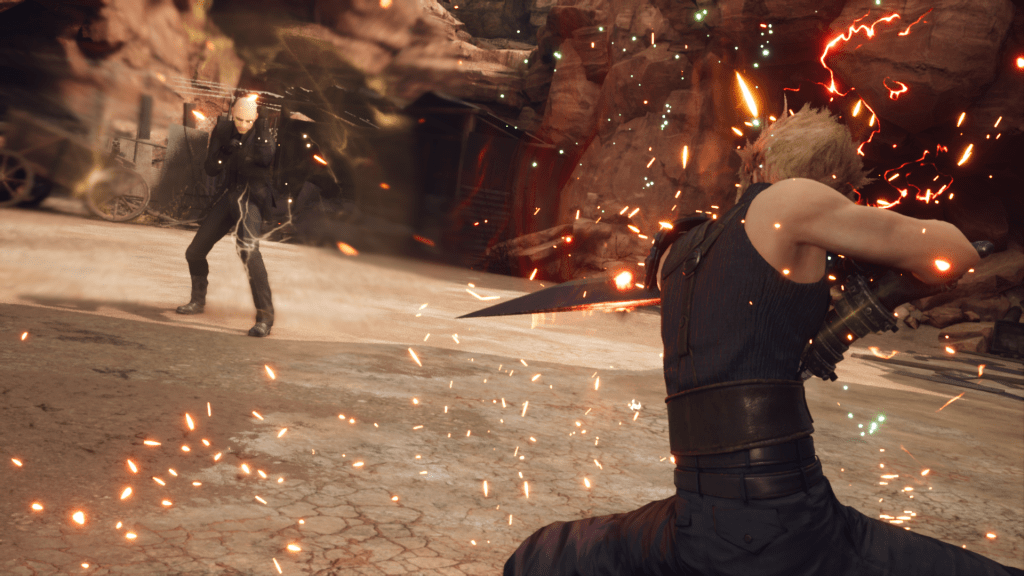
Sometime last year I had made that little thing detailing how and why I’m not sold on this ‘time loop’ theory that dominates Remake discussion. If we put these additional theories aside for the moment and return to the product in its released form, I believe that there are two specific points at which it had the opportunity to establish itself as a sequel. Had One-Winged Angel Rebirth elected to use the lyrics from the film rendition of the song, then I would have accepted that as concrete proof of Sephiroth being a continued existence somehow crossing the border of an in-universe loop between Dirge and Remake. Yet that idea does not come to fruition. For the second possibility, I believe that had Zacl displayed the gold-plated Buster Sword seen across the Compilation then there would be no shred of doubt that the complete Compilation preceded the new game. However again, he carries the Remake edition of the sword. If this new telling did have that old stuff in the in-setting background, then those moments would have been where it was shown. Yet it did not, and so I would still like to say that I’m not convinced of this claim that Remake is occurring after a timeloop and with knowledge of the original timeline, since I don’t know how that can possibly function in the Final Fantasy VII universe. But on a second playthrough I guess I would say that I just don’t know. I don’t have a solid grasp on what the narrative is doing right now. Maybe if they relate it back to Minerva it could have an excuse, like perhaps there were unseen aftershocks from the Omega Weapon’s awakening in Dirge of Cerberus and the goddess saw fit to try and fix it by reversing the flow of the Lifestream or something. This is currently my only good working theory as to how a rebuild-sequel is possible. What’s integral to note for this suggestion is that the timeline mechanics, at their deepest displayed level, don’t centre on Aerith or Sephiroth. Rather it’s that everything converges upon the Edge of Creation scene. That is where Sephiroth finally pulls back the curtain to reveal his intent to alter destiny, by issuing a challenge to the great beyond. He stares down the universe and he says “No. Not yet.” And in that event, I find the important takeaway is not actually Sephiroth’s “seven seconds til the end” speech, but rather the two nebulas that the scene lingers on. Particularly the white one is what Sephiroth threatens to oppose, and Cloud ends the scene perturbed by their presence. “Seven seconds til the end” is the relevant character plot, but I believe the symbolism is the way in which this scene actually implicates the setting. I really do feel that these have to be metaphors for divine beings, and the white one, I suppose, can then only be Minerva. The draconic shape with large shoulders in the red one could be hinting at the Omega Weapon, but I wouldn’t say there’s actually enough information present yet to fully stand by either of those claims. If this were a Dissidia title those would just be Cosmos and Chaos, but Chaos in the Final Fantasy VII universe is only Vincent’s proto-materia transformation. It doesn’t have a Shinryu either. The setting doesn’t have any force in place opposite to its goddess.
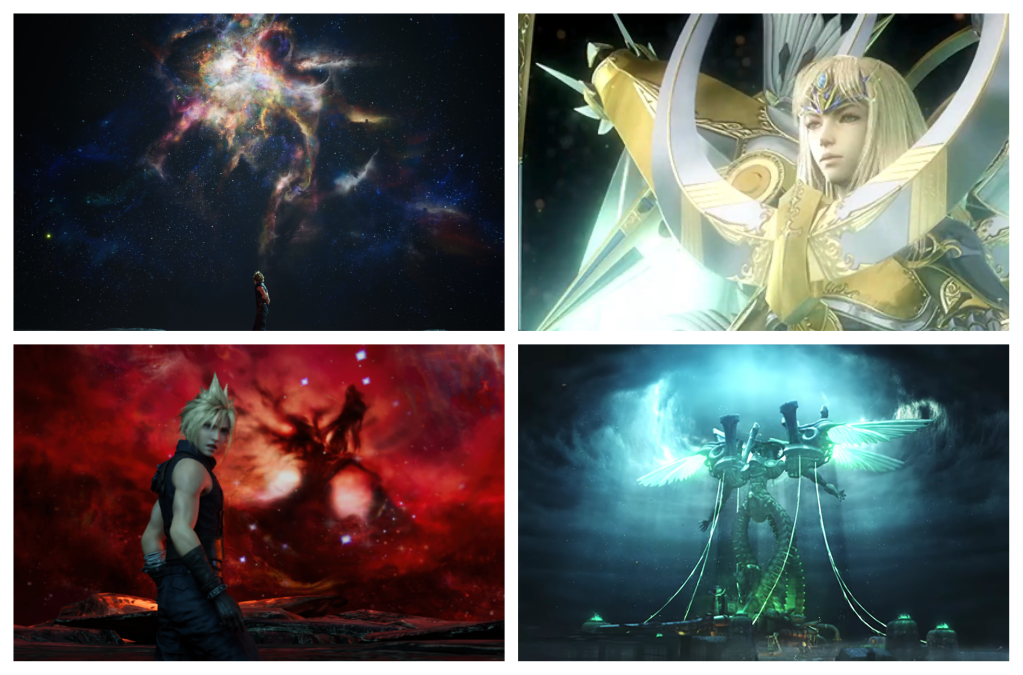
Otherwise maybe it links back to whatever Genesis was trying to do in the post-credits scene of Dirge? That is the one plot thread from the Compilation still left hanging. But that doesn’t feel like it fits. Like, what, the red nebula represents Genesis rewriting history because he’s still salty he got rejected by the goddess? That’s dumb. A slightly less dumb way to extrapolate on that would be to say that if the red nebula represents Genesis, then Sephiroth is talking to the white nebula, Minerva, and threatening her established pathway of destiny. His claim that “I will not end, nor will I have you end” that he delivers while looking away from Cloud would then actually be him talking inward to his memory of Genesis, trying to save his old friend from ruin by attacking Minerva’s history. I do particularly like the concept of this. Why is Sephiroth fixated on divinity of all things? In the original game there simply isn’t an answer. It’s an oversight in the story design that never gets explored in any capacity, almost as if Sephiroth hadn’t rehearsed his big villain speech by the time that Cloud inquired as to his goals so he just ad-libbed and accidentally set his sights on becoming god. But with the extra context provided across the Compilation, we see that he’s had vast exposure to the narrative of LOVELESS. As of Crisis Core, this is where the concept of god finally gets inducted into Final Fantasy VII. Genesis had relentlessly beat the Gift of the Goddess into his head, making Sephiroth well aware of Minerva’s existence. In 1997, Sephiroth’s ‘god’ had no actual meaning, but at this point, revisiting that story beat creates a sense that he wants to seek revenge on the goddess for corrupting his precious few. He has seen his friends enchanted and then torn down by her, and he has come to feel that the world is disgusting. The notion of which doesn’t fall out of line with what’s displayed in Remake.
There are an assortment of crazy ideas possible, but little in the way of answer. The only thing that I will commit to is that, based on Compilation knowledge, Remake hinges on Minerva. There’s that symbolism in the Edge of Creation, there’s the plot tying itself so strongly back to Crisis Core; and the important thing to note, in my opinion, is that when Sephiroth engages the Singularity at destiny’s crossroads, he says “All born are bound to her. Should the world be unmade, so too shall children.” ‘Her’ in this context, obviously refers to the planet as personified mother, and the way that its children are bound to it is through the Lifestream. And once again, Minerva is the goddess and the avatar of the Lifestream. I can’t commit to a whole lot in this theorycrafting discussion, but what I will stand by is that it’s all about Minerva. She’s always been the most interesting and overlooked part of the Compilation, so Remake is taking the opportunity to give her the central relevance she demands.
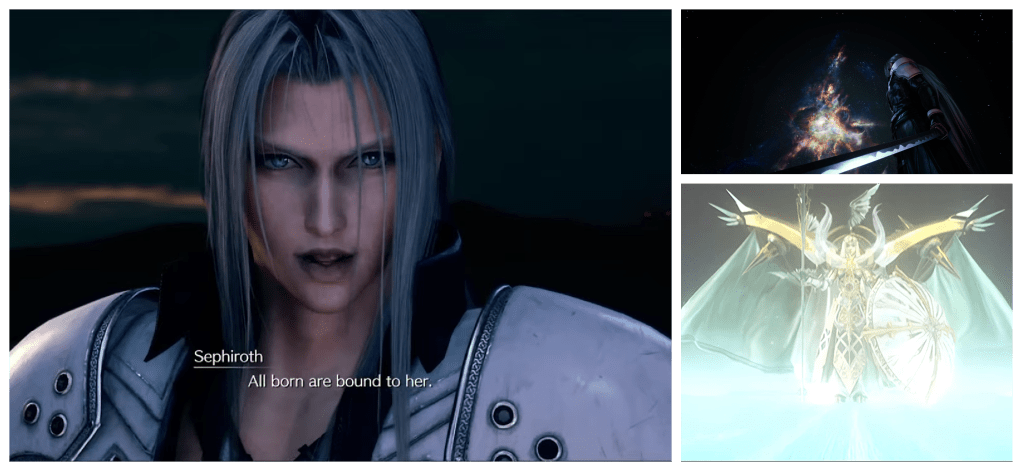
You know what, maybe with this they’re even addressing those concerns I raised about Sephiroth’s deification earlier. Instead of having his notion of god coming totally out of left field, this could just be them rewriting it so they’re now using the god they do have. And then perhaps because the design doesn’t really work in the action-oriented 3D space of Remake, and the design seen when they elected to use him in Dissidia NT, this could mean that when we eventually reach Safer Sephiroth his character design could potentially be replacing the original, gigantic wings with elements of Minerva’s armour.

But beyond that – yeah, I just don’t get it. Nothing on Gaia was ever shown to have that capacity, and there’s only one established existence that it can reasonably be assigned to. Being a post-Dirge rebuild requires creating at least one new form of divinity, and so the reason I’d rather support the claim to the opposite (that this is still a reboot, not a hidden Compilation sequel) until provided irrefutable evidence is that it doesn’t require any shuffling. Aerith is linked into the general flow of destiny because she’s a Cetra. It’s her basic nature to commune with the Lifestream and the collective consciousness of her people, which is also where she becomes informed of Sephiroth’s evils. As per The Maiden Who Travels the Planet, her modern character setting – as in, where her motivations and power set are currently understood to sit in her contemporary appearances – lets her interact with the Lifestream to the extent that she can feel Sephiroth’s evil corroding it from within the North Crater. She speaks to the planet and unlocks secrets that no one else has. When she shares knowledge of her identity with Marlene and Red in order to calm them, it can be said that it’s only the planet’s observations rather than something beyond a temporal boundary. You can easily interpret her actions that way without any need for a conspiracy. Likewise, not even once does Sephiroth act out of character either. His modern depictions have always shown him to be this kind of mental manipulator with behind-the-scenes knowledge, pleading sympathetic and hyperfixated on Cloud to the point of having homoerotic undertones. This is the exact same as he’s been portrayed in Dissidia and other spinoffs long after the Compilation finished, and nothing he does necessitates Advent Children as prerequisite.
I simply want to acknowledge that this has not yet proven itself a sequel, even if the dominant discussion has taken that sentiment and run away with it. However that, at this point, has become nitpicking. It’s nebulous and largely irrelevant, since the narrative moving forward has shown itself to be unequivocally altered. Zack is alive. I’ll need to see Remake Part 2 before I can draw conclusions but at the moment the way his scenes have been framed kind of makes me wonder if Zack might still be in a different dimension, and that Remake will have two story spheres going on now. I originally got this feeling because in Remake we see Crisis Core happening simultaneously with the Arbiter of Fate battle, and Zack was oblivious to the thousands of ghosts swarming Midgar. As if he was looking at a different world. I still feel like that has to be the case, otherwise the differently-designed Stamp poster in his cutscene doesn’t make sense. Crisis Core isn’t a distant prequel, it finishes only days or weeks before Tifa finds Cloud on the station stairs and Final Fantasy VII begins, so it’s not an option for that to have been an old design of the mascot. But how does that function then? Who knows. Again, it’s just confusing and right now there are no proper answers in the content, so speculation like this can only go so far. But as for the decision to alter his history, as expected I’m a bit upset. I love this character and think by the end of it I will have been happy to explore more of him in a setting that doesn’t have to influence the original Compilation, because hot damn that snippet of Zack on the church stairs made me emotional very quickly. But before that sentiment comes to sway me I really just need to say: Literally what Square Enix. You cannot revive Zack. That’s one of the big taboos in Final Fantasy VII. It compromises the whole point of your protagonist. This is the story of Cloud’s strife. He fails to save Zack, and he fails to save Aerith. Cloud falls into depression because of this, but then one day overcomes that by successfully saving Tifa and Denzel when they’re facing similar situations.

Those character moments are so integral. It’s how Cloud’s growth is signposted. But if Zack didn’t pass away on that hill and ask Cloud to be his living legacy, then who does that make Cloud now? It’s just not a good change. Do not Thrice Upon a Time me, Nomura. Final Fantasy VII is not a property that needs a Thrice Upon a Time. They’ve hinted at Aerith being afraid to sacrifice her life this time around, with Sephiroth even seeming to acknowledge that Cloud does have a newly-presented chance to save her. I had previously written that off since obviously it’s not Final Fantasy VII without Aerith’s death defining the story, and her response to this event has always been that “I never blamed you. Not once.” But now that Zack is actually for-realsies alive again, I don’t know what to believe. I don’t know what’s sacred. For the most part Remake does feel like it has great respect for the original game in how it makes its alterations, but the suggestions about Zack and Aerith, dare I say they border on blasphemous. Obviously you can’t fault the girl for wanting to live when presented the chance but I still feel as though taking her character that direction is a reversal of the established definition in literally every other appearance.
The Whispers were a bad idea. Bad in concept and bad in execution, they’re intrusive every time they’re afforded narrative presence and I think it’s extra double dumb because I don’t believe they’re going to be relevant at all in the story moving forward. It’s like everything else in the production just doesn’t want them to be a story element, yet there they are forcing their way into every second scene. Why the Whispers? Why is Zack back? I didn’t want a carbon copy of the 1997 script, but still, don’t overcompensate and diverge that much. Those decisions just don’t really make sense.

But, overall, I still highly favour this game. I’d say 9/10. Which, for reference, is something I would label as ‘great’. Just shyly missing the ‘masterpiece’ tag. If you’re curious as to how my numbered scoring system actually quantifies, it’s that after so many years of usage I’ve thoroughly internalized MyAnimeList’s number scores. This game is great, ergo it gets a 9. I know that might seem counter to what I’ve just said but, look, I have more fleshed out thoughts on my problems with it because weighing this new interpretation against the old ones is largely where this game has room for discourse. But that doesn’t equate to those being my dominant thoughts. Remake is super cool. It’s fun and pretty and has a many good musics. I am still very impressed with it, and my hesitations toward its undoing of the Compilation are somewhat mitigated by the tentative existence of Ever Crisis. I’m still giddy for what comes next in this seemingly new narrative. For the most part it met every unrealistic expectation, and felt like it was patting me on the back for following it this long. “To those who loved this world and found friendly company within. This reunion is for you.” It was with such warm sentiment that Advent Children introduced itself, and even when taken this far out in Remake, that warmth still remains.
 skapbadoa